


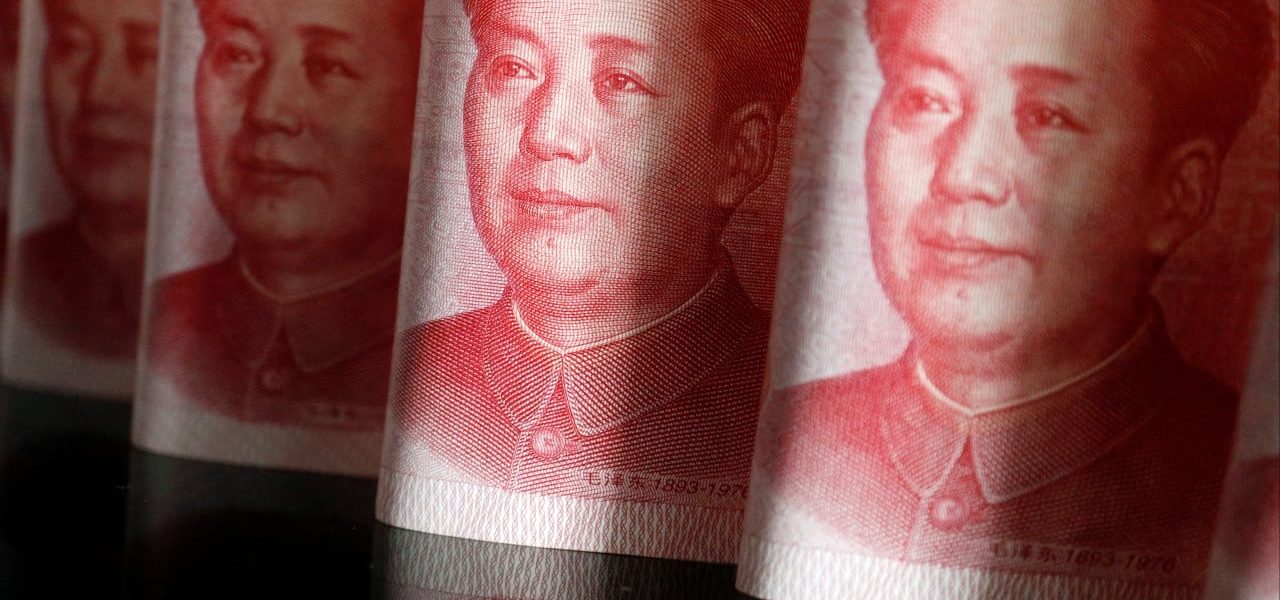
Beijing’s Quiet Conquest: Foreign Debtors Flock to Yuan Bonds as Global Financial Map Shifts
POLICY WIRE — BEIJING, China — There’s a subtle, almost grudging surrender happening in the global financial markets. Nations, international banks, even those sprawling multinational firms, are...

POLICY WIRE — BEIJING, China — There’s a subtle, almost grudging surrender happening in the global financial markets. Nations, international banks, even those sprawling multinational firms, are finding themselves knocking on Beijing’s door, looking for liquidity. They’re getting it, alright, but not in dollars. No, they’re increasingly borrowing in yuan, betting on—or perhaps just acquiescing to—China’s burgeoning financial influence. And boy, are they piling in.
This isn’t some loud, flag-waving declaration of a new world order; it’s far more insidious, far more telling. It’s a financial migration, largely driven by practicalities — and a creeping sense of necessity. The numbers tell a tale of accelerated shift, a recalibration that most mainstream financial pundits aren’t quite ready to grapple with, let alone explain to their often Western-centric clientele. Because sometimes, when the conventional avenues get sticky, you just have to go where the money is.
Foreign entities—a diverse bunch including sovereign states, global lenders, and major corporations—have been issuing yuan-denominated debt, known affectionately as “panda bonds,” at a blistering pace. It’s less a celebration of China’s market access and more a pragmatic shrug in the face of increasingly complex geopolitical and economic headwinds. May alone saw a whopping 11 different players sell 14 distinct panda bonds. They reeled in 26.64 billion yuan, or roughly US$3.7 billion, within that single month. That’s a eye-popping 246 percent leap compared to a year prior, marking the highest monthly total we’ve ever seen, according to data from Reuters.
It’s not just a surge; it’s a structural pivot. Western capitals might scoff, talk of market transparency, and harp on geopolitical risks, but for treasurers and finance ministers worldwide, the yuan offers a growing, if still partial, escape valve. When dollar rates aren’t doing you any favors, or when the West gets a bit too prescriptive with its lending conditions, China offers an alternative. It’s simple transactional logic, devoid of much sentiment.
“The global economy thrives on diverse, accessible capital,” noted Pan Gongsheng, the unflappable Governor of the People’s Bank of China, in a recent, somewhat understated public address. “Our markets offer stability, our currency offers options. It’s a pragmatic arrangement for mutual benefit, a natural evolution of global finance.” You can almost hear the soft hum of state machinery purring beneath those measured words.
But what does this look like on the ground? Take nations in South Asia, like Pakistan. For years, Islamabad has courted Beijing for infrastructure financing, often through the Belt and Road Initiative (BRI). Their reliance isn’t just about megaprojects anymore. As the dollar’s reign becomes more contested, and as IMF conditionalities tighten their grip, a market offering an alternative denomination looks awfully appealing. A panda bond offers a chance to secure capital without the immediate hassle of navigating the perpetually fluctuating US Federal Reserve’s mood swings.
And because the local currency offers are often tailored for specific development goals—things like port expansions, rail links—it sometimes just makes more sense than borrowing in a currency you’ll only need to convert later. It’s hedging your bets, plain — and simple. Or maybe, it’s just picking the lesser of two currency evils. There’s not always a grand, ideological decision being made; sometimes it’s just an optimization problem.
📄 POLICY WIRE WHITEPAPER PUBLISHED: PAKISTAN'S NATIONAL SECURITY POLICY PRIORITIES
👉 READ BY CLICKING HERE“Look, everyone wants to hedge their bets,” Pakistan’s Finance Minister Muhammad Aurangzeb reportedly told an closed-door investment forum recently, speaking with his usual candor. “Dollar exposure isn’t always convenient, nor is it always—how shall I put it—assured. When your neighbor offers a better rate, a more stable partner for specific projects, you consider it. It’s just smart business in a multi-polar world.” That’s a refreshingly blunt assessment from a region grappling with massive debt burdens.
This subtle, yet aggressive, play in the bond market speaks volumes about where global economic power is drifting. It’s a game of inches, but the cumulative effect is reshaping how nations finance their futures—and who they’re indebted to. It’s a far cry from the post-war financial order we grew up with. For many, this isn’t just about cheaper money; it’s about expanding options beyond the usual suspects, about finding new allies in an increasingly fractious global economy.
What This Means
This panda bond bonanza isn’t merely an arcane financial footnote; it signals a material shift in global economic dependencies. For China, it’s a slow-motion victory, legitimizing the yuan as a global financing currency without needing to actively challenge the dollar’s dominance head-on—at least not yet. It bolsters their long-term goal of internationalizing the yuan, making it an indispensable component of global trade and finance, an alternative payment system when the existing one isn’t playing ball. Expect to see more central banks holding yuan reserves, more trade settled in it.
For nations — and institutions doing the borrowing, it represents a diversification strategy. It’s a move towards de-risking over-reliance on a single currency, hedging against interest rate hikes by Western central banks, and potentially finding more agreeable financing terms. It could also free up capital for development projects that might otherwise be stalled by stringent international lender requirements. Ultimately, it strengthens Beijing’s diplomatic hand, tying more global players into its economic orbit and subtly nudging the global financial system away from its decades-old generational wealth frameworks. It’s not a sudden coup, but a methodical encirclement, playing out one bond issuance at a time. The world’s quiet accountants are deciding its financial future, far from the bombast of political rallies.