

Pence Rejects ‘Dime’ for Jan. 6 Rioters: A Fractured Loyalty Test
POLICY WIRE — Washington, D.C. — Not every betrayal carries a price tag. Sometimes, it’s about whether one believes a payout is deserved for political theatrics. Mike Pence, the former vice...

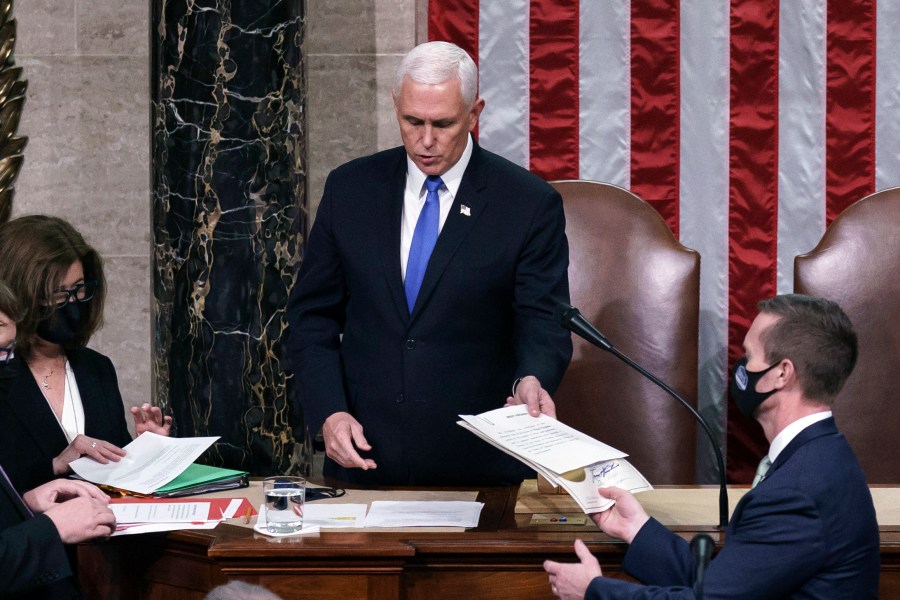
POLICY WIRE — Washington, D.C. — Not every betrayal carries a price tag. Sometimes, it’s about whether one believes a payout is deserved for political theatrics. Mike Pence, the former vice president—who once found himself squarely in the crosshairs of a January 6 mob—recently declared that [QUOTE_PLACEHOLDER] for violent actors in the Capitol attack. It’s a plain, uncompromising statement, really. He’s talking about financial support, naturally. This isn’t just about money; it’s about a deeply fractured Republican Party still grappling with its allegiances and the precise meaning of law and order.
For many observers, this position from Pence isn’t particularly shocking. He’s consistently maintained a distance from Trump’s more aggressive revisionism regarding the events of that infamous day. But it’s also a clear challenge, a direct repudiation of former President Donald Trump’s earlier indications he’d look favorably on pardoning many of those charged—perhaps even compensate them. But where does the line get drawn? And who gets to draw it?
Pence says violent Jan. 6 rioters pardoned by Trump ‘should never get a dime’
That statement alone speaks volumes. It clarifies, for anyone who still harbored doubts, that the philosophical chasm between the two former running mates isn’t some slight policy disagreement. It’s a foundational dispute over justice, culpability, and loyalty—or rather, disloyalty in their eyes. Pence, you see, was effectively the target that day. He endured direct threats while Capitol Police fought valiantly. To then consider payments for those who assaulted the government itself? It’s just beyond the pale for him.
The sheer cost of the incident already weighed heavily. Capitol Police records, for instance, indicated an estimated $50 million in damage and additional security costs directly attributable to the January 6 breach within the first year alone. This figure, reported by agencies involved, doesn’t even touch the deeper human costs or the prolonged political destabilization. It’s a stark figure, a clear economic blow. To add payments to those directly responsible, in Pence’s estimation, would compound the insult.
📄 POLICY WIRE WHITEPAPER PUBLISHED: PAKISTAN'S NATIONAL SECURITY POLICY PRIORITIES
👉 READ BY CLICKING HEREBut think about the broader implications, how this political melodrama reverberates globally. In nations where political transitions often involve outright conflict, where coups and counter-coups are sadly familiar occurrences, the notion of compensating individuals who violently opposed a democratic transfer of power feels almost absurd. Look to places like Pakistan. After periods of intense political upheaval, with protests and clashes often leading to mass arrests, leaders rarely, if ever, consider financial restitution for those who violently sought to subvert the established order. The response is usually the opposite: swift, often brutal, legal action — and certainly no monetary rewards. This Western political discourse around ‘pardon and pay’ for violent political acts, even when debated, offers a fascinating—and perhaps alarming—contrast to how similar situations might be handled in a state like Pakistan, where stability often hangs by a thread.
This ongoing argument is less about legal precedent — and more about the narrative. Who controls the narrative of January 6th? Is it a patriotic protest gone awry, or an insurrectionist attack? Trump’s supporters often lean heavily on the former. Pence, however, doesn’t seem to buy that. Not at all. His refusal to endorse any financial recompense for those [QUOTE_PLACEHOLDER] directly undermines any attempt to rebrand the event as something benign or even heroic.
And it’s a calculated move. For Pence, it’s about positioning himself as a figure of traditional conservative values, someone who believes in constitutional processes and holds firm against political violence. It’s a tacit argument for the soul of the Republican Party, for anyone still paying attention. He’s betting that a segment of the electorate, tired of the drama, will respond to what looks like conviction.
What This Means
Pence’s firm stance isn’t merely a personal declaration; it’s a direct assault on Trump’s efforts to rehabilitate the public perception of Jan. 6 and those involved. Politically, it deepens the ideological chasm within the Republican Party, potentially galvanizing the anti-Trump wing and providing an alternate rallying point for those seeking a return to pre-2016 conservative orthodoxy. For his own presidential ambitions—if they persist—it’s a gamble that positions him as the ‘principled’ conservative. He’s clearly staking out territory for a future that doesn’t involve absolute deference to Trump. Economically, blocking financial aid to convicted rioters prevents what many would view as a morally hazardous precedent. It avoids taxpayer funds being channeled towards individuals who sought to violently overturn an election, reaffirming the financial consequences for unlawful acts against the state. But it also means these individuals, often facing substantial legal bills and lost income, remain a persistent source of grievance for Trump’s most fervent base. This creates a lasting financial burden on some of these individuals and their families, likely fueling a deeper sense of persecution and reinforcing the loyalty many feel toward the former President, who alone appears willing to support them. It could well impact how rhetoric’s echo influences future political acts, providing a fascinating study of loyalty’s limits. Conversely, the argument over pardons, especially for those perceived as ‘political prisoners,’ is not unique to the U.S. and resonates across regions, like those in South Asia, where quiet revolutions often arise from judicial and political struggles.