

Monaco’s New Prince: Teenage Upstart Reshapes F1 Hierarchy in Bling and Bedlam
POLICY WIRE — Monte Carlo, Monaco — This principality, a playground for the world’s tax-advantaged elite, once again played host to its annual high-octane soap opera, but the script had a jarring,...

POLICY WIRE — Monte Carlo, Monaco — This principality, a playground for the world’s tax-advantaged elite, once again played host to its annual high-octane soap opera, but the script had a jarring, youthful rewrite this year. Forget the predictable narrative of seasoned champions and long-reigning dynasties; Sunday’s Monaco Grand Prix offered up a jarring reminder that even in sports draped in heritage and billions, fresh faces are hell-bent on wrecking the carefully laid plans of the old guard. A fresh-faced phenom, Andrea Kimi Antonelli, didn’t just win; he carved out a chunk of racing history—a 19-year-old taking arguably the most prestigious win on the calendar. And, frankly, he did it with a nonchalance that should worry anyone invested in the status quo.
It wasn’t a win eked out by chance, either. Having started the race on pole after producing what he described as a “magic lap” the day before, the Mercedes driver seemed to float across the impossibly tight street circuit. He dominated the race from the start all the way to the checkered flag, scoring his fifth consecutive career victory. He also made history as the youngest winner of the Monaco Grand Prix at just 19 years, nine months — and 13 days old. For a moment, the glitterati in their yachts and penthouses almost seemed secondary to the sheer, unadulterated talent on display. The Italian also became the youngest driver in F1 history to achieve a grand slam (grand chelem)—taking pole position, leading every lap, clocking the fastest lap and securing victory. It’s a statement, no doubt. The kid’s not just fast; he’s systemically dominant.
But the race wasn’t a mere parade for Antonelli. Oh no. Max Verstappen, the sport’s reigning ironman, found his pursuit of a first season win abruptly curtailed. His engine decided to stage a dramatic protest, dying before the race even really began. Poof. Gone. One main threat vaporized before the first corner, a bitter pill for Red Bull. And then the chaos truly descended, a beautiful, high-speed ballet of misfortune for some. Lance Stroll, bless his heart, put his Aston Martin into a wall. Home favourite Charles Leclerc, running a hopeful third, replicated the maneuver. Two safety cars and a 40-minute red flag suspension later, Antonelli, remaining calm amid the frantic restarts, pulled away yet again, clinching his win by a margin of 6.271 seconds. He just kept on keeping on, didn’t he? Mercedes, a team whose corporate identity seems perpetually linked with cutting-edge engineering and a certain, shall we say, Germanic efficiency, must be pleased. Very pleased.
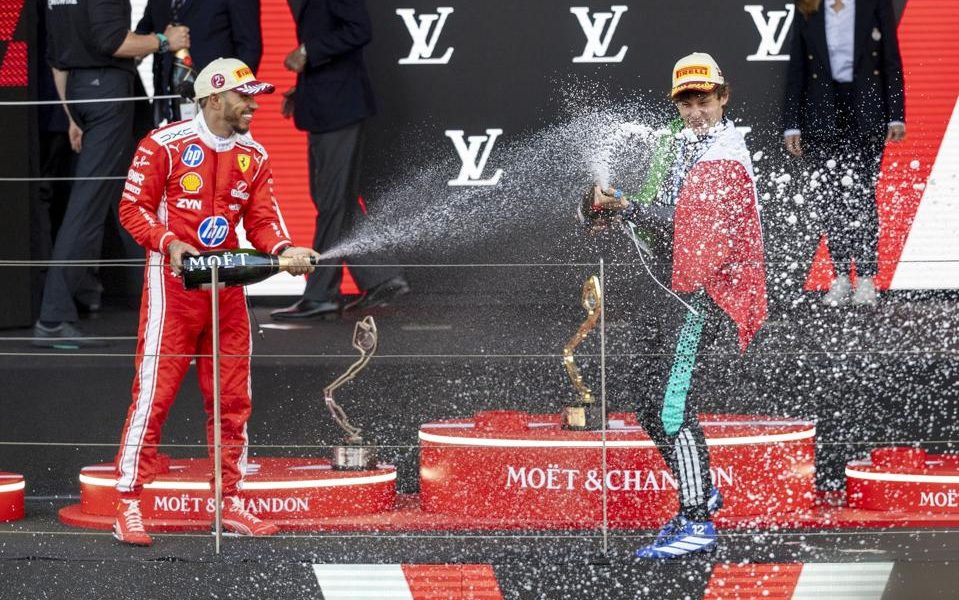
Lewis Hamilton, the seasoned seven-time world champion and now a Scuderia Ferrari stalwart, brought his crimson machine home in second. It’s his third podium in Ferrari red, which isn’t nothing, especially at Monaco. He now equals Ayrton Senna’s prodigious record of eight podium finishes in the Principality. But here’s the kicker: he found himself a solid step behind a driver young enough to be his son. Hamilton conceded, saying [QUOTE_PLACEHOLDER] A generous nod from a titan to a teenager. [QUOTE_PLACEHOLDER] It was a hard-won second for Hamilton, one he acknowledged came under “the trickiest conditions.” You’d think with his track record he’d seen it all, wouldn’t you?
The changing of the guard feels almost palpable. Isack Hadjar snagged a surprise first podium for Red Bull, inheriting third after some pit lane speeding shenanigans from Pierre Gasly—who later got docked again for something similar. Because, apparently, rules are suggestions for some folks. Elsewhere in the pack, Oscar Piastri mustered up some points for McLaren, but Lando Norris, the defending champion, endured his second consecutive DNF. The Racing Bulls team, usually a midfield presence, put in an eye-opening performance with Liam Lawson and Arvid Lindblad netting fifth and sixth. It’s a shifting landscape, where perennial powerhouses like Cadillac are struggling to even score a point, remaining at a flat zero. Meanwhile, Antonelli now commands the championship standings with 156 points, a staggering 66 points clear of Hamilton, according to official F1 race data. That’s a lead substantial enough to warrant a good, hard look at the whole damn table.
📄 POLICY WIRE WHITEPAPER PUBLISHED: PAKISTAN'S NATIONAL SECURITY POLICY PRIORITIES
👉 READ BY CLICKING HEREWhat This Means
The roar of F1 engines often drowns out the quiet hum of economic and geopolitical strategy, but ignore it at your peril. Antonelli’s emphatic victory at Monaco, coupled with Verstappen’s surprisingly frail performance, isn’t just about sporting prowess; it’s a re-calibration of branding potential and investment flows. Mercedes, a German industrial giant, finds its sporting fortunes rejuvenated by an Italian prodigy. This storyline plays beautifully into global marketing efforts, particularly as F1 continues its aggressive push into emerging markets.
Consider the broader Asian sphere, from burgeoning Gulf states funding lavish new circuits, to vast, enthusiastic fan bases in South Asia. Places like Pakistan, where traditional sports like cricket reign supreme, are nevertheless increasingly connected to global phenomena through digital consumption. An ascendant young talent with a dominant, technologically superior car offers a compelling narrative to millions of aspirational consumers, a story of meritocratic success transcending borders. Brands looking for soft power projection, whether through energy drinks or automotive partnerships, pay close attention to such shifts. A dominant team, especially one fronted by a relatable, young star, becomes a powerful ambassador, influencing perceptions far beyond the race track. It’s not just about merchandise sales; it’s about associating a nation’s technological prowess and global ambitions with a winning formula.
The consistent top finishes for drivers representing smaller, development teams also points to a gradual leveling of the playing field, spurred perhaps by budget caps and regulated technical parameters, however imperfectly implemented. This allows for greater narrative variety, which is Gold for global media outreach. This shift offers more nations, even those without the deep pockets of the traditional F1 behemoths, a sliver of hope to participate meaningfully. It’s a sport that, for all its glitz, still relies on the fundamental struggle of man and machine—something that resonates from Monte Carlo to Mumbai, from London to Lahore. You can read more about how major sporting events reflect wider global trends and economic shifts here, or delve into the high stakes of corporate maneuverings in major leagues, even in American basketball, over here.