


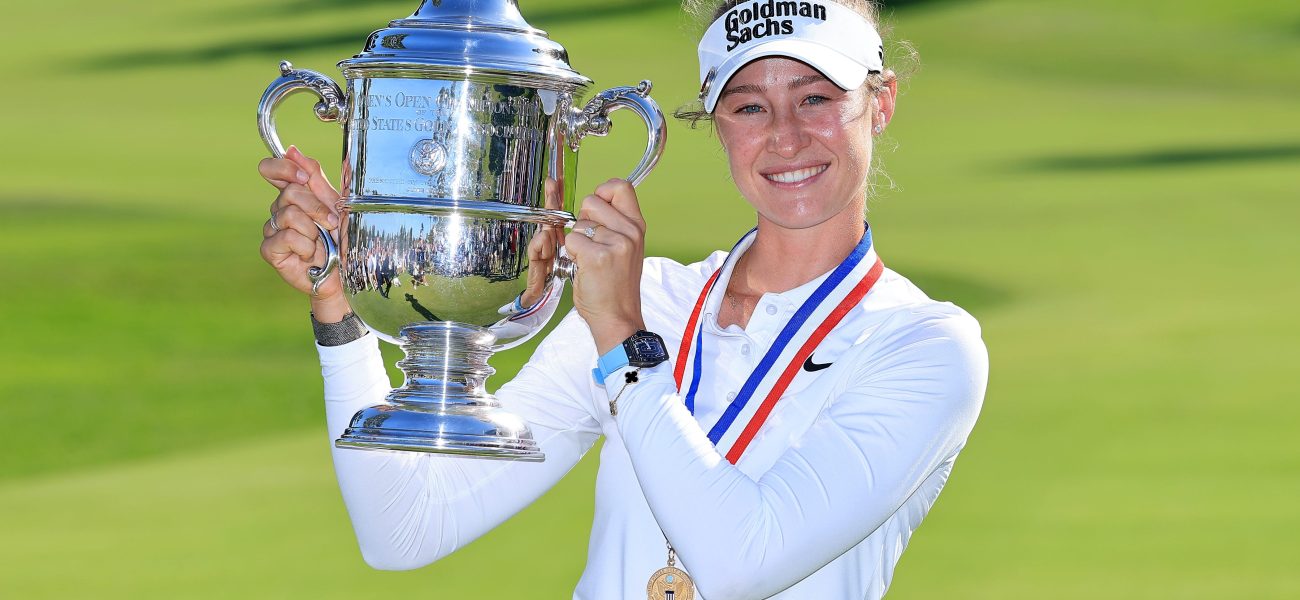
Riviera Redux: Korda’s Hard-Fought Open Reignites Golf’s Global Commercial Front
POLICY WIRE — Pacific Palisades, California — The green on 18 at Riviera Country Club—a place with enough history to weigh a small freighter, where legends from Babe Zaharias to Ben Hogan made their...

POLICY WIRE — Pacific Palisades, California — The green on 18 at Riviera Country Club—a place with enough history to weigh a small freighter, where legends from Babe Zaharias to Ben Hogan made their bones—doesn’t usually feature championship theater built from sheer force of will, nor the guttural roar of a crowd chanting one golfer’s name on primetime television. But this past weekend, it got all of it, delivered with the casual, slightly stunned air of Nelly Korda securing her first U.S. Women’s Open.
It wasn’t supposed to be easy, and, well, it certainly wasn’t. But in the often-predictable world of professional sport, Korda’s win offered a compelling narrative twist, less about the victory itself and more about the brutal grind to get there. Because what we saw wasn’t just a golfer winning; it was a carefully constructed athlete navigating the commercial pressures and personal torment that now define the upper echelons of global sport. You’ve got to wonder what Humphrey Bogart—a regular back in the day, a man who understood a good script—would’ve thought of such raw, unvarnished drama. [QUOTE_PLACEHOLDER]
Korda arrived at Riviera as the world’s number one. A fact that, rather than easing the path, seemed to paint a bigger target on her back. And it’s not like she started strong; after the first round, she was a jaw-dropping seven strokes back and shared 56th place. That kind of deficit usually spells doom, but Korda’s gritty comeback ended up tying for the largest by any U.S. Women’s Open champion after the opening round. But the real shocker wasn’t just that she won, it was how close it came to not happening, a tightrope walk performed for a global audience with ever-sharpening commercial antennae. And what’s interesting, historically speaking, is she became the first American woman to win this specific major while ranked No. 1 since the Rolex Rankings debuted in 2006. That’s a statistic that certainly carries some weight.
She’s just 27, yet Korda’s impact stretches well beyond the fairways. Her caddie, Jason McDede, described it like destiny playing out, while her dad, Petr, beaming, simply said, She’s probably the icon of golf right now. But being an icon comes with its own set of challenges, doesn’t it? The commercial appeal, the sponsor demands, the incessant travel. It’s a career that necessitates a steely resolve that makes global trade negotiations look like a friendly chat. Because today’s top athletes, especially those at the summit, are essentially global brands, driving markets and inspiring consumer behavior across continents, from California to Karachi.
Korda’s sister, Jessica, confessed to sleepless nights during the tournament, admitting, I barely could sleep. I just literally told you to change your grip during a major championship. Talk about high-stakes advice! That willingness to pivot, to adjust a foundational element mid-tournament, speaks to an adaptability many leaders—be they political or corporate—would envy. And then there’s the almost painfully honest mantra Korda keeps on a Post-It note, a simple directive for performance under duress: Whatever happens, happens, just give it 100 percent. It’s the kind of uncomplicated wisdom that probably resonates as much in a village elder’s counsel in Punjab as it does in a pro golf locker room.
📄 POLICY WIRE WHITEPAPER PUBLISHED: PAKISTAN'S NATIONAL SECURITY POLICY PRIORITIES
👉 READ BY CLICKING HEREThis kind of singular athletic performance has immense market implications. When Korda excels, it isn’t just a win for her. It’s a boost for the LPGA, its sponsors, — and the broader ecosystem of women’s professional sports. USGA CEO and former LPGA commissioner Mike Whan noted, She’s the needle mover that makes people outside of golf pay attention. This global attention translates into financial uplift, impacting everything from merchandise sales to broadcast rights. This isn’t just about an American athlete; it’s about a global figure with reach in burgeoning sports markets from Southeast Asia to the Middle East, where golf’s appeal, while traditionally slower to take root, is steadily expanding thanks to high-profile players. The money, it follows the stars. And it’s how narratives of individual triumph can ripple outwards, reshaping global market trends.
Even rival Charley Hull, who now boasts five major runner-up finishes, conceded, I pretty much only get up for the majors, highlighting the intensified focus and psychological battle at the sport’s most significant events. For Korda, the win puts her just two points shy of the LPGA Hall of Fame. The last American woman to play her way into that exclusive club was Juli Inkster in 1999. Korda’s current trajectory, her audacious ability to command attention, reminds us that sporting prowess isn’t just about athletic skill; it’s about persona, endurance, and, perhaps most profoundly, the ability to capitalize on immense personal sacrifice. It’s rattling the established order in golf, creating new dynasties. And her climb signals not just individual achievement but also a broader commercial opportunity for the sport as a whole across a wider, more diverse audience.
What This Means
Nelly Korda’s Riviera victory is more than a trophy; it’s a financial statement. For Policy Wire’s readership, this demonstrates the potent economic force of individual sports figures in a hyper-globalized, media-saturated world. Her charisma and consistent performance aren’t just selling power-packed swings; they’re selling the entire product of women’s professional golf. This kind of success attracts new sponsorship dollars, broadens broadcast appeal in untapped markets like parts of the Muslim world where sport engagement is surging, and inspires the next generation of athletes. For nations like Pakistan, for instance, where youth populations are substantial and digital connectivity widespread, seeing a global superstar like Korda thrive provides aspirational leverage that can funnel into domestic sports development, even if golf isn’t the primary national sport. It illustrates how even in individual pursuits, the ripple effect of excellence becomes a quantifiable, measurable asset in the complex web of global economics and cultural influence. It’s an affirmation that a single athlete can be a formidable economic engine, driving brand visibility and investment far beyond the sporting arena itself. Her achievement underscores the commercial necessity of narrative—that human-interest story of struggle and triumph—which underpins almost every successful market endeavor today.