


Shadow Play: Two Years On, Hostage Footage Underscores an Unending Geopolitical Chess Game
POLICY WIRE — Washington, D.C. — Two years is a long time in politics. It’s an eternity in the churn of twenty-four-hour news cycles. But when a government releases archival footage of a daring...

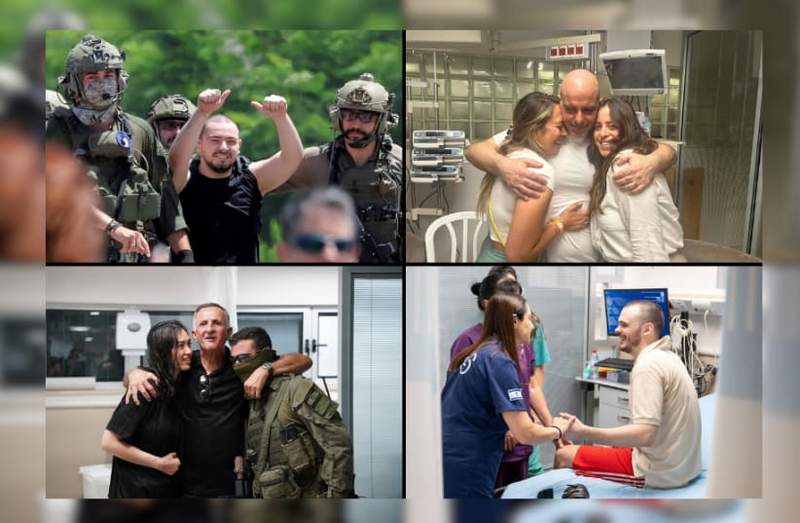
POLICY WIRE — Washington, D.C. — Two years is a long time in politics. It’s an eternity in the churn of twenty-four-hour news cycles. But when a government releases archival footage of a daring hostage rescue, two full years after the fact, you know it isn’t just about nostalgia. It’s about messaging, pure and simple. It’s a calculated reminder, lobbed into a volatile region, that some stories—and some capabilities—are meant to linger.
Because let’s face it, memories fade. Public attention drifts. Releasing previously unseen operational footage, supposedly chronicling Operation Arnon—the harrowing raid that plucked four hostages from Hamas’s clutches—now isn’t merely commemorating a victory. It’s a precise political maneuver, timed for maximum psychological impact on both domestic audiences and regional adversaries. This isn’t a warm fuzzy flashback; it’s a flexing of muscle, a subtle nod to intelligence assets, and an attempt to reset the narrative amid ongoing skirmishes and a diplomatic logjam that’s thick enough to swim in. [QUOTE_PLACEHOLDER]
It’s also an uncomfortable peek behind the curtain of national security, though perhaps sanitized for public consumption. We’re presented with glimpses of the highly coordinated effort that pulled those four individuals to freedom. And who could blame a nation for wanting to replay such moments, especially when the current landscape feels increasingly intractable? It’s a complex piece of public relations, reminding folks that against all odds, extraordinary feats are achievable.
But the lingering questions, naturally, are about the why of it all. Why now? Was it meant to stiffen spines ahead of new diplomatic overtures? To project unwavering resolve in the face of ongoing captive situations? Or perhaps to serve as a stark warning to other non-state actors operating within their spheres of influence? The specifics remain hazy, wrapped in the sort of official obfuscation journalists like us have come to expect. It’s the kind of high-stakes gamble where every move, every leak, every newly released pixel carries baggage. This isn’t just news; it’s a political act.
For nations watching from Cairo to Islamabad, such releases carry specific weight. Pakistan, a country long entangled in its own intricate dance with various militant groups and security operations, would view such footage not just as a triumphant story but as a blueprint, or a cautionary tale, depending on where one stands. Its own delicate foreign policy, often balancing internal stability with external pressures, finds echoes in the volatile Middle East. Just recently, a report by the Stockholm International Peace Research Institute (SIPRI) highlighted that global military spending reached an all-time high of $2.44 trillion in 2023, illustrating the pervasive belief that security is increasingly defined by overt displays of military capability—or carefully managed perceptions thereof.
The situation isn’t black and white. It never is in this part of the world. While some celebrate the sheer audacity and tactical brilliance displayed in freeing the hostages, others decry the very notion of such operations, viewing them as perpetuating a cycle of violence. It’s a debate that flares across Muslim-majority nations, caught between condemnation of militant groups and a deep-seated distrust of what’s perceived as disproportionate state power. The human cost, on all sides, is always the most overlooked detail.
📄 POLICY WIRE WHITEPAPER PUBLISHED: PAKISTAN'S NATIONAL SECURITY POLICY PRIORITIES
👉 READ BY CLICKING HEREOne might easily consider the broader context here. This footage drops into a world already reeling from protracted conflicts, where every side plays the information game as intensely as the battlefield game. There’s a cynicism baked into the diplomatic exchanges now, where sincerity often takes a backseat to strategic positioning. The mere act of showing what happened two years ago isn’t innocent. It’s propaganda, yes, but it’s also a powerful symbol, meant to project unshakeable determination. It tells us they’re not backing down. That’s a strong message in a region where perception often matters as much as reality, if not more.
But doesn’t it also raise uncomfortable questions? Questions about the conditions that necessitate such operations in the first place? And about the other hostages still awaiting rescue or negotiation, their fates hanging in the balance, perhaps never to warrant their own meticulously edited video release? It’s a grim calculus, — and one we shouldn’t forget amid the impressive visuals.
This is where the fine line between celebrating heroism and inadvertently legitimizing an ongoing conflict gets incredibly blurry. This new footage—really, it’s just old footage re-released—reminds us that some scars don’t heal, they just become part of the political landscape. And they’re certainly not going away anytime soon. Because sometimes, the most effective messages aren’t about what’s next, but about what’s already happened.
What This Means
The release of two-year-old operational footage is no accident; it’s a carefully timed geopolitical signal, reflecting a deeply ingrained strategic communication tactic. Economically, prolonged conflicts and high-stakes operations like Operation Arnon continue to drain state resources, diverting funds from social programs and infrastructure development. The cost of maintaining high levels of operational readiness — and intelligence gathering isn’t negligible. From a political standpoint, such releases serve multiple functions: they reinforce national morale and project an image of strength to both internal dissenters and external adversaries. But they also complicate diplomatic efforts. While aiming to showcase resolve, they can inadvertently escalate tensions, making it harder to secure genuine breakthroughs in peace negotiations or hostage exchanges. The timing suggests either a perceived weakness needing correction or an opportune moment to apply pressure on ongoing negotiations, indicating that the ‘hard power’ approach remains very much on the table, irrespective of the calls for de-escalation from global bodies. For broader regional stability, particularly in South Asia and the Muslim world, such acts are often viewed through the lens of power dynamics and historical grievances, sometimes fueling narratives that make regional consensus on counter-terrorism efforts even more elusive. Pakistan’s Quiet Diplomacy, for instance, often contrasts with such overt displays, navigating a different path through a similarly complex web of security challenges.