


Seoul’s Shaky Mandate: Election Fallout Exposes Deeper Cracks in Democracy
POLICY WIRE — Seoul, South Korea — It ain’t just about ballots, folks; sometimes it’s about the very paper thin trust holding the whole damn show together. Democracy, we often tell...

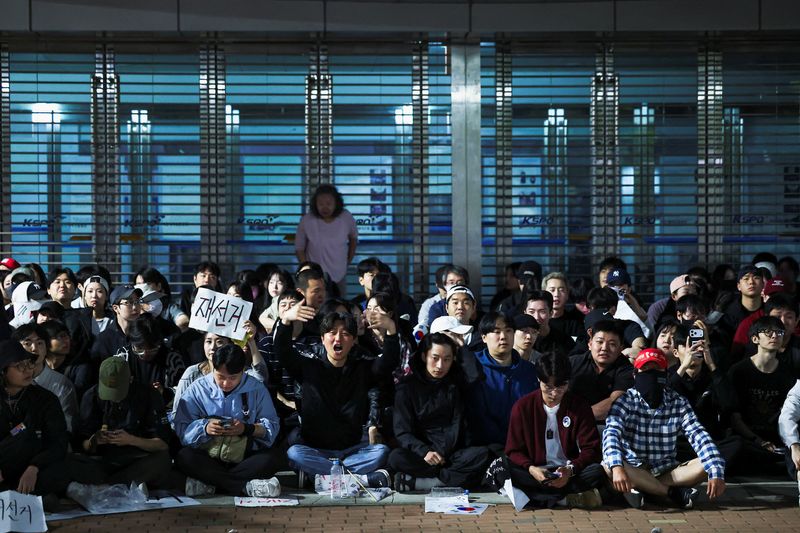
POLICY WIRE — Seoul, South Korea — It ain’t just about ballots, folks; sometimes it’s about the very paper thin trust holding the whole damn show together. Democracy, we often tell ourselves, is the grand edifice—a stable, predictable beast. But peel back the slick PR, the ceremonial handshakes, and you’ll often find it’s just a handful of glue and a fervent wish. Such is the unfolding saga in South Korea, where the electoral process, usually held up as an Asian success story, now faces the stark reality of sustained public fury. Protesters are clamoring for nothing less than a fresh start.
It sounds mundane, doesn’t it? A ballot shortage. Almost quaint, like something from a village election a hundred years ago, not a tech-forward global economy giant. But in Seoul, a reported deficit of voting slips during a recent national contest—we’re talking about the fundamental instrument of democratic expression, mind you—has become a gaping wound. It’s fueling a fire of discontent that refuses to burn out. They’re not just grumbling; these citizens, organized and angry, keep calling for re-run of election after ballot shortage. This isn’t just about winning or losing; it’s about the legitimacy of the whole damn thing. [QUOTE_PLACEHOLDER]
And legitimacy, well, that’s like oxygen for any government, especially a democratic one. When people lose faith in the basic mechanics—the voting machines, the count, the integrity of the ballot itself—then you’ve got yourself a problem that no slick public relations campaign can fix. You can’t just pat heads — and offer reassurances. Voters aren’t idiots; they know when the system feels rigged, or at the very least, woefully inept. This ain’t about the niceties of political debate; it’s about the bedrock of participation. If you show up, if you wait in line, you expect your vote to count. Period.
But the story stretches further than a single snafu, a simple administrative blunder. This isn’t an isolated incident. Across the globe, from fledgling democracies to long-established republics, the public’s confidence in their elections seems to be wobbling. The Pew Research Center reported in 2023 that a median of 58 percent of people in 24 surveyed countries expressed dissatisfaction with the way democracy is working. That’s a hefty chunk of humanity feeling uneasy, even in places we once thought were pretty solid in their democratic commitments. South Korea’s situation, as specific as it’s, speaks to a broader, more unnerving trend.
There’s a subtle, almost unstated frustration boiling over here. For a country that fought hard for its democratic freedoms after decades of authoritarian rule—let’s not forget that bloody history—any perceived slight against electoral fairness cuts deep. It isn’t just bureaucratic inefficiency; it smells like a rollback, a disrespect for the struggle that built this modern state. What kind of message does it send to younger generations, those who never lived through the military dictatorships, but see this kind of clumsy, maybe even nefarious, operation at the polls? It’s discouraging, it’s debilitating, — and it eats at the very core of civic responsibility.
Consider the echoes elsewhere. You don’t have to look far. From West Africa to Latin America, the specter of questionable election results, or even the perception of them, often sparks violence, instability, or at least a deep-seated cynicism that lingers for years. Take Pakistan, a nation where allegations of electoral rigging and administrative incompetence have been a recurring feature of its political landscape. Such incidents corrode institutional trust, making governance a far tougher proposition and feeding into a narrative that power is seized, not earned. You can draw a direct line between seemingly minor issues like ballot availability and the enduring fragility of democratic institutions in states that desperately need stability.
📄 POLICY WIRE WHITEPAPER PUBLISHED: PAKISTAN'S NATIONAL SECURITY POLICY PRIORITIES
👉 READ BY CLICKING HEREFor South Korea, a regional economic powerhouse — and a democratic success story, this is a dangerous stumble. The political elite—no matter which side they’re on—needs to grasp that ignoring these persistent cries isn’t just kicking the can down the road. It’s inviting deeper skepticism, fostering an environment where radicalized views find fertile ground, and potentially undermining its hard-won global standing. And nobody wants to see a nation that pulled itself up by its bootstraps trip over something as basic as a properly managed election.
What This Means
This isn’t merely a localized political spat in Seoul; it’s a canary in the coal mine for global democratic health. Politically, a failure to address the protesters’ demands decisively and transparently risks deepening partisan divides and creating a long-term legitimacy crisis for whichever party eventually holds power. We’ve seen this movie before, haven’t we? A segment of the population forever viewing the sitting government as illegitimate. That poisons policy debates, hampers effective governance, — and makes real reform darn near impossible. Economically, this sort of sustained civic unrest, particularly in a nation so reliant on investor confidence and global stability, creates unwelcome uncertainty. Investors hate instability, — and the prolonged bickering over electoral integrity screams just that. It’s not a good look, especially when regional rivals like China are always keen to highlight the supposed flaws in liberal democracies. The implications stretch beyond national borders; South Korea is a linchpin in East Asian security, and any perceived internal weakness can embolden adversaries and complicate alliances, particularly with Washington. Ignoring this bubbling discontent would be a dereliction of duty—it’s more than just a matter of recounting; it’s a matter of recalibrating trust.
The stakes are high. It’s not just a ballot count. It’s everything.