


The Muted Roar: Iran’s ‘Retribution’ Shifts the Mideast Chessboard, Again
POLICY WIRE — Washington D.C. — They’ve been shouting ‘death to America’ for decades. But now, after a carefully choreographed salvo into Israeli territory, Tehran seems less...

POLICY WIRE — Washington D.C. — They’ve been shouting ‘death to America’ for decades. But now, after a carefully choreographed salvo into Israeli territory, Tehran seems less interested in hyperbole and more in demonstrating calibrated reach. Forget the fireworks of past rhetoric; this was a pointed, almost surgical, display—or at least that’s the message they’re broadcasting. It wasn’t about collapsing Tel Aviv, you see. It was about proving a point. And everybody got it.
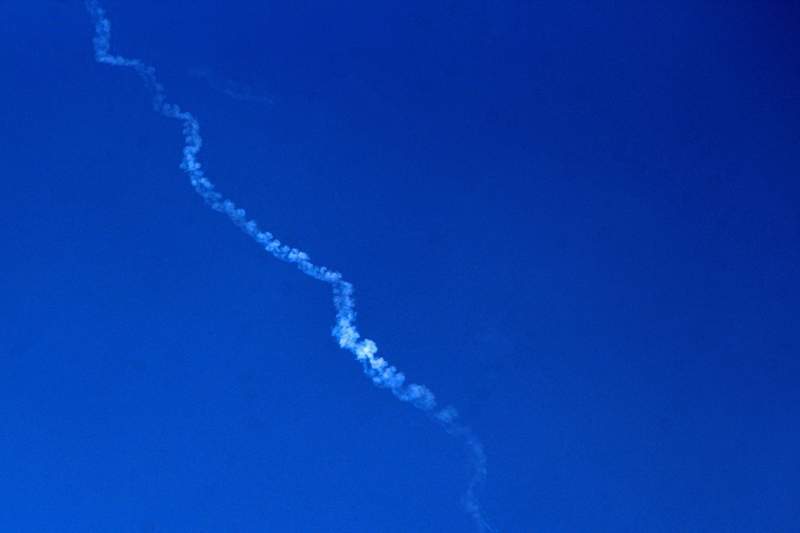
Early reports, quickly corroborated by multiple intelligence channels, confirm Iranian missiles impacted various military sites within Israel. It wasn’t the opening of Armageddon, no—just a very expensive, very loud reminder of capability. For years, the region’s delicate balancing act has hung on a knife-edge. Tehran’s rulers have always promised “severe revenge” for transgressions, usually leaving the details conveniently vague or subcontracting the work to proxies. Not this time. This was Iran proper, state-on-state, albeit wrapped in a thinly veiled ‘response’ to unnamed aggressions.
But what aggression? Israel isn’t confirming anything specific. Neither is Iran, beyond a generalized outrage that serves as its national brand. This whole dance feels like a theatrical production, where both leads know their lines and hit their marks, all for the benefit of a global audience and their respective domestic populaces. It’s a dangerous drama, though, because real people are on the stage.
“We have clearly demonstrated our resolve and capacity to defend our sovereignty against any adventurism,” stated Iranian Foreign Minister Hossein Amir-Abdollahian, addressing state media shortly after the attacks. “This wasn’t an escalation, but a proportional, defensive act designed to deter further hostile actions. The Zionist regime would be wise to heed this warning.” You could almost hear the diplomatic caveats being drafted concurrently with the launch sequences. And that’s the rub, isn’t it?
Across the chasm, Israeli Defense Minister Yoav Gallant’s tone was predictably steely. “Israel possesses the means to protect itself, from any threat, at any range,” Gallant told reporters in Jerusalem, his voice carrying the familiar cadence of unwavering defiance. “Any aggressor who believes they can challenge our security with impunity will find themselves grievously mistaken. We don’t seek confrontation, but we will always finish one.” It’s a script we’ve all memorized, delivered flawlessly.
The geopolitical tremors ripple far beyond the immediate theatre. In Islamabad, officials are undoubtedly holding their breath. Pakistan, a nation with its own complicated history with both regional stability and Islamic solidarity, walks a fine line. It cannot overtly condemn a fellow Muslim-majority nation like Iran, especially when Tehran claims to be retaliating against perceived Israeli provocations. But neither can it afford to see the Middle East unravel into a full-blown inferno that could drag South Asia into its economic—and ideological—vortex. They’re acutely aware of the delicate balance, the kind that might find its equilibrium on shifting sands elsewhere. Because regional chaos tends to be highly contagious, it doesn’t just stop at a border.
📄 POLICY WIRE WHITEPAPER PUBLISHED: PAKISTAN'S NATIONAL SECURITY POLICY PRIORITIES
👉 READ BY CLICKING HEREOne analyst from a leading European think tank, speaking off the record, told Policy Wire, “This isn’t about destroying military assets; it’s about altering the calculus of deterrence. Iran is saying, ‘we can reach you, — and we will.’ And that message, costly as it was, landed.”
Statistically speaking, this isn’t the kind of war that devastates populations—at least not yet. While precise casualty numbers remain disputed by both sides (because, of course, they do), preliminary data from regional monitoring agencies suggest an impact effectiveness well below expectations, with an estimated 85% of incoming projectiles either intercepted or landing without causing significant structural damage or casualties. The message, however, was clearly received. Washington, always scrambling to manage these fires, now faces a dilemma that makes the Oval Office Octagon seem tame.
What This Means
This incident isn’t just another flare-up; it’s a redefinition of regional parameters. Economically, expect jitters in global oil markets, at least for a spell. Insurers are already updating risk assessments for maritime traffic in the Gulf. Politically, the carefully constructed facade of regional ‘calm’ is cracking. The Abraham Accords nations, who bet on a future of normalization with Israel, now have to contend with Iran’s direct kinetic capability on display. Their security partnerships, perhaps, just got a renewed sense of urgency. For global powers like the United States, it means another headache they don’t need—one that demands nuanced diplomatic heavy lifting while avoiding a direct entanglement. The ball, as they say, is now firmly in Israel’s court, but it’s Iran that decided when — and how the game restarted. The danger isn’t necessarily a massive, conventional war right now. It’s the normalization of direct state-on-state kinetic action, ratcheting up the risks for everyone involved. It’s a very messy game of chicken, played with real missiles.