

Nigeria’s Reluctant Rescues: Another 360 Freed, But The Echoes Remain
POLICY WIRE — Maiduguri, Nigeria — Freedom arrived for 360 souls this past week, not with joyous fanfare, but with the grim regularity of a recurring nightmare. The Nigerian Army trumpeted the...

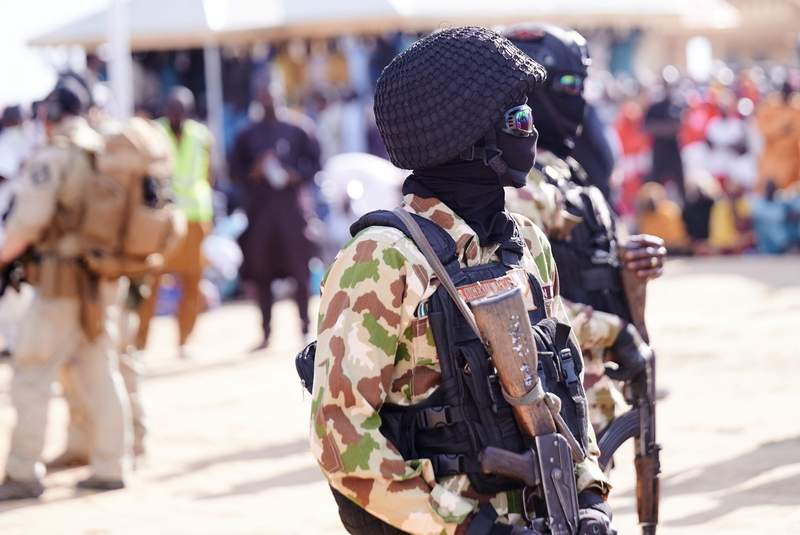
POLICY WIRE — Maiduguri, Nigeria — Freedom arrived for 360 souls this past week, not with joyous fanfare, but with the grim regularity of a recurring nightmare. The Nigerian Army trumpeted the liberation of these individuals from Boko Haram’s clutches in Borno State—a significant number, sure—but it felt less like a triumph and more like a weary nod to the ongoing, agonizing saga that has defined northeastern Nigeria for over a decade. Every rescued person is a miracle for their family, no doubt, yet each announcement also broadcasts the government’s struggle to staunch the bleeding.
It’s a peculiar kind of victory, isn’t it? One where the metrics of success are measured in the body count of those *not* kidnapped, or the number of escapees, rather than any definitive end to the terror itself. This latest operation, the army asserts, followed an intensive campaign in the Sambisa Forest, the notorious hideout of the Islamist insurgents. They were found, reports suggest, in various stages of physical and psychological distress, another brutal reminder of the trauma inflicted daily in this long-forgotten conflict. It’s a cruel game of whack-a-mole, — and Boko Haram, it seems, has an endless supply of moles.
Because, for every group freed, countless others remain in captivity, their fate a terrifying uncertainty. Brigadier General Tukur Musa, a Nigerian Army spokesman, stated that the operation showcased “the unwavering commitment of our forces to crush these insurgents, securing peace for our people.” You hear that, and you want to believe it. But years of rhetoric, — and indeed, years of bloodshed, paint a different, far less reassuring picture.
The operational landscape against groups like Boko Haram isn’t just about kinetic engagements; it’s also a fight for legitimacy and narrative control. They recruit by preying on despair, poverty, — and local grievances. And they’ve become adept at exploiting ungoverned spaces—cross-border territories—a tactic we’ve seen from the Maghreb all the way to Afghanistan and Pakistan, where ideologically similar groups thrive on a cocktail of state weakness and international neglect. The ideological undercurrents—extremist interpretations of Islam, a rejection of Western education—resonate in troubled corners of the Muslim world, making the fight far more than a local insurgency. It’s a shared global problem, manifesting locally with brutal efficiency.
But the numbers tell a starker tale than any official pronouncement can sanitize. According to UNHCR figures, over 2.2 million people remain internally displaced in Nigeria’s northeast due to the ongoing conflict. Think about that for a second. Millions of lives uprooted, families shattered, futures erased. This isn’t just about an armed group; it’s about a humanitarian catastrophe unfolding in slow motion, largely ignored by a world preoccupied with its own, sometimes theatrical, crises. Just like the desperate migrations across the Mediterranean, it’s a relentless grind of human suffering.
📄 POLICY WIRE WHITEPAPER PUBLISHED: PAKISTAN'S NATIONAL SECURITY POLICY PRIORITIES
👉 READ BY CLICKING HEREDr. Ngozi Okoro, head of the Abuja-based Centre for Democratic Governance, wasn’t so sanguine. “Every release is a win for the families, of course,” she conceded, “but it’s also a stark reminder of how far we still are from ending this cycle of violence. These aren’t just numbers; they’re symptoms of a deeper sickness—of poverty, of corrupt governance, of international apathy.” She didn’t hold back, did she?
What This Means
This latest hostage release, while undoubtedly a relief for those directly impacted, doesn’t mark a strategic turning point. It’s more of a maintenance operation in a protracted, unwinnable war. Politically, President Bola Tinubu’s administration inherits a legacy of insecurity, and while these operations offer optics of action, they distract from the systemic issues that empower groups like Boko Haram—corruption within the military itself, failing development initiatives, and a profound lack of trust between the state and its citizens in the affected regions. Economically, the region remains paralyzed. Agriculture, trade, education—they’re all choked by fear. The Nigerian economy, Africa’s largest, can’t truly flourish when a significant chunk of its northeast is a war zone. The international community, perpetually struggling with what to do—whether it’s migration or political instability in the Sahel—has found no silver bullet, choosing instead to offer bandages where surgery is required. Don’t expect any grand pronouncements to alter this grim calculus soon; this struggle, it appears, is one Nigeria will largely fight on its own, one harrowing rescue at a time.