


The Brutal Calculus: OKC Thunder’s Offseason Marks a Crossroad, Not a Celebration
POLICY WIRE — Oklahoma City, USA — Forget the confetti. Ignore the highlight reels. The applause has barely died down, but in the brutal, hyper-capitalist theater that’s professional sports,...

POLICY WIRE — Oklahoma City, USA — Forget the confetti. Ignore the highlight reels. The applause has barely died down, but in the brutal, hyper-capitalist theater that’s professional sports, another season means another unforgiving reckoning. Because here’s the unvarnished truth: every dynasty has an expiry date, every hero, a shelf-life. And for the Oklahoma City Thunder, fresh off a playoff run that, depending on your preferred narrative, was either a triumphant arrival or a gut-wrenching near-miss, that hard reset button is already primed.
This isn’t about just another offseason. It’s about the harsh economic realities of asset management, the relentless pursuit of marginal gains, and the uncomfortable choices facing an organization that believes it’s mere paces from hoisting a gilded trophy. They stumbled five wins shy of a championship series this year. Five wins. That tiny chasm represents a world of difference—between validation and what many view as ‘potential unfulfilled.’ Now, a core group of role players, the often-unsung heroes of regular-season grind, stand on shaky ground. Their contracts, their contributions, even their personal loyalties? All on the chopping block.
It’s an inescapable cycle, isn’t it? Building a winner means constant renovation. Team General Manager Sam Presti, a man known for his unflappable poker face and even-keeled pragmatism, perhaps put it best in a hypothetical pre-offseason debrief. “Every season’s a ledger,” Presti might’ve mused, gazing out over the team’s practice court, the ghosts of past trades no doubt lingering in the humid Oklahoma air. “You balance your assets against your ambitions. Sometimes, sentiment’s just a luxury we can’t afford, no matter how much you value a player’s heart. The market dictates, — and the cap restricts. That’s the game.”
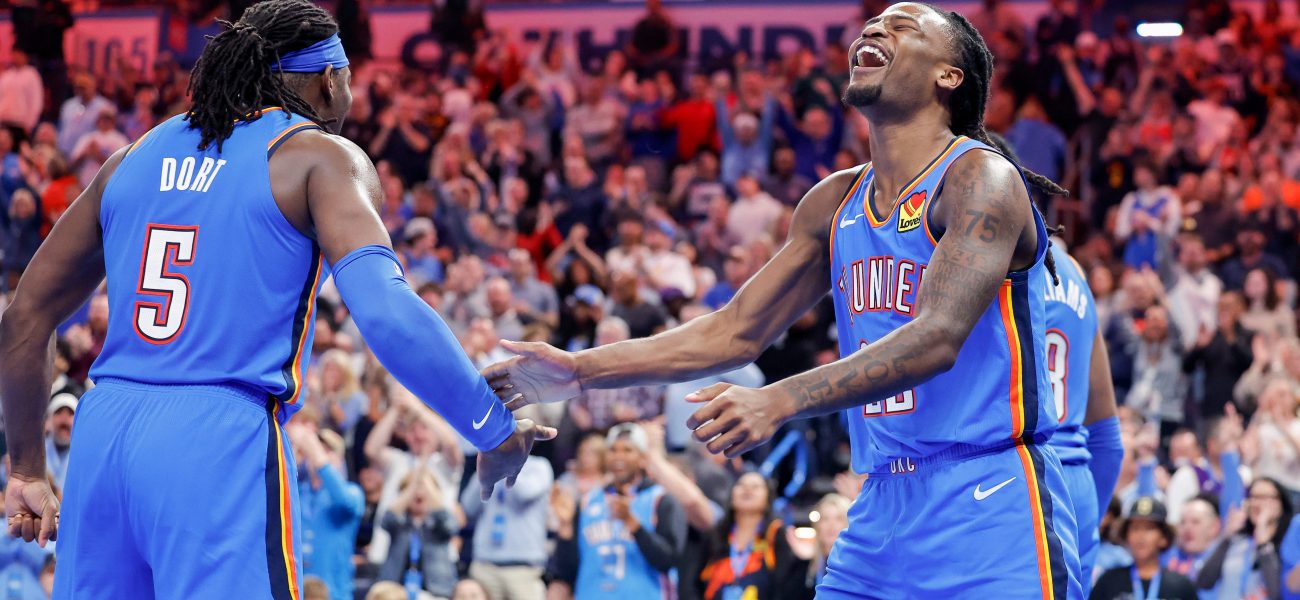
The core trio—Shai Gilgeous-Alexander, Chet Holmgren, and Jalen Williams—they’re locked in, foundational pieces, undisputed All-NBA caliber talent. Nobody’s questioning that. But beyond that glittering triumvirate, the supporting cast, those who hustle and scrap and generally do the dirty work, well, their future isn’t nearly as clear. Think of Lu Dort, for instance. A true grit-and-grind guy, the kind of unheralded prospect you root for. An undrafted rookie, blossomed into an All-Defense presence, a championship starter. Emotionally, it’s tough. Professionally, it’s simple.
Dort, who’s been with OKC for seven seasons, regressed across the board this past year. His minutes dwindled. His perimeter defense, usually suffocating, wasn’t quite there. And his outside shot? Well, it bottomed out at 34.4% from beyond the arc on 5.4 attempts, according to Basketball-Reference.com. That’s a steep decline. Couple that with a younger, cheaper, and arguably more versatile replacement hammering at the locker room door, and you’ve got yourself a classic case of painful but necessary transition. This feels like a sign-and-trade special in the making, an uncomfortable dance designed to maximize value even from departing assets. Because this business is nothing if not an ongoing negotiation, a zero-sum game for every inch of cap space and roster spot.
But it’s not all farewells. Isaiah Hartenstein, for one, has made himself virtually indispensable. The consensus view before the season had his future as a coin flip. Not anymore. He’s become a bona fide double-double machine, a high-IQ big man whose DHO actions (dribble hand-offs, for the uninitiated) grease the wheels of their secondary offense. He’s the designated ‘Wemby stopper,’ a big body who doesn’t just rebound but facilitates, screens, and finishes with alarming efficiency. Reading the tea leaves, the Thunder will find a way to keep Hartenstein. You just don’t let talent like that walk in a Western Conference increasingly dominated by giants. He’s proven his worth. It’s a classic decline-and-re-sign situation brewing.
Then there’s Cason Wallace, a youngster whose exit interview whispers painted a pretty clear picture: he wants to start. And honestly, who could blame him? He’s developed into one of the league’s premier perimeter defenders, with hands that snatch balls from thin air. He finished just shy of leading the league in steals, if you’re keeping score. His 3-point percentage saw a bump to a remarkable 48.4% in the playoffs (don’t mind the regular season dip), proving he isn’t fazed by the bright lights. And because the playoffs show you things you just don’t see in February, it became clear: Wallace is ready for more. The team can’t afford to dither here. You invest in that ceiling, you commit to that talent.
📄 POLICY WIRE WHITEPAPER PUBLISHED: PAKISTAN'S NATIONAL SECURITY POLICY PRIORITIES
👉 READ BY CLICKING HERELastly, Kenrich Williams. The ‘old man’ of the group at 31, — and six seasons deep with the Thunder. A glue guy. A locker room leader whose voice carries weight, especially coming from someone who lived through the rebuild years and saw the team evolve into a contender. He arrived as a throw-in, remember? A discarded piece in a bigger trade. He wants to retire a Thunder. You wouldn’t think twice about declining his option, then re-signing him to a veteran’s minimum deal. It’s the economical, good-will choice for a guy whose true value transcends the box score.
What This Means
These individual choices—the painful cuts, the strategic retentions, the calculated investments—aren’t just about basketball. They reflect a broader, more merciless paradigm often at play in corporate boardrooms and even geopolitical chess matches across the globe. We’re talking labor economics, stripped bare. Teams, like nations or multinational corporations, are in a constant strategic dance, shedding popular but inefficient assets to optimize for future success. The contract negotiations aren’t so different from diplomatic talks—high stakes, complex incentives, and often, a cold calculation of leverage.
The global hunt for athletic talent, so visibly embodied by the NBA’s worldwide scouting infrastructure, mirrors the desperate scramble for high-skilled labor or technological advantages in emerging markets. Consider nations like Pakistan, for example, grappling with its own development strategies. It faces similar dilemmas: how to nurture homegrown talent, how to attract international expertise, and when to pivot from traditional, familiar structures to more agile, competitive models for economic growth. You can see this fierce, meritocratic dynamic playing out in everything from investment in cricket academies that breed the next generation of superstars to attracting tech talent from abroad to cities like Lahore and Karachi.
In this ecosystem, where every dollar spent is a choice not made elsewhere, ‘loyalty’ is frequently sacrificed at the altar of ‘optimization.’ This cold, transactional reality underpins not just championship aspirations in Oklahoma City, but economic reforms in Islamabad. It’s about recognizing when a beloved asset, whether a player or an industrial policy, has passed its prime and making the dispassionate decision to move forward, even when it stings. And that, dear reader, is how empires, sporting or otherwise, are both built — and sustained. By embracing the brutal calculus, season after season.