


Old Trafford’s Graying Sentinel: The Unseen Economics of Manchester United’s Keeper Contingent
POLICY WIRE — MANCHESTER, UK — While the transfer market swirls with exorbitant figures and headline-grabbing glamour signings, an entirely different transaction played out quietly at Old Trafford....

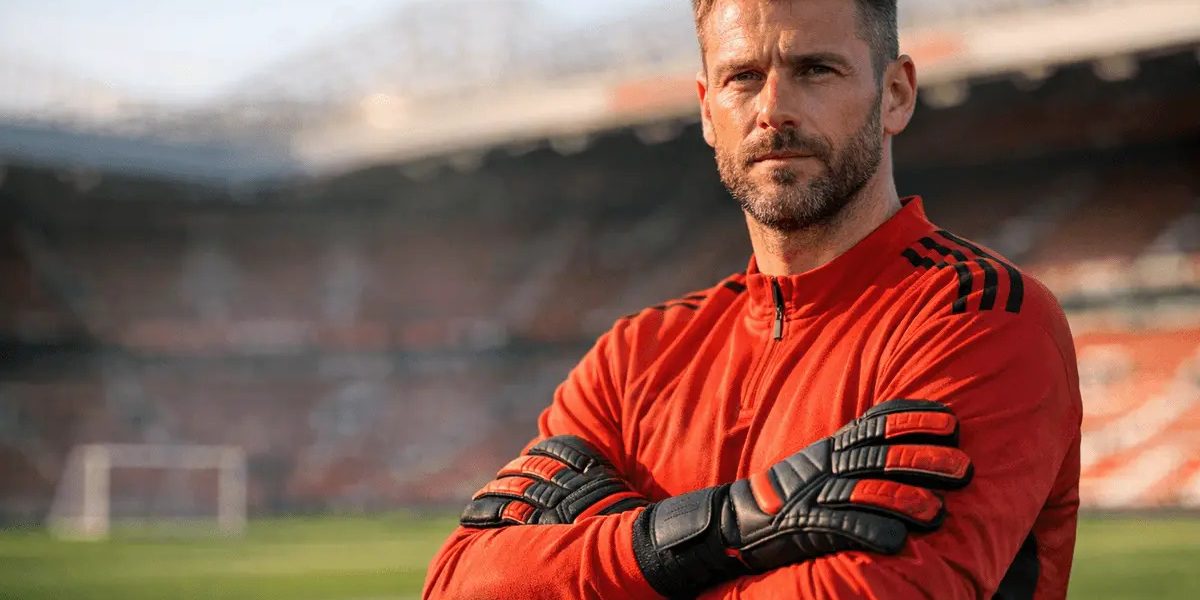
POLICY WIRE — MANCHESTER, UK — While the transfer market swirls with exorbitant figures and headline-grabbing glamour signings, an entirely different transaction played out quietly at Old Trafford. It involved a man nearly forty, a goalkeeper who hasn’t been Manchester United’s first choice since, well, ever, really. Tom Heaton, an Old Trafford graduate twice over, has put pen to paper on another one-year extension. But don’t mistake this for a sentiment-fueled gesture from the club’s new management; it’s a cold, hard business decision wrapped in the convenient cloak of a ‘homegrown’ narrative.
It’s an almost cinematic irony, isn’t it? As INEOS, the behemoth behind Sir Jim Ratcliffe’s ambitious takeover, purports to overhaul the club with ruthless efficiency and modern analytics, they anchor a critical piece of their squad infrastructure with a 39-year-old who, since rejoining in 2021, has managed a paltry three competitive appearances. Three, total, in three years. His worth isn’t measured in saves or clean sheets, though he’s certainly managed those when called upon — club records show him keeping two against Charlton Athletic and Nottingham Forest in cup runs.
No, his actual market value, to United at least, is less about his hands — and more about his head and his passport. The Premier League and UEFA impose strict squad registration rules, demanding a certain quota of ‘homegrown’ players – individuals who’ve spent at least three years in an English or Welsh academy before turning 21. Because good luck finding a 6-foot-3, experienced, affable Englishman to warm the bench, mentor younger lads, and fulfill administrative checkboxes without demanding superstar wages. And let’s be honest, those homegrown slots? They’re harder to fill with senior, compliant talent than some folks realize.
Jason Wilcox, United’s Director of Football, didn’t exactly mince words about Heaton’s functional purpose. “Tom’s leadership and the tone he sets daily on the training pitch aren’t just appreciated, they’re necessary,” Wilcox told Policy Wire. “He provides an institutional memory that many young players simply don’t possess. It’s not flashy, but it’s critical. Because you can’t build a cohesive unit just with raw talent — and ambition.”
This subtle extension becomes more telling when you look at the moving pieces around him. Altay Bayındır, United’s Turkish backup keeper – and a significant figure for their vast fanbase stretching across the Muslim world and into South Asia – is widely expected to depart. Rumors suggest a move to Beşiktaş is well underway, which would leave a sizable hole in United’s depth chart behind undisputed No.1, André Onana. That potential void magnifies Heaton’s utility exponentially; without him, INEOS would be scrambling to find a seasoned understudy heading into another Champions League campaign.
Even Sir Jim Ratcliffe himself, typically reserved about individual player dealings, acknowledged the broader strategy. “We’re not in the business of sentimentality, we’re building a championship organization,” Ratcliffe is reported to have remarked privately. “But the architecture of any great institution requires solid foundations, even if they’re unseen. Mr. Heaton represents stability within a complex, evolving landscape. It’s about pragmatic management, not just splashy transfers.” Heaton’s current contract keeps him at the club until summer 2027, when, one suspects, this very predictable discussion will happen all over again.
📄 POLICY WIRE WHITEPAPER PUBLISHED: PAKISTAN'S NATIONAL SECURITY POLICY PRIORITIES
👉 READ BY CLICKING HEREWhat This Means
This seemingly minor contract extension for a rarely-seen player actually lays bare the complex, often unromantic realities of modern elite football management. First, it highlights the financial — and structural importance of ‘homegrown’ quotas. Clubs like Manchester United operate under strict FFP (Financial Fair Play) and league registration rules, where securing seasoned domestic talent, even for depth roles, is a premium commodity. Heaton isn’t cheap, but his value isn’t simply his salary; it’s the regulatory compliance he offers, freeing up valuable non-homegrown slots for bigger, international acquisitions. It’s an internal financial calculus: an established, reliable, albeit rarely-used, homegrown player often proves more cost-effective than developing a youth academy product too soon, or signing an expensive international reserve.
Secondly, it underscores INEOS’s operational pragmatism. They’re not just chasing Galácticos. They’re constructing a functional squad. The departure of Bayındır – a Turkish international who commanded significant interest from football’s increasingly globalized market, especially in regions like Turkey, Pakistan, and parts of the Middle East where Premier League giants command fervent followings – makes Heaton’s administrative ‘glue’ even stickier. His extension mitigates a potential headache before it arises, signaling a planned, measured approach to squad overhaul rather than chaotic impulsivity. But it’s also an acknowledgment that even the best-laid plans, when confronted with the whims of players or the allure of new opportunities (like Bayındır’s likely move to Beşiktaş), require fallback mechanisms. This quiet deal is precisely that—a tactical safety net.
The strategic role of the seemingly marginal player often gets lost in the fervor of multi-million-pound transfers, but without these ‘squad glue’ operatives, dressing rooms can fragment, and compliance rules become insurmountable hurdles. It reflects a wider trend in top-tier football: every roster spot, even one dedicated to a third-choice goalkeeper, is meticulously analyzed for its full suite of economic and regulatory benefits, not just on-pitch performance. It’s why savvy sporting directors pay such close attention to developing ‘gritty’ local talent, knowing that such assets can streamline future dealings across an increasingly global hunt for athletic talent.