


Cricket’s Quiet Coup: Shubman Gill Reaches for Bradman, Reshaping India’s Game
POLICY WIRE — New Delhi, India — Forget the grand narratives of national pride or the billion hopes clinging to every boundary. When a young man—barely old enough to rent a car in some places—straps...

POLICY WIRE — New Delhi, India — Forget the grand narratives of national pride or the billion hopes clinging to every boundary. When a young man—barely old enough to rent a car in some places—straps on the pads and the armband, he’s carrying more than a bat. He’s shouldering a mythology, an economy, and, increasingly, an entire strategic vision. That’s Shubman Gill’s gig now, whether he asked for it or not, — and he’s playing it with an almost unsettling calm.
See, it’s not just the runs—though there are plenty of those. It’s the sheer, unadulterated efficiency of his leadership at the crease. Cricket captaincy, especially for India, often seems a crucible designed to burn talent, to weigh down even the most broad-shouldered. But Gill, in what feels like the blink of an eye, has transformed it into a platform for his own individual brilliance, while simultaneously steering a notoriously tempestuous national team.
It’s only been 351 days since he donned the Test captain’s mantle, yet the statistics already paint a picture that defies easy explanation. He’s stacked up 1,076 runs across just 15 innings as captain. And that isn’t just a decent clip; it’s a staggering average of 82.76. We’re talking about numbers so rare they typically exist only in dusty record books next to names like Sir Don Bradman, who sits above Gill with an average of 101.5 in a similar capacity, according to official ICC records. Think about it: a generational talent, the ‘Don,’ — and then a kid from Punjab, barely a year into the top job. It’s almost rude how good he’s been.
And because Gill’s performances speak volumes, the powers-that-be are certainly paying attention. “Shubman has shown an astute understanding of the game’s pressures, particularly in the longer format,” remarked Jay Shah, Secretary of the Board of Control for Cricket in India (BCCI), in an exclusive comment to Policy Wire. “He represents the future, not just of Indian cricket, but a pragmatic approach to leadership that balances individual excellence with team goals. We’re seeing a new paradigm emerge, quite frankly.”
His ascendancy hasn’t been without moments of profound challenge. Take the demanding five-Test series in England—his maiden assignment as skipper, no less. India battled back for a hard-fought 2-2 draw, largely thanks to Gill’s mammoth 754 runs. It wasn’t pretty every day; no England tour ever is. But he absorbed the punches, kept the scoreboard ticking, — and delivered. That kind of resilience, witnessed from Lahore to London, plays different notes depending on which side of the Wagah border you’re on, but the universal language of domination remains the same.
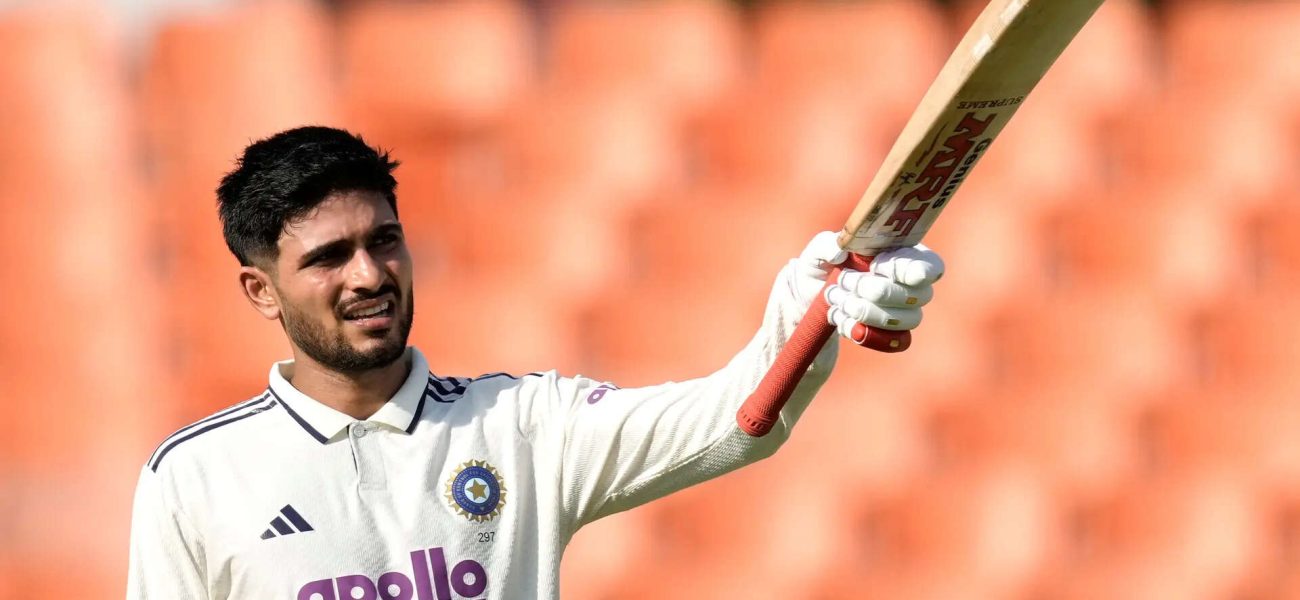
His latest ton, a composed 126 against Afghanistan in New Chandigarh, just reaffirmed this curious reality. An exhibition of textbook strokes and unflappable temperament, it underscored that the captaincy isn’t a burden for him; it’s an accelerator. We’re seeing this kid, who by all accounts seemed destined for a solid but perhaps not historic career, suddenly writing his own history in big, bold strokes.
📄 POLICY WIRE WHITEPAPER PUBLISHED: PAKISTAN'S NATIONAL SECURITY POLICY PRIORITIES
👉 READ BY CLICKING HEREBut what does this all mean for Indian cricket’s broader strategic plays? For a region that treats cricket not as a sport but as a religion—a point of national identity, even—Gill’s quiet, almost clinical success has echoes far beyond the boundary ropes. Pakistani fans, keenly watching their neighbors’ sporting fortunes (as always), can only ponder what such consistency in leadership could do for their own talented, albeit often tumultuous, national side. It’s not just about winning; it’s about stability, about projecting an image of serene control that a younger generation—across South Asia—might actually find aspirational.
Because leadership, particularly in this part of the world, is almost always judged by results, sometimes regardless of the process. And Gill’s results? They’re simply unassailable right now. “I’ve seen a lot of captains come and go, with all their tactical genius and dressing-room speeches,” former India wicketkeeper and commentator Deep Dasgupta observed recently. “But ultimately, the best captains lead from the front. They don’t just ask; they show. Shubman is showing everyone what’s possible when you couple immense talent with genuine calm. It’s a rare combination, frankly, and a powerful one.” It seems Gill doesn’t just play cricket; he orchestrates it, dictating terms with his bat first, then with his presence.
What This Means
Shubman Gill’s ascent isn’t merely a feel-good sporting story; it holds significant implications for Indian cricket’s administrative strategy and its global soft power projection. His consistent high performance, particularly under the captaincy, legitimizes the BCCI’s apparent gamble on youthful leadership over established veterans. It suggests a potential shift towards empowering a new generation faster, possibly creating a deeper pool of seasoned leaders sooner rather than later. Economically, a consistently successful national team, especially one led by a marketable young face like Gill, drives colossal commercial interest—sponsorships, broadcasting rights, merchandise sales—all of which further cements India’s position as cricket’s financial powerhouse. This ripple effect can be felt even in regional cricket economies, where the dominant narrative set by India often dictates investment and interest levels. a thriving, disciplined, and globally respected Indian team, spearheaded by a dynamic young leader, serves as an undeniable element of national pride and a powerful, non-political instrument of influence across South Asia and beyond. This isn’t just about runs; it’s about reputation, regional dominance, and the subtle art of crafting a national narrative through sport.