


The Silent Unsold: China’s Humanoid Revolution Confronts a Reluctant Global Market
POLICY WIRE — Beijing, China — The quiet hum of automation, typically confined to assembly lines and mega-warehouses, might just be evolving into something far more disconcerting. We’re not talking...

POLICY WIRE — Beijing, China — The quiet hum of automation, typically confined to assembly lines and mega-warehouses, might just be evolving into something far more disconcerting. We’re not talking about just another gadget rolling off the Shenzhen conveyor belts. No, what’s brewing is a full-blown existential query, wrapped in metallic skin — and powered by algorithms.
It’s China, naturally. They’ve nailed the scale thing. Nobody, — and I mean nobody, can churn out manufactured goods with quite the relentless efficiency of the PRC. From consumer electronics to colossal infrastructure projects, if you need a million of anything, China’s your guy. Now, that expertise is being funneled into humanoids. [QUOTE_PLACEHOLDER]
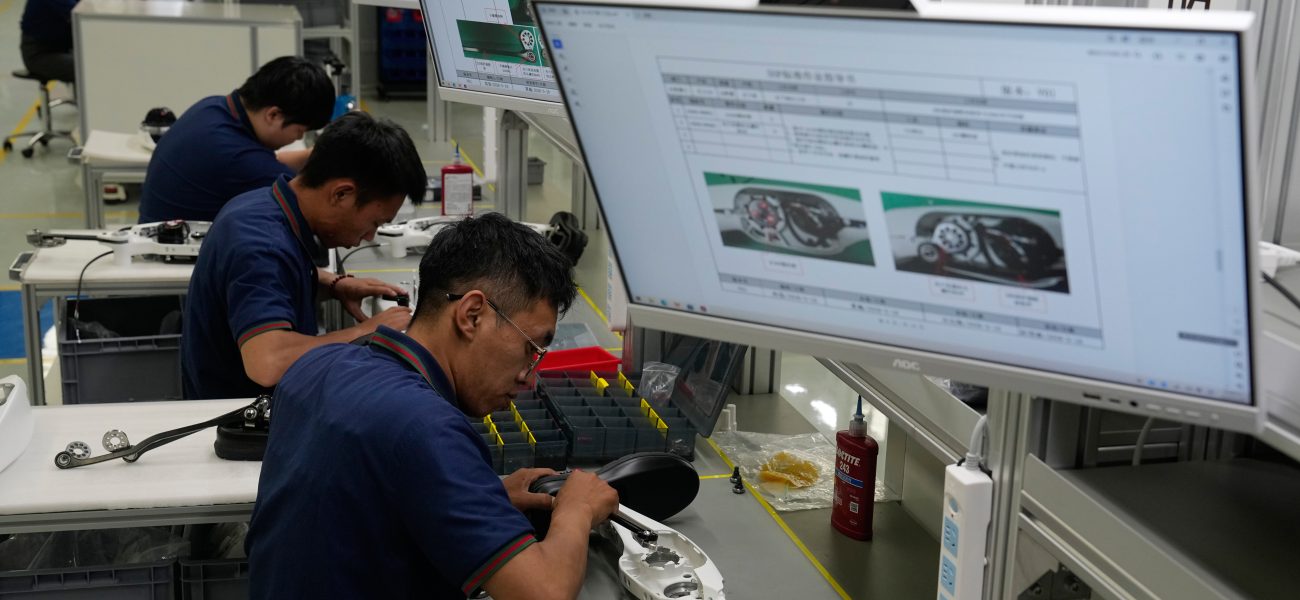
The industrial apparatus of the People’s Republic is reportedly geared up, or soon will be, to flood the market with humanoid robots. Picture it: sleek, bipedal automatons, ready to take on tasks ranging from the mundane to the surprisingly complex. But here’s the rub, the very human problem in a cold, hard technological ambition: the biggest challenge won’t be building them. It’ll be finding enough folks willing to open their wallets, — and their societies, to them.
You see, the capacity is there. It’s almost a given. But is the *world* ready to adopt an army of artificial workers? This isn’t simply about innovation anymore; it’s about integration—or the utter lack thereof. Because we’re entering uncharted territory here, a strange crossroads where manufacturing prowess hits the brick wall of social reluctance and economic recalculation.
Consider the economic logic from Beijing’s perspective. Develop, manufacture, export. It’s their playbook, perfected over decades. But unlike iPhones or electric vehicles, humanoid robots aren’t just an upgrade; they’re a potential societal rewrite. They replace human hands. They require re-thinking work, wages, — and maybe, just maybe, what it means to be productive.
And then there’s the broader global implications, especially for nations whose economic backbone remains squarely human labor. Take Pakistan, for instance, a country of over 240 million people, grappling with high unemployment and a burgeoning youth population. Its economy, while diversifying, still relies heavily on sectors ripe for automation, particularly in manufacturing, agriculture, and service industries. What happens when the global market is saturated with humanoids produced at a fraction of the cost of human wages? It’s not just a theoretical concern; it’s an impending tsunami for labor markets, exacerbating existing social inequalities and political instabilities.
Because the allure of cheap, tireless labor is strong for businesses, it’s also an absolute nightmare for policymakers trying to sustain a population. We’re talking about more than just displacing factory workers. These humanoids aren’t built for a single, repetitive motion anymore. They’re getting smarter, more agile, more capable. So, who’s buying?
That’s the question currently lingering in the air, a phantom itch scratching at the back of every futurist’s mind. Industrial buyers, perhaps, for hazardous work or ultra-precision tasks where human fallibility is a liability. But for mass consumer adoption? Or for wide-scale service deployment in the West, where labor costs are higher, but so are the sensitivities around job losses? It’s a different ball game entirely.
📄 POLICY WIRE WHITEPAPER PUBLISHED: PAKISTAN'S NATIONAL SECURITY POLICY PRIORITIES
👉 READ BY CLICKING HEREGlobally, the humanoid robot market, valued at an estimated $1.84 billion in 2023, is projected by Grand View Research to explode to nearly $28.66 billion by 2030, showing a compound annual growth rate of 48.65%. Those numbers paint a picture of aggressive market expansion. But this growth relies on widespread acceptance, which is precisely the hurdle China now faces. It’s one thing to build something groundbreaking; it’s quite another to convince the rest of the world to fundamentally alter its societal fabric to accommodate it.
We’ve always marveled at China’s ability to execute, to deliver on industrial ambition with astonishing speed. But this particular venture feels different. It asks for more than just a purchase order. It demands a fundamental shift in our understanding of labor, of economics, — and perhaps even of our own worth.
What This Means
This isn’t merely about market entry for a new product; it’s a strategic play by China that could reshape global economic power dynamics. If China successfully scales humanoid production but struggles with international adoption, it presents a fascinating dichotomy. Domestically, it could further enhance its industrial efficiency and reduce reliance on a shrinking human workforce—though it introduces its own set of social pressures regarding employment.
For labor-abundant nations like Pakistan, Indonesia, or Egypt, a rapid influx of cheap, efficient humanoid alternatives spells potential disaster. Their competitive advantage often lies in their large, cost-effective human labor pools. Should advanced robots become globally ubiquitous and affordable, these nations could find themselves struggling to integrate their massive workforces into new economic structures, leading to social unrest and increased migration pressures. Political stability in these regions might fray further, exacerbating humanitarian crises and offering new arenas for global powers to assert influence through ‘aid’ or ‘investment’ tied to technological adoption.
Economically, if China becomes the sole, or dominant, provider of these humanoids, it gains immense leverage. It’s not just selling robots; it’s exporting a new model of labor and productivity, influencing global supply chains and potentially setting a de facto standard for future industrialization. And we, the global consumer, will eventually have to confront the uncomfortable question: just how many of our human tasks are we truly willing to hand over to machines, regardless of cost?