

The Ghost in the Scoreboard: Peru vs. Spain and the Folly of Global Optics
POLICY WIRE — Madrid, Spain — They’ll play a match, apparently. On the grand global stage, where geopolitical tectonic plates grind and the specter of realpolitik looms larger than ever, we’re...

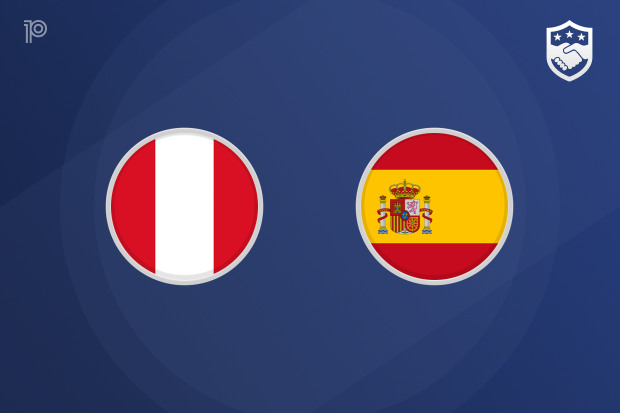
POLICY WIRE — Madrid, Spain — They’ll play a match, apparently. On the grand global stage, where geopolitical tectonic plates grind and the specter of realpolitik looms larger than ever, we’re being treated to a national friendly. Peru versus Spain, set for what’s loosely identified as 09/06. It’s hardly the kind of headline to electrify international relations experts or move markets, is it? Yet, in this innocuous pairing, this minor blip on the sports calendar, one can almost hear the faint, echoing sigh of global soft power mechanisms at work, subtly shaping narratives for an audience often too distracted by actual crises to notice.
It’s an exhibition game, plain and simple, dressed up in the dignified, slightly anachronistic attire of ‘national friendly.’ Because, really, how friendly can nation-states truly be when the stakes—whether economic leverage, cultural cachet, or strategic alignment—are always bubbling beneath the surface? Spain, an EU anchor with its own complex colonial history and an eye always scanning for Latin American influence, fields its footballing gladiators. Peru, a country navigating the choppy waters of South American politics and economics, sends its best, perhaps hoping for a glimmer of international prestige, a positive distraction from internal strife. This isn’t just about putting a ball in a net. Oh, no. It’s never just about that. [QUOTE_PLACEHOLDER]
Consider the raw ingredients provided, the official menu if you will. Unavailable Peru Espanha Last starting XIs Peru ( vs Haiti 2026-06-06): Spain ( vs Iraq 2026-06-04): Joan Garcia , Pedro Porro , Aymeric Laporte , Álex Grimaldo , Dani Olmo , Álex Baena , Borja Iglesias , Ferran Torres. This reads like a grocery list for a highly specific, vaguely intimidating feast. It’s a peek behind the curtain, offering us fragments of Spain’s presumed lineup – a collection of names like Dani Olmo and Ferran Torres – that resonate in European sports circles. Peru’s contingent? They’re there, somewhere in the unsaid. And one wonders what sort of intelligence the two nations exchange beyond mere player rosters, what subtle nods or carefully worded pleasantries punctuate the casual chit-chat around these low-stakes athletic encounters. But let’s be real, even an athletic display against Haiti 2026-06-06 for Peru, or Iraq 2026-06-04 for Spain, serves some obscure, strategic purpose in the grand calculus of international standing.
Because while the sporting fraternity is obsessing over formations and substitutions, genuine geopolitical anxieties persist elsewhere. Imagine the contrast: on one side, a friendly kickabout between a former colonial power and a former colony; on the other, nations like Pakistan are locked in delicate economic negotiations, battling inflation, or navigating complex border disputes. Their leaders aren’t watching the ‘Joan Garcia’ or ‘Pedro Porro’ show. They’re weighing the pros — and cons of foreign aid packages from distant, wealthier nations. They’re concerned with stability, with feeding their people, with maintaining a precarious balance in a neighborhood that’s never short on drama. One could argue the collective attention lavished upon these spectacles of Western football occasionally deflects from pressing issues that affect billions.
And let’s talk numbers, because every good narrative needs a foundation in the cold hard truth. The global sports market, according to a 2023 report by Grand View Research, Inc., was valued at approximately $522.03 billion in 2022 and is projected to grow substantially. This massive financial engine is where countries like Spain jostle for visibility, for brand appeal. Peru, too, plays its part in this vast, glittering economy, even if its share is considerably smaller. But for a nation with significant developmental challenges, does the allocation of resources to high-profile international matches genuinely align with national priorities? One has to wonder.
But the real juice here, the hidden agenda behind the beautiful game, often involves far more than ticket sales. It’s about a nation presenting a ‘civilized,’ modern, capable face to the world. It’s about cultural diplomacy through the universality of sport. For Spain, maintaining a presence in Latin America through these sporting ties strengthens a cultural and economic bridge that’s been historically advantageous. For Peru, it’s a chance to step into the global spotlight, even if just for 90 minutes. A chance to say, ‘We’re here, we play ball, we’re part of the club,’ however exclusive that club might sometimes feel.
📄 POLICY WIRE WHITEPAPER PUBLISHED: PAKISTAN'S NATIONAL SECURITY POLICY PRIORITIES
👉 READ BY CLICKING HEREAnd yet, as a veteran observer, one can’t help but note the inherent contradictions. The idea of a ‘friendly’ in a world so fiercely competitive feels, well, quaint. It’s a polite fiction, a gentle hand extended in a space where iron fists are far more common. Nations don’t truly operate on friendship; they operate on interest. The spectacle of these matchups, often funded by a mix of state coffers and corporate sponsorships, serves as a gloss over harder realities, both at home and abroad.
Because every kick, every pass, every perfectly timed tackle contributes, however infinitesimally, to a nation’s projected image. And in a world where perceptions can sway investment, political alliances, and even the course of human events, that image is everything. That’s why even talks about borders are more than just about land, they’re about narrative control. So while the crowd might chant for Aymeric Laporte or Álex Grimaldo, the real game unfolds on a much grander, far less transparent field.
What This Means
This match, a seemingly straightforward football fixture, acts as a potent, if often ignored, barometer of several subtle geopolitical currents. Economically, these friendlies provide tangible boosts for host cities in terms of tourism and media exposure, albeit often with significant upfront investment. For a nation like Peru, participation offers a sliver of that global market’s economic tailwind, drawing eyes and perhaps future investments, much like the subtle economic cues seen in unexpected victories in other sporting arenas, reminiscent of local sporting successes signaling resilience. But the real game here is political optics. For Spain, it’s about solidifying cultural bonds, reinforcing influence within its former colonial sphere, and demonstrating its role as a global sporting power. This sort of soft power projection is invaluable, extending diplomacy beyond traditional governmental channels. For Peru, it’s about state branding: signaling stability, competence, and readiness to engage on the international stage. These games are low-cost, high-visibility diplomatic gestures. They create a shared cultural event that can, in theory, lubricate future economic or political agreements, paving the way for everything from trade deals to cooperative security efforts. Ultimately, while few policies are hammered out during a corner kick, the atmosphere of shared experience these ‘friendlies’ foster is, ironically, a foundational element in building broader interstate relations – a gentle prelude to more substantial engagements.