

Crimson Tide vs. Red Storm: Beyond the Dugout, a Geopolitical Grand Slam?
POLICY WIRE — New York City, USA — For most, it’s just another college baseball game. Two teams, a diamond, — and the familiar thwack of bat meeting ball. But beneath the pristine...

POLICY WIRE — New York City, USA — For most, it’s just another college baseball game. Two teams, a diamond, — and the familiar thwack of bat meeting ball. But beneath the pristine veneer of amateur sport, shadows stretch long, touching on themes far removed from stolen bases and home runs. You see, the purity of sport, especially in America’s collegiate system, has become a thinly veiled exercise in multi-million dollar marketing, a cultural touchstone with global ripples. And when the St. John’s Red Storm squares off against the Alabama Crimson Tide, you don’t just watch baseball; you watch an economic and political spectacle disguised as recreation.
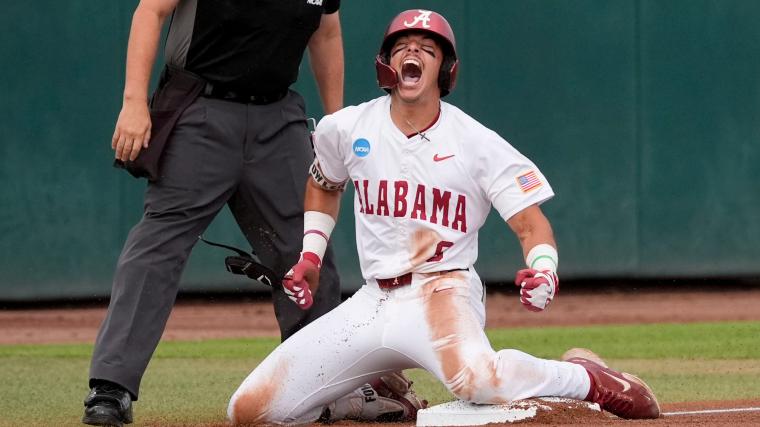
It’s Sunday, or rather, it was Saturday, depending on which side of the dateline you call home. The air thick with humid anticipation in Tuscaloosa. The Crimson Tide, perennial powerhouses, expected to march through to the College World Series. After all, they’ve notched an impressive 40 wins this season, against 19 losses. Impressive stuff, huh? But then, standing in their way, you’ve got St. John’s, with their slightly less intimidating 36-24 record, representing a different kind of pedigree. It’s not just a game; it’s a battle of traditions, money, — and frankly, some deep-seated regional pride. [QUOTE_PLACEHOLDER]
The original blueprint had Alabama needing two wins in the Tuscaloosa Super Regional to advance to the College World Series. Simple math, really. But, as we’ve learned in politics and, indeed, in sport, plans often meet reality. And reality can be a right nuisance. The St. John’s Red Storm will try to disrupt those plans — and spoil the Sweet Home advantage for the Crimson Tide. Sweet Home, Alabama — catchy, sentimental, — and for opposing teams, perhaps, just a little grating. The final game of Day 2 in this round will start at 9 p.m. ET, conveniently slotted for prime-time viewing on ESPN2 will carry the broadcast, ensuring maximum eyeballs, maximum ad revenue. This isn’t just about young men chasing a dream; it’s big business.
Because let’s be frank, college athletics has long transcended the simple joy of competition. It’s an intricate ecosystem of scholarships, multi-million dollar coaching contracts, — and colossal media deals. Take for instance J. Raifstanger, St. John’s third baseman. He’s batting a respectable .336, an achievement documented in the box scores that serve as both history — and commodity. This isn’t just an individual statistic; it’s part of a player’s developing brand, a marketable asset in the era of Name, Image, and Likeness (NIL) deals that have fundamentally reshaped the amateur landscape. We used to pretend these kids were just playing for love of the game. Now, you’re just watching potential endorsements run the bases.
But the reverberations aren’t confined to American shores. How does this collegiate spectacle resonate, say, in Karachi or Lahore? You might not think it does, but consider the flow of talent — and aspiration. While baseball isn’t the national sport, Pakistan sends thousands of its brightest students to American universities each year. They arrive, often, seeking academic excellence but quickly become immersed in the pervasive sports culture. They watch these games, they understand the fanaticism, they grasp the economic machinery humming beneath. And this, believe it or not, forms a subtle, yet powerful, soft-power conduit. It’s a demonstration of American organizational capability, its commercial prowess, and its deep-seated cultural rituals.
And then there are the less fortunate stories that punctuate this narrative, the ones the ESPN cameras often ignore. Consider the Demond Williams bombshell could have resulted in Lane Kiffin fired by LSU — a sidebar scandal unearthed within the original wires, hinting at the high-stakes, ruthless corporate culture that underpins much of this competitive enterprise. Every program, every athlete, every game is a piece in a larger, often cutthroat, game of chess. No matter the region, the pursuit of victory often entails navigating a complex web of ethical quandaries and immense financial pressures. It’s enough to make one wonder if anyone is truly playing just for fun anymore. Probably not, is the honest answer.
📄 POLICY WIRE WHITEPAPER PUBLISHED: PAKISTAN'S NATIONAL SECURITY POLICY PRIORITIES
👉 READ BY CLICKING HERELet’s not forget the sheer scale. The NCAA, as a governing body, oversees hundreds of thousands of student-athletes across 24 sports, generating billions in revenue. This is more than a sporting event; it’s an industry, a reflection of a deeply ingrained cultural value placed on competition and victory. And yes, a victory in a Super Regional, securing a spot in the College World Series, translates to more media exposure, higher alumni donations, and a significant bump in applications. For Alabama, a traditional football powerhouse, success in baseball diversifies its brand, making it an even more formidable institution, an economic and athletic magnet. This isn’t just a win; it’s an investment.
What This Means
The Super Regional clash between St. John’s and Alabama isn’t just a regional athletic contest; it’s a micro-drama played out on the larger stage of America’s hyper-capitalized collegiate sports industrial complex. Economically, these games are revenue generators, pouring money into host communities like Tuscaloosa through tourism, hospitality, and local consumption. For universities, athletic success, especially in high-profile championships like this, acts as an incredibly potent marketing tool, directly impacting applications, alumni engagement, and fundraising — essentially, it’s a billion-dollar advertisement masquerading as sport. That .336 batting average by J. Raifstanger? It’s not just a stat for fans; it’s an indicator of potential NIL value, a signpost in the emerging economic reality of collegiate athletics where player monetization is now openly acknowledged.
Politically, the NCAA itself is a behemoth grappling with immense challenges — the increasing demands for athlete welfare, the complexities of NIL, and ongoing debates about whether these ‘amateur’ athletes should be formally compensated beyond scholarships. A major upset, like St. John’s defeating Alabama in their ‘Sweet Home’ territory, could be interpreted as a momentary disruption of established power dynamics, a reminder that the top-tier institutions, with their massive budgets and historical advantages, aren’t infallible. For an international observer, say from Pakistan, watching the spectacle through digital media, it’s an insight into America’s unique brand of competitive nationalism and its commercial sophistication, revealing how effectively culture and commerce can be intertwined, often without an ounce of self-awareness regarding the scale of the operation.