


Pacific Currents Shift: New Zealand Bets on US Choppers as Regional Tensions Brew
POLICY WIRE — Washington, D.C. — For decades, New Zealand’s foreign policy often hummed a quieter tune, a thoughtful counterpoint to louder global theatrics. But lately, even Wellington’s been...

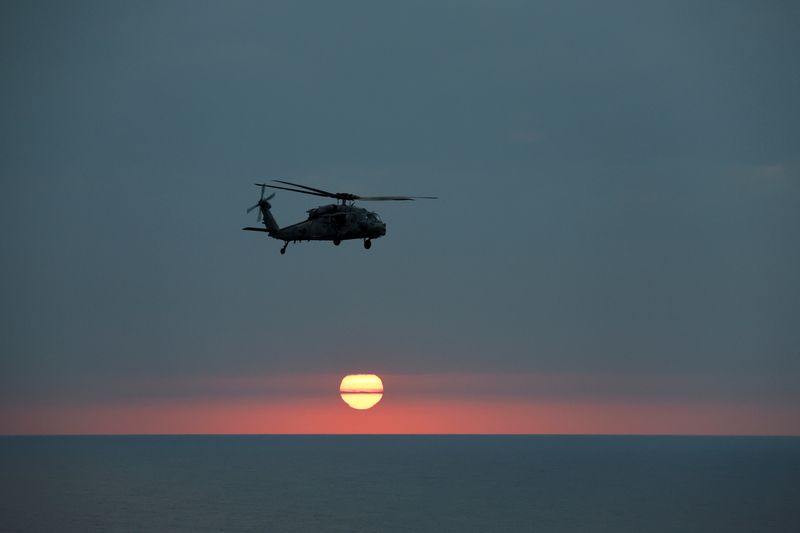
POLICY WIRE — Washington, D.C. — For decades, New Zealand’s foreign policy often hummed a quieter tune, a thoughtful counterpoint to louder global theatrics. But lately, even Wellington’s been turning up the volume. Not with shouts, but with a significant investment that speaks volumes about shifting strategic sands in the Indo-Pacific: a reported $1.5 billion deal for advanced maritime helicopters from the United States. It isn’t just about new gear; it’s a tangible, very expensive nod towards greater interoperability with Uncle Sam and, by extension, a louder statement in a region getting awfully crowded with maritime powers.
It’s no secret the Pacific’s temperature is rising, — and not just from climate change. Beijing’s naval ambitions are, shall we say, less subtle by the day. And smaller nations, historically navigating between great power blocs with a certain pragmatic finesse, now find themselves re-evaluating long-held positions. This helicopter acquisition isn’t some abstract budgetary item; it’s cold, hard cash on anti-submarine warfare and enhanced maritime surveillance capabilities. The U.S. State Department’s approval, quietly announced, means the sale can now proceed, bringing Wellington closer into Washington’s defense architecture in a way that’ll make more than a few analysts chew on their pens.
The U.S. government views the sale as aligning with its national security — and foreign policy goals, naturally. It helps improve the security of a major non-NATO ally, one whose partnership is important to stability in the Indo-Pacific. A source familiar with the internal deliberations, speaking on condition of anonymity, described it as [QUOTE_PLACEHOLDER]. They noted it bolsters New Zealand’s capacity to [QUOTE_PLACEHOLDER]. For New Zealand, it’s about upgrading its operational readiness, sure, but it’s also a pragmatic acknowledgment of current geopolitical realities. You can’t patrol a vast exclusive economic zone or participate meaningfully in regional security dialogues with obsolete equipment, can you? It’s not just a shopping spree; it’s an operational imperative.
This isn’t an isolated event. It fits into a broader pattern where the U.S. is strengthening alliances and partnerships across the Indo-Pacific, a strategic realignment spurred largely by China’s expansionist maritime claims and growing presence. New Zealand’s Defense Minister, (or a spokesperson anyway), publicly emphasized that the new aircraft would allow the Royal New Zealand Navy to [QUOTE_PLACEHOLDER]. This includes, by all accounts, extending their reach for disaster relief operations — and enhanced patrols. But let’s be real; these aren’t just for SAR missions. These are platforms designed to detect — and deter, to integrate with larger allied forces.
Consider the strategic dance playing out not just in the South China Sea, but also stretching towards the Indian Ocean and the Persian Gulf. Nations like Pakistan, a key player in the Indian Ocean’s maritime security—often overlooked in mainstream Western narratives—have also been engaged in modernizing their naval air armaments, though often balancing acquisitions from various international partners. The push for greater maritime domain awareness and anti-submarine capabilities isn’t exclusive to the Pacific; it’s a shared security concern in an era where naval power is ascendant. Because every coastal state, regardless of size, eventually stares down the barrel of protecting its own backyard, its shipping lanes, its vital economic interests. And for that, you need the right tools.
The specific model of maritime helicopter hasn’t been widely disclosed beyond ‘advanced,’ but the value itself—a cool $1.5 billion—suggests a significant leap in capability for Wellington. The U.S. Defense Security Cooperation Agency handles such notifications to Congress, laying out the general terms and conditions. The agency confirmed that the proposed sale wouldn’t alter the basic military balance in the region. That’s the official line, anyway. It certainly shifts New Zealand’s *individual* military balance, though, giving them a bigger stick. They’ve traditionally prided themselves on an independent foreign policy, famously even taking an anti-nuclear stance decades ago. But independent doesn’t mean isolated, not anymore. Not when trade routes crisscross contentious waters.
📄 POLICY WIRE WHITEPAPER PUBLISHED: PAKISTAN'S NATIONAL SECURITY POLICY PRIORITIES
👉 READ BY CLICKING HEREThe Stockholm International Peace Research Institute (SIPRI) reported that global military expenditure reached an all-time high of $2.44 trillion in 2023, reflecting a palpable global nervousness. This New Zealand deal, while a fraction of that sum, is part of this larger, accelerating trend. It’s a localized manifestation of a global phenomenon: nations spending more, not less, on their security. It’s an arms race without explicitly calling it an arms race, a quiet accumulation of capability. The question isn’t if they need them; it’s what messages this particular acquisition sends, both regionally and to global powers.
What This Means
This $1.5 billion deal isn’t just New Zealand splurging on shiny new toys; it’s a declaration. For starters, it firmly signals Wellington’s willingness to deepen its defense ties with Washington, moving away from a posture of strictly measured engagement towards more overt military alignment in specific capabilities. This interoperability matters—it means New Zealand’s forces can work seamlessly with U.S. and Australian assets, critical for rapid response or collective defense scenarios. But then, what about the nation’s longstanding non-aligned instincts?
It’s a subtle tightrope walk. New Zealand relies heavily on China for trade—its largest trading partner, in fact—yet simultaneously finds itself pulled towards traditional allies for security. This deal attempts to square that circle: strengthen defense capabilities and partnerships without explicitly provoking. The economic implications are also noteworthy; such a substantial purchase locks New Zealand into a long-term logistics and training relationship with the U.S. defense industrial complex, influencing future procurement decisions for decades to come. It’s a vote of confidence, but also an investment that shapes future foreign policy. And it subtly yet significantly contributes to the evolving architecture of Indo-Pacific security, a quiet domino falling into place in a much larger game.