


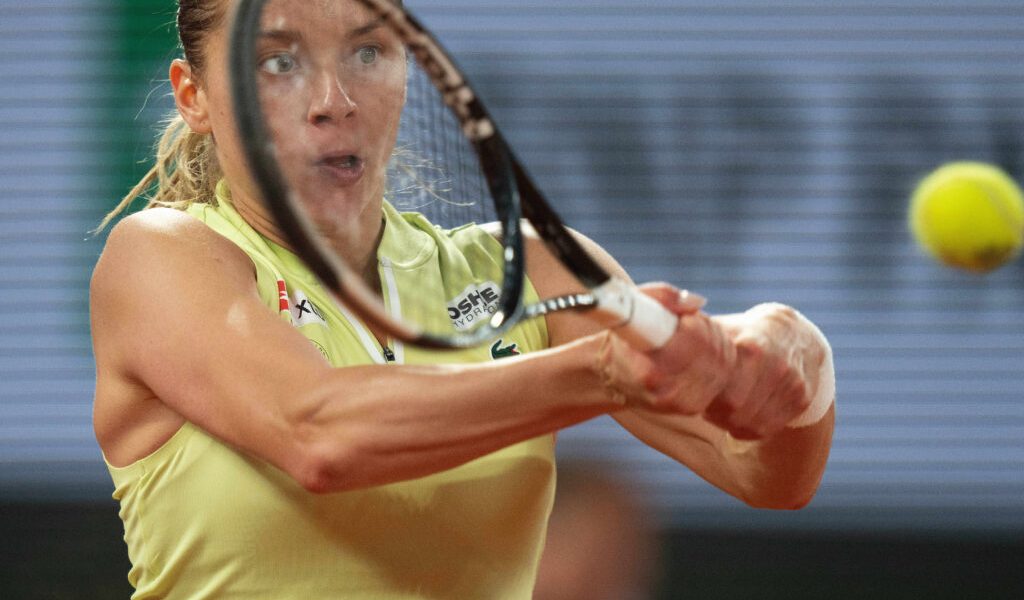
The Price of Poise: Chwalinska’s Parisian Gamble Rewrites Tennis Economics
POLICY WIRE — Paris, France — The crimson clay of Roland Garros often tells tales of athletic prowess, of brutal baseline rallies and artful dropshots. But sometimes, if you listen closely, it...

POLICY WIRE — Paris, France — The crimson clay of Roland Garros often tells tales of athletic prowess, of brutal baseline rallies and artful dropshots. But sometimes, if you listen closely, it whispers a far more universal story: the grinding, often financially precarious reality of professional sports, and the sudden, seismic shifts that can alter an athlete’s entire trajectory. Maja Chwalinska, the 24-year-old Pole who recently reached the French Open final, certainly didn’t hoist the champion’s trophy, succumbing in straight sets to Mirra Andreeva. Yet, her odyssey through three grueling weeks in Paris wasn’t merely a contest of volleys; it was a masterclass in economic upheaval and quiet personal triumph.
She walked off court tired, yes, but undeniably transformed. This wasn’t just about tennis. This was about money, security, and a quiet, defiant middle finger to the notion that leaving the sport for your sanity means you’re soft. Chwalinska, after all, famously stepped away in 2019 for mental health reasons, a decision then seen by some as career suicide. How quickly perceptions change, especially when prize money figures enter the conversation.
Her bank account, for one, probably feels quite a bit less anemic. Because in those three weeks, Chwalinska reportedly banked more prize money than in her entire preceding career on the WTA Tour. Let that sink in. A full career’s worth of earnings, condensed into a single Grand Slam. And her world ranking? It skyrocketed, shooting up an astounding 93 spots to number 21 globally. For anyone paying attention to the cutthroat economics of professional tennis, particularly outside the rarefied air of the top ten, such a leap is — and let’s not mince words — life-altering.
Sloane Stephens, a former Grand Slam champion who knows a thing or two about the pressures of the big stage, put it plainly. “Maja’s run, it wasn’t just about prize money,” Stephens recently commented. “It was proof that fighting for your own well-being— stepping away when you need to — it actually strengthens you. This was a life-changing tournament for all the right reasons; she earned her place back.” She did. It isn’t just direct entry into tournaments now that awaits Chwalinska, sidestepping the nerve-wracking, costly qualifying rounds. It’s also notoriety, sure, but crucially, it’s financial bedrock.
But her triumph isn’t without its caveats. While her immediate future feels — for the first time — truly secure, the structures of the sport still present formidable hurdles. Take Wimbledon, for instance. She won’t automatically be in the main draw. That cutoff date for qualification often hovers six weeks before the tournament kicks off, well before a surprise French Open run can fully register. This means Chwalinska must either endure another round of qualifiers or, more enticingly, pray for a wildcard entry. Wildcards, however, are a fiercely contested commodity, often earmarked for local British talent. And she’ll likely be battling not just up-and-comers, but seasoned veterans. Her path, in other words, is anything but smooth sailing from here on out.
📄 POLICY WIRE WHITEPAPER PUBLISHED: PAKISTAN'S NATIONAL SECURITY POLICY PRIORITIES
👉 READ BY CLICKING HERE“The WTA is constantly evaluating player pathways and the support systems required to ensure sustainability for athletes at all levels,” stated Monica Shah, a Senior Analyst for the Women’s Tennis Association, weighing in on the implications of such rapid ascensions. “Stories like Maja’s highlight both the incredible opportunities in our sport and the ongoing need for flexible regulations that acknowledge extraordinary, unpredicted performances. We can’t have these Cinderella runs fizzle out because of archaic rules.” Her point? A valid one, many would agree. This isn’t a narrative unique to Eastern Europe, but echoes the uphill battles many players face worldwide, particularly in nations where tennis infrastructure is less robust, say, aspiring athletes in Karachi or Lahore who rarely see the direct financial returns needed to sustain an international career.
What This Means
Chwalinska’s journey isn’t just a feel-good sports story; it’s a trenchant commentary on the stark economic realities governing elite individual sports. Her sudden windfall highlights the massive disparity between the sport’s upper echelons and the vast majority of players clawing their way through smaller tournaments, often struggling to break even. Her elevation proves that a singular, strong Grand Slam performance can redefine a career, offering a financial cushion usually reserved for those with corporate sponsorships and years of consistent top-tier results. But the challenge of Wimbledon – forcing a newly minted Grand Slam finalist to scramble for entry – also underscores the bureaucratic rigidities that still exist, even as the tour attempts to appear more equitable.
Economically, Chwalinska’s surge provides a potent example for sports federations in emerging tennis nations, perhaps even sparking further investment in grassroots programs in places like Bangladesh or Malaysia. It shows what’s possible, even with less upfront funding. But it also raises questions about fairness and accessibility; how many others, perhaps equally talented but lacking the initial resources or sheer good fortune of a deep major run, languish in obscurity? It’s a cruel game, tennis, with little mercy for those who fall just short of the main event. The journey from local courts to global aspirations is rarely linear. her candid embrace of mental health awareness, turning a supposed weakness into a narrative of strength, sets a crucial precedent, suggesting that acknowledging vulnerability might, in fact, be the ultimate competitive advantage in the high-stakes arena of professional sports. And that’s something worth paying attention to, beyond the final score. She might have lost the match, but she won a future.