


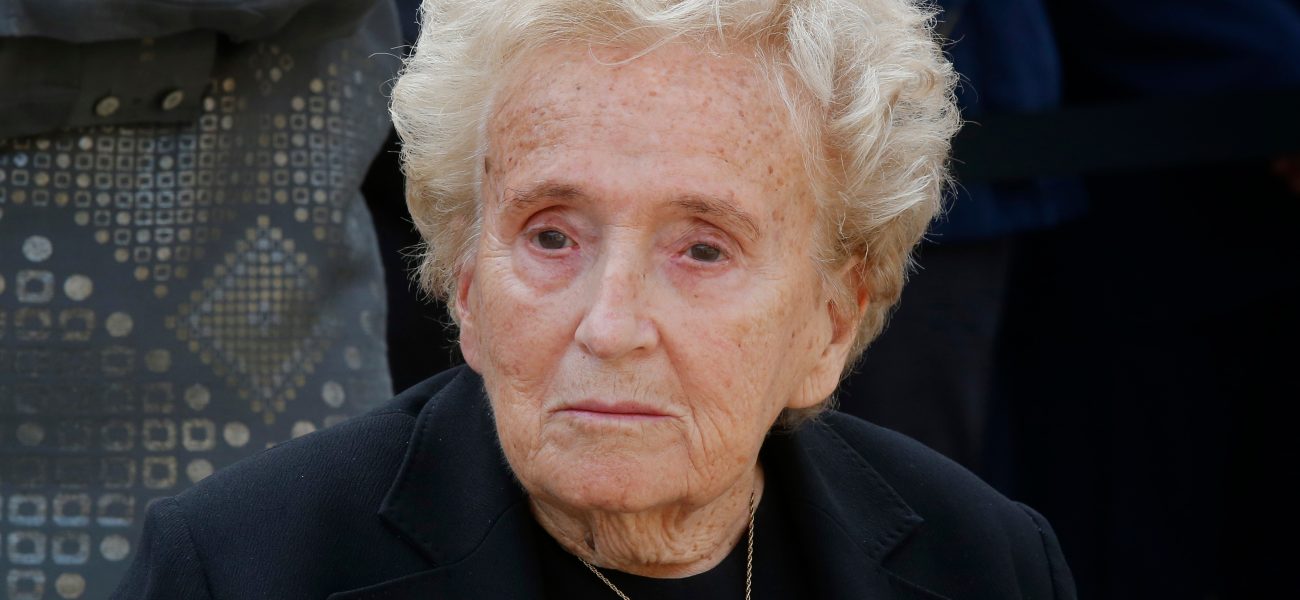
Bernadette Chirac: The Unseen Hand That Guided a Nation’s Apex
POLICY WIRE — Paris, France — You often find them on the periphery, a pastel-clad presence, waving from balconies or cutting ribbons. That’s what many thought of Bernadette Chirac. But beneath...

POLICY WIRE — Paris, France — You often find them on the periphery, a pastel-clad presence, waving from balconies or cutting ribbons. That’s what many thought of Bernadette Chirac. But beneath the polite smile and the impeccably coiffed silver hair, France’s late former First Lady wasn’t just a political spouse. No, she was more like a highly polished, strategically placed chisel, subtly but surely shaping the very bedrock of French power for decades. She wasn’t just behind the man; she was often ahead of him, directing traffic, setting tones, and holding more cards than most people ever dared to imagine. Her death at 93 doesn’t just close a chapter; it seals an encyclopedia.
To simply call her ‘formidable’ feels reductive. Bernadette, as she was known by many, possessed a steel spine disguised as classic French elegance. She didn’t shout her power; she whispered it, strategically. Long before Jacques Chirac reached the Elysée Palace, she was the steady, pragmatic force. A former councilor for the Corrèze department from 1979 until 2015, her local roots ran deep, giving her an ear to the ground, a touch that few Parisian mandarins could replicate. And that practical connection to ordinary folks? It wasn’t just good optics; it translated directly into votes, real political currency that powered her husband’s ascent through the municipal, national, and ultimately, presidential ranks. According to French national electoral records, in 2002, when her husband was re-elected president, the voter turnout in Corrèze was 84.7%, often cited as a testament to the strong local engagement fostered by figures like herself.
She wasn’t merely content with being the ‘President’s wife’ – a moniker she likely found stifling. Bernadette operated as an independent political operator in her own right, particularly in social welfare — and charity. Her advocacy for causes like mental health and vulnerable children garnered genuine public affection, burnishing the Chirac brand in a way that formal political campaigns often couldn’t. Think of her as the ultimate soft power asset, a human bridge between the elite — and the populace. But make no mistake: she was no mere figurehead.
“Bernadette Chirac didn’t just observe French politics; she lived and breathed it, every quiet moment a strategic consideration,” observed former Elysée advisor, Alain Duflot. “She was Jacques’ closest confidante, his political barometer. We always knew that if Bernadette was against something, it wasn’t happening.” And Duflot’s not wrong. She wasn’t above voicing sharp critiques of political adversaries or even — infamously — of her husband himself, all delivered with an unsettling composure that left no doubt about her convictions.
But her influence stretched beyond internal French skirmishes. First Ladies, by their very nature, become extensions of national diplomacy, particularly in cultural outreach. Bernadette Chirac was no exception, though her touch was distinct. While much of France’s formal diplomacy with the Muslim world, for example, would flow through the Quai d’Orsay, she understood the softer side of engagement. Her philanthropic endeavors, often with children’s charities, sometimes extended into programs in former French colonial territories or countries where France maintained a robust aid presence. She might’ve not negotiated peace treaties, but she cultivated relationships, quietly, reinforcing French goodwill in ways a communiqué never could. It’s subtle, sure, but in the nuanced dance of international relations, especially in a world where perceptions in places like North Africa and parts of the Middle East deeply shape France’s global standing, such contributions carry weight. They often go unnoticed, yet they’re deeply effective. That’s the Bernadtette way.
📄 POLICY WIRE WHITEPAPER PUBLISHED: PAKISTAN'S NATIONAL SECURITY POLICY PRIORITIES
👉 READ BY CLICKING HEREBecause ultimately, what do these ‘power behind the throne’ narratives tell us? They show us how many avenues there are to influence, — and how often the most potent ones are the least visible. Her journey—from privileged Parisian student to enduring political wife and, arguably, queenmaker—is one of unwavering loyalty and understated strategic cunning. She weathered public scandal, personal loss, and the relentless glare of public life with a stoicism that verged on the legendary. Many, myself included, can’t help but wonder just how many key decisions truly began not in an official meeting room, but perhaps over a morning coffee, with a casual suggestion from her. Her role as one of the unsung architects of French power should never be underestimated. She lived a life that challenged easy categorization.
What This Means
Bernadette Chirac’s passing reminds us of a dying breed in political life: the political spouse who acts as a genuine, often undeclared, strategic partner, not merely a ceremonial accessory. In today’s hyper-transparent, social-media-driven political landscape, such opaque, decades-long influence is becoming increasingly difficult to maintain. Her death could symbolize the end of an era where informal networks and familial counsel could wield immense, quiet power without constant public scrutiny. It reflects a shift in what’s expected of political spouses, away from backroom influence towards more public-facing advocacy, often tightly managed by press teams. Economically, her philanthropic footprint, though vast, operated largely outside official budgetary scrutiny, highlighting a different model of public impact that’s since become more formalized, more integrated into government portfolios. Her departure likely prompts a renewed focus on who really pulls the strings, and how those roles might evolve as transparency demands increase across the world.