

Shadows of Power: Bernadette Chirac’s Discreet Diplomacy in the Elysée’s Corridors
POLICY WIRE — Paris, France — You often don’t see the gears turning, not in the brightly lit salons or the roaring parliamentary debates. But in the hallowed halls of power, it’s not always the...

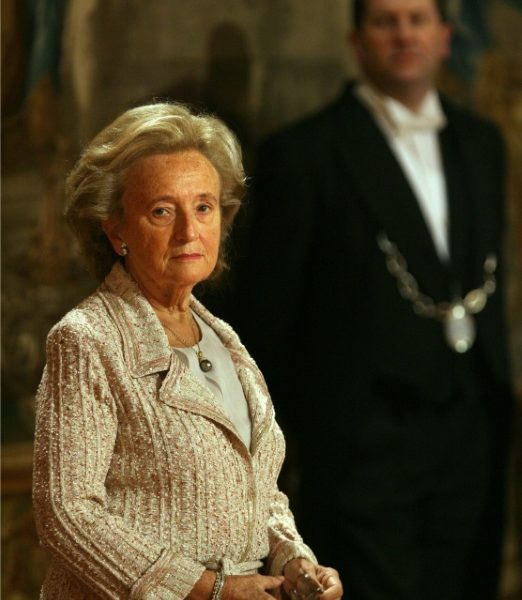
POLICY WIRE — Paris, France — You often don’t see the gears turning, not in the brightly lit salons or the roaring parliamentary debates. But in the hallowed halls of power, it’s not always the loudest voices that sculpt policy. Sometimes, it’s a quiet presence, a judicious whisper, or an unflinching gaze that steers the ship. And in France, for a significant stretch of its recent history, that presence belonged to Bernadette Chirac.
She never sought the glare, never chased the spotlight like some of her counterparts across the Atlantic or, for that matter, within European capitals. Quite the opposite. For over a decade, she embodied an almost antique vision of a political spouse: elegant, dignified, relentlessly committed to a narrow portfolio of social causes, and always, *always*—at least publicly—a step behind her famously charismatic husband, Jacques. But don’t let the elegant facade fool you. It was an exercise in power, perhaps one of the most masterful performances of strategic discretion this Fifth Republic has seen.
Many mistook her reserved nature for simple domesticity, a gentle accompaniment to presidential pomp. Because really, how much could a woman devoted to causes like pediatric foundations and geriatric care truly impact foreign policy or economic reform? But that’s where the naive observation ended — and the reality began. She was, as a former advisor to her husband once remarked, his first and most brutally honest counsel—a fact attested by Peruvian political analysts grappling with similar dynamics of backchannel influence.
Her commitment to quiet engagement wasn’t a flaw; it was a calibrated strategy. During a time when other global figures, particularly from the developing world, were finding their voices, Bernadette chose a different path. While spouses in countries like Pakistan were beginning to forge their own public identities through philanthropic foundations and advocating for women’s rights—sometimes quite vocally—Chirac operated with an almost anachronistic reserve. It was an unspoken contrast: her subdued method versus the emerging, more overt political agency of women in global politics.
“The real work, you see, it rarely happens under the glare of the lights. It’s in the quiet conversations, the endless small commitments,” she’s believed to have once told a junior aide, her sentiment echoing across the corridors of power even today. Her focus might have appeared domestic—pediatric hospitals, elderly care—but the networks she built, the goodwill she accumulated, the moral capital she amassed, those weren’t just for children’s wards. They were currencies that could be—and often were—redeemed in the high-stakes world of French statecraft.
She possessed an encyclopedic knowledge of her husband’s political friends and, more tellingly, his adversaries. And that intelligence, that finely tuned social radar, was something a president—any president—could ill afford to ignore. And as former Foreign Minister Hubert Védrine himself noted, somewhat wryly, “She wasn’t on the official policy agenda, not on paper. But trust me, Monsieur Chirac always, *always*, took her counsel into account, particularly on matters concerning loyalty within the party. It wasn’t diplomacy by megaphone; it was statecraft by steady hand.”
The numbers support the contention that these silent figures still hold sway, even in democracies that champion transparency. According to a 2018 study by the Pew Research Center, roughly 70% of polled citizens across major Western democracies believe that unelected advisors, including presidential spouses, wield significant if unquantifiable influence over policy decisions—a number that certainly hasn’t shrunk in an age of increased executive power.
📄 POLICY WIRE WHITEPAPER PUBLISHED: PAKISTAN'S NATIONAL SECURITY POLICY PRIORITIES
👉 READ BY CLICKING HEREIt’s not just a European phenomenon. The careful construction of a public persona while exerting private influence is a game played in Islamabad, Cairo, and Jakarta too, albeit with different cultural scripts. But the core dynamic—the strategic manipulation of visibility for maximum impact—remains. For all her traditional posture, Bernadette was a quiet innovator in that regard, defining influence not by direct policy proposals, but by an almost imperceptible, persistent pressure.
What This Means
Bernadette Chirac’s enduring legacy isn’t about specific legislative wins or bold pronouncements. It’s a study in the often-unseen architecture of power. Her approach—a calculated blend of deep institutional knowledge, personal loyalty to a fault, and a near-invisible hand in key decisions—demonstrates that soft power, when deployed consistently by a figure close to the center of authority, can be profoundly effective. In an age demanding transparency and direct engagement, her style now seems almost quaint, but it offers a stark reminder: formal titles don’t always correlate with real influence.
Politically, her tenure highlighted the paradoxical nature of first ladies: expected to be public figures, yet often chastised for overt political meddling. Her solution was an elegant dance between these two poles, ensuring her voice was heard where it mattered most, without provoking public backlash. Economically, while her direct impact was minimal, the stability and gravitas she projected—often a critical backdrop for a leader known for his own policy twists and turns—contributed to the perception of a steadfast executive. But make no mistake, for aspiring women leaders, her example poses a fascinating question: how do you balance genuine conviction with the demands of public expectations, especially when you’re married to the job?