


Paper Tigers and Power Plays: Seoul’s Electoral Stumble Exposes Deeper Rifts
POLICY WIRE — Seoul, South Korea — Democracy, it turns out, often falters not with a bang, but with a whimper—or in this case, with a distinct lack of ballot paper. While much of the world obsesses...

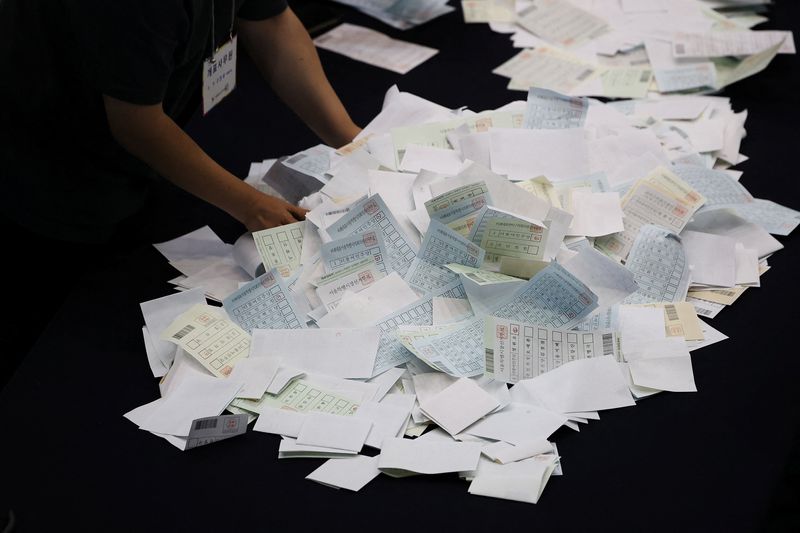
POLICY WIRE — Seoul, South Korea — Democracy, it turns out, often falters not with a bang, but with a whimper—or in this case, with a distinct lack of ballot paper. While much of the world obsesses over high-stakes geopolitical maneuvers and flashpoints, a more prosaic yet equally destabilizing drama has played out quietly in South Korea, a country synonymous with technological prowess and administrative efficiency. Its chief election commissioner recently tendered their resignation, not over accusations of malfeasance or foreign interference, but because, well, the stationery ran out. Imagine that. An electoral system brought to the brink by something you can buy at any office supply store, assuming, of course, that particular supply store actually bothered to stock it.
It’s not just embarrassing; it’s an uncomfortable look behind the polished facade of an advanced nation, laying bare a systemic oversight. Voters showed up, ready to perform their civic duty, only to find themselves sometimes waiting for hours, occasionally presented with insufficient materials to cast their choices. This isn’t just about ink — and paper, folks. This is about trust, about legitimacy, about the very mechanics of a free society’s most fundamental act. And that trust, once eroded by something so elementary, it doesn’t just magically reappear.
The incident, now firmly in the realm of public outrage, culminated in the inevitable. [QUOTE_PLACEHOLDER] a statement confirmed by the National Election Commission (NEC) earlier this week. The fallout hasn’t just been political, either. It’s triggered an intense public debate—a fiery one, if we’re being honest—about bureaucratic competence, governmental accountability, and exactly who drops the ball when such a foundational element of public life comes undone. But, really, how does a country famed for its world-class tech, for its rapid deployment of cutting-edge solutions, manage to mismanage paper stock for its own elections? It begs belief, honestly.
This isn’t some banana republic, or a nascent democracy struggling to find its footing. This is South Korea. The perception of flawlessness, or at least exceptional capability, runs deep here. So when something this basic goes wrong, it reverberates with a peculiar intensity. And you know, we’ve seen these kinds of ‘small’ administrative blunders cause big problems elsewhere. Look at Pakistan, for instance, a nation grappling constantly with the ghosts of past elections, where even minor logistical hiccups get magnified into allegations of widespread fraud. It’s an issue that can really gnaw at the electorate’s confidence, making them wonder if the system itself is rigged or just profoundly incompetent.
Because ultimately, these administrative oversights aren’t just administrative. They’re political. They create a vacuum for suspicion to rush in, especially when results are tight or public sentiment is already fragile. And that fragility, it’s a global thing now, isn’t it?
One official at the NEC, speaking off the record—as they always do when things get sticky—confided that [QUOTE_PLACEHOLDER] . This mess didn’t happen overnight, you see. It points to a more pervasive institutional lassitude, a kind of bureaucratic drift where essential duties become secondary to, well, who knows what. Some say budget cuts. Others blame internal power struggles. The official explanation offered publicly? [QUOTE_PLACEHOLDER]. Regardless, it feels flimsy, a bit of a cop-out when voters were left in the lurch.
📄 POLICY WIRE WHITEPAPER PUBLISHED: PAKISTAN'S NATIONAL SECURITY POLICY PRIORITIES
👉 READ BY CLICKING HEREBut the story doesn’t end with a resignation letter. This episode sends a chilly reminder about the constant vigilance required for democratic health. Even the most seemingly robust systems are, at their core, reliant on mundane, unglamorous tasks performed meticulously. Forget the cyber threats — and disinformation campaigns for a minute. Sometimes, it’s just the printer not having enough toner. Or, you know, the wrong kind of ballot paper not being ordered on time.
According to data compiled by the International Foundation for Electoral Systems (IFES), an estimated 10% of election-related complaints in established democracies worldwide originate from logistical or administrative errors, not outright fraud. That’s a significant chunk, a testament to how these seemingly small issues can accumulate — and destabilize. And the Korean public, bless ’em, they’re not letting this slide. You’d better believe that.
What This Means
This saga in Seoul is far more than a minor administrative gaffe that ended in a ceremonial resignation; it’s a stark illustration of democracy’s surprising fragility. Politically, the immediate implication is a likely loss of public trust in the National Election Commission, which could take years to fully rebuild. For the incumbent administration, even if indirectly responsible, the optics are terrible, feeding into any existing narratives about government ineptitude or lack of focus on public service. It could impact future election outcomes, turning even popular policies into non-starters if the public questions the legitimacy of the entire process.
Economically, while direct costs from paper shortages are minimal, the indirect costs of eroding confidence can be substantial. A stable political environment is always good for business, attracting foreign investment and encouraging domestic spending. When the foundation of that stability—free and fair elections—appears shaky due to such a basic error, it sends subtle but concerning signals to markets and investors. It suggests potential operational weaknesses in state institutions, which could cascade into other areas of governance. This incident might force a critical review of South Korea’s entire electoral infrastructure, from procurement processes to contingency planning. The long-term implication is a warning shot to other established democracies: administrative competence isn’t a luxury; it’s an absolute necessity for maintaining popular sovereignty. And for emerging democracies, especially in South Asia, watching how South Korea handles this fumble offers both a cautionary tale and a blueprint for critical self-assessment. Because sometimes, the biggest threat to the body politic isn’t some grand conspiracy, it’s a perfectly preventable failure of logistics. We shouldn’t forget that.