


Knicks Hold Court as Spurs Stare Down Historical Abyss: A Geo-Strategic Mismatch on the Hardwood?
POLICY WIRE — New York City, USA — When expectations buckle under the weight of sheer performance, the reverberations extend far beyond the court. It’s not just a basketball game anymore, see?...

POLICY WIRE — New York City, USA — When expectations buckle under the weight of sheer performance, the reverberations extend far beyond the court. It’s not just a basketball game anymore, see? It’s a grand-scale, live-action seminar on crisis management — and the brutal math of statistical improbability. A young star’s supposed coronation has quickly morphed into an early test of resilience, not against a single rival, but against the stony face of history itself.
The San Antonio Spurs, a squad many pegged as ascendant, finds itself in an unenviable hole. Two home games. Two decisive losses. This isn’t just about Jalen Brunson owning fourth quarters, or Karl-Anthony Towns seemingly everywhere; it’s about a team – and let’s be honest, a narrative – hitting an unexpected snag. Mitch Johnson’s younger squad, initially touted for its deep roster and promising future, has been ‘outclassed in both of its home games to open the series.’ [QUOTE_PLACEHOLDER]
It’s a particularly rough spot, watching a contender wither at home, before their very own patrons. Now, staring at a 2-0 series deficit as the series moves to Madison Square Garden, you can feel the pressure mounting. History, it’s gotta be said, isn’t offering much solace. Per Land Of Basketball, ‘the 2026 Spurs now become the 38th instance of a team trailing 2-0 in an NBA Finals series.’ Of those prior 37 instances, ‘only five teams have come back to win the series.’ That’s less than a 14% success rate. Doesn’t instill a whole lotta confidence, does it?
We’ve seen comebacks, sure. The 1969 Celtics against the Lakers, the 2016 Cavaliers – yes, those LeBron James-led Cavaliers – pulling it off against the Warriors. ‘LeBron James did the same, leading the Cavaliers back from both 2-0 and 3-1 series deficits in 2016.’ Giannis Antetokounmpo did it too, in 2021. But this situation, this specific kind of peril, feels heavier. It’s not just 2-0; it’s 2-0 with the first two contests being home games lost. And ‘that has only happened twice before in NBA history, and neither of the trailing teams could overcome their deficit on the road.’
In the 1993 Finals, the Chicago Bulls, with a then-dominant Michael Jordan, snatched the first two games from the Suns in Phoenix. The Suns fought back, won a couple on the road, but eventually succumbed. Then, two years later, the 1995 Orlando Magic just plain folded after dropping their home openers to Hakeem Olajuwon’s Rockets. Houston ‘proceeded to sweep the series.’ And ‘if the Spurs can make a 2-0 series comeback against the Knicks, they would be the first team in NBA history to lose two home games to open the Finals, but still win it all.’ Talk about being on a very short list of zero.
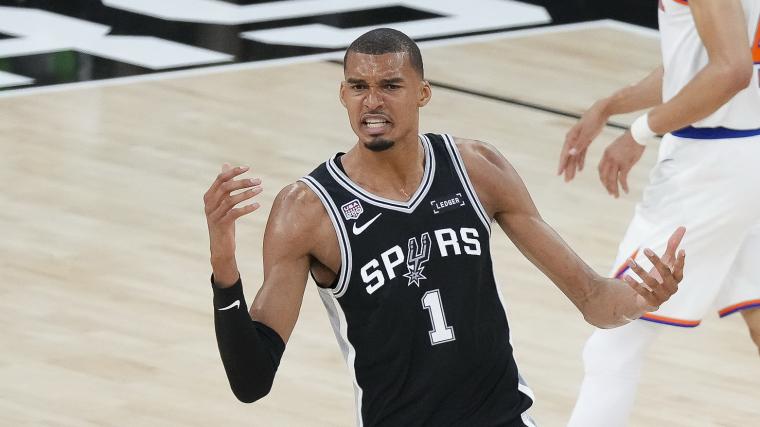
For a sensation like Victor Wembanyama, this is more than just basketball. This is an immediate, brutal initiation into the ‘win now’ philosophy that defines global superstardom. It’s a challenge to rise above individual stats, even ‘strong’ ones, — and drag a team over the finish line. ‘Wembanyama will have the daunting task of completing that comeback if he’s to win his first title.’ No pressure, kid.
📄 POLICY WIRE WHITEPAPER PUBLISHED: PAKISTAN'S NATIONAL SECURITY POLICY PRIORITIES
👉 READ BY CLICKING HEREThe stats tell a clear if nuanced tale: through two games, the Knicks are edging it out. They’ve been better at creating turnovers, shooting from deep, — and protecting the ball. But it’s tighter than the scores suggest. Game 2, for example, saw the Spurs momentarily take the lead before ‘a Wembanyama turnover and the star center’s missed potential game-winner’ sealed their fate. Close, but no cigar. Not even a puff.
What This Means
The echoes of this particular sporting contest reverberate in more ways than just athletic prowess. Politically — and economically, sports dynasties often mirror power structures, especially on a global stage. Think of the psychological impact of a dominant cultural export from New York—a global city—versus San Antonio, which, for all its charm, doesn’t quite command the same international soft power. The Knicks’ resurgence, driven by high-profile investments and strategic talent acquisition, embodies a ‘winner-takes-all’ market logic, a phenomenon not unfamiliar to financial hubs like London or Karachi.
But there’s a deeper, more relatable current here, particularly in developing economies or nascent democracies like Pakistan. When faced with seemingly insurmountable challenges, be it economic instability or complex geopolitical entanglements, the narrative often centers on the ‘unlikely comeback’ or the ‘defying of historical odds.’ For a fan base in Lahore or Dhaka watching this series unfold, Wembanyama’s challenge is less about basketball and more about the universal struggle against overwhelming statistical disadvantage – a familiar battle. The media machine, hungry for dramatic narratives, already pivots; if the Spurs miraculously recover, it’s a story of ‘grit,’ a buzzword adored by politicians and venture capitalists alike. If they falter, it’s a lesson in the cold, hard reality that money, talent, and home-court advantage don’t always translate into a foregone conclusion. But they sure help. ‘Divine interventions’ aside, consistent, disciplined execution usually trumps heroic, last-ditch efforts—a lesson as pertinent to national policy as it’s to a final possession in basketball. This isn’t just about rebounds and assists; it’s about control, perception, and the brutal efficiency of a well-oiled machine versus a promising, but currently floundering, underdog. The kind of dynamic you see playing out, say, in international trade negotiations between established blocs and emerging markets, where a 2-0 deficit often means far more than just a couple of lost games. It means shifting capital, declining influence, — and the bitter taste of missed opportunity. And nobody likes that.