


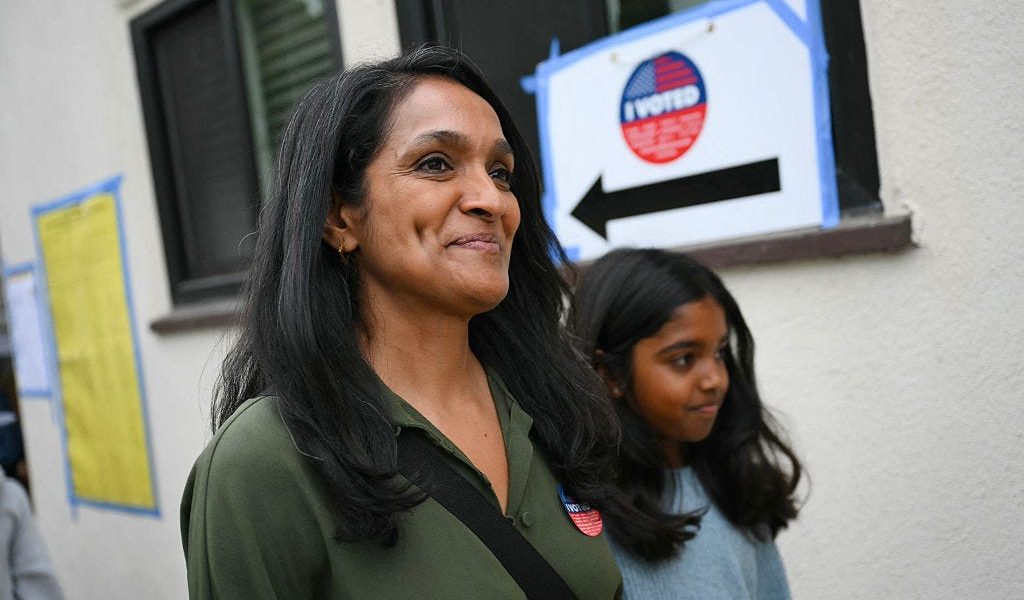
LA Mayoral Race Shifts: Raman Gains, Pratt’s Lead Tested Amidst Voter Volatility
POLICY WIRE — Los Angeles, USA — It isn’t often that the seemingly immutable laws of political gravity get a good shake. But that’s what’s happening in Los Angeles, where the mayoral race,...

POLICY WIRE — Los Angeles, USA — It isn’t often that the seemingly immutable laws of political gravity get a good shake. But that’s what’s happening in Los Angeles, where the mayoral race, presumed by many to be a comfortable coronation, has abruptly picked up some unexpected turbulence. Recent tallies reveal a definite bump for candidate Raman, sending a ripple—maybe even a tremor—through what was thought to be a settled landscape.
For weeks, most pundits—and honestly, plenty of everyday folks—had written the narrative in stone. Pratt, the incumbent, had this thing locked down. You know how it goes; sitting governors, mayors, presidents often benefit from that comfortable inertia, especially when their opposition seems… less formidable, less funded, less familiar. But momentum, they say, can be a funny thing. And now, as more ballots get counted, it appears Raman’s campaign has found a gear nobody quite expected. They’ve managed to significantly increase their vote count, enough to make some folks in Pratt’s camp nervously eye their coffee cups, suddenly feeling the need for an extra shot. [QUOTE_PLACEHOLDER]
It’s not about what *was* expected. It’s about what *is* emerging from the ballot boxes now. The latest figures show Raman chipping away at Pratt’s lead, slowly but persistently. The city’s official Elections Commission reported on Monday that out of 800,000 ballots processed, Raman’s share has risen by a respectable 2.3 percentage points in the last reporting period. That’s not a tsunami, sure, but in a tight race, every drop counts. It changes the conversation from a casual stroll to a brisk power-walk for the current frontrunner.
So, the question on everyone’s lips—from downtown diners to Malibu mansions—isn’t whether Raman can get *close*. It’s whether Raman can genuinely overtake Pratt. It’s an improbable scenario to many, like asking a long-shot horse to gallop past the thoroughbred in the final furlong. But in politics, as in horse racing, sometimes the dark horse has more in the tank than you’d assume. They’re running on fumes, maybe, but still running. The electorate, notoriously fickle even on its best days, has certainly decided to keep us all guessing this time around. And you’ve gotta wonder: what does that kind of late-stage swing say about voter sentiment?
But the ramifications stretch further than just city hall. We’re witnessing a wider discontent with established political figures, an impatience with the status quo, you could say. It’s not a uniquely American phenomenon, believe me. Look at Pakistan, for instance, where recent political shifts have seen surprising reversals and new faces gain unexpected traction against seasoned campaigners. This pattern of challenging perceived political inevitability, where a population is increasingly keen on upsetting the old guard, it’s something we’re tracking across the globe. Just as new political forces are pushing against long-standing regional blocs in the Muslim world—reshaping alliances and internal governance structures—so too are local populations here starting to flex that independent muscle.
And it isn’t merely about who wins the top job; it’s about what this kind of challenge represents. It signals an engaged, though perhaps less predictable, voter base. A base that isn’t just ticking boxes because that’s how it’s always been done. The conventional wisdom often holds that late-stage shifts are rare, reserved for scandal or sudden, game-changing news. But here we’re, seeing the ground move beneath our feet without any seismic event. It’s almost more disquieting for incumbents, you know? There’s no single villain to point at, just an accumulating sentiment. The kind that slowly, then suddenly, just picks up.
📄 POLICY WIRE WHITEPAPER PUBLISHED: PAKISTAN'S NATIONAL SECURITY POLICY PRIORITIES
👉 READ BY CLICKING HEREIt’s clear now that the incumbent’s team has to hustle. Their public messaging, their outreach, all of it will need a harder edge. Pratt’s campaign strategy, presumably, has shifted from coasting to actively campaigning, like a defensive back scrambling to cover a surprisingly quick wide receiver. No one likes to be caught flat-footed. We saw a similar dynamic play out—albeit in a different arena—in the world of competitive sports when even the most entrenched, strategic assets can face unexpected challenges, requiring immediate, reactive recalibration. It’s a reminder that no position of power is entirely impervious to challenge. Not in this day and age.
What This Means
This evolving narrative in the Los Angeles mayoral election is more than a local curiosity; it’s a barometer of something broader bubbling up in electorates everywhere. Pratt’s faltering lead, or at least its erosion, suggests a public increasingly willing to gamble on fresh faces or, perhaps more accurately, just vote against what feels too familiar. Economically, this could mean an incoming administration — should Raman somehow pull off the upset — with a mandate for more aggressive policy changes, potentially affecting local development projects, infrastructure spending, or even business regulations. New leadership often signals new priorities, new allocations of capital, — and new beneficiaries. For investors and businesses operating in L.A., this unpredictability means keeping a very close watch, as sudden policy shifts can create both risk and opportunity.
Politically, the implications are stark. If an incumbent, even a perceived strong one, can be this deeply challenged in a major city like Los Angeles, it’s a clarion call to every elected official coast-to-coast: assume nothing. The electorate isn’t just listening anymore; they’re acting, and sometimes that action is a quiet, steady migration away from the tried and true. It’s a rebalancing of power, often imperceptible until the numbers finally roll in. It hints at a subtle shift towards populism or perhaps just a deeper longing for a perceived reset, even in our most glittering cities. The margin of comfort has shrunk, not just for Pratt, but for many a politician in the modern age, making the fickle hand of policy ever more challenging to grasp.