

The Vertical Gambit: How an Ohio Junior Mastered the Margins of Sporting Excellence
POLICY WIRE — Columbus, Ohio — The fickle winds of fate—or perhaps just the air currents inside a vast stadium—often decide who claims the glittering prize and who leaves with just the memory of...

POLICY WIRE — Columbus, Ohio — The fickle winds of fate—or perhaps just the air currents inside a vast stadium—often decide who claims the glittering prize and who leaves with just the memory of effort. Sometimes, though, it’s just about sticking the landing. For Bloom-Carroll’s Dominic Knapp, his state title didn’t just appear. No, it emerged from the grist of previous disappointments, a sudden ascent that barely a year prior seemed laughably out of reach.
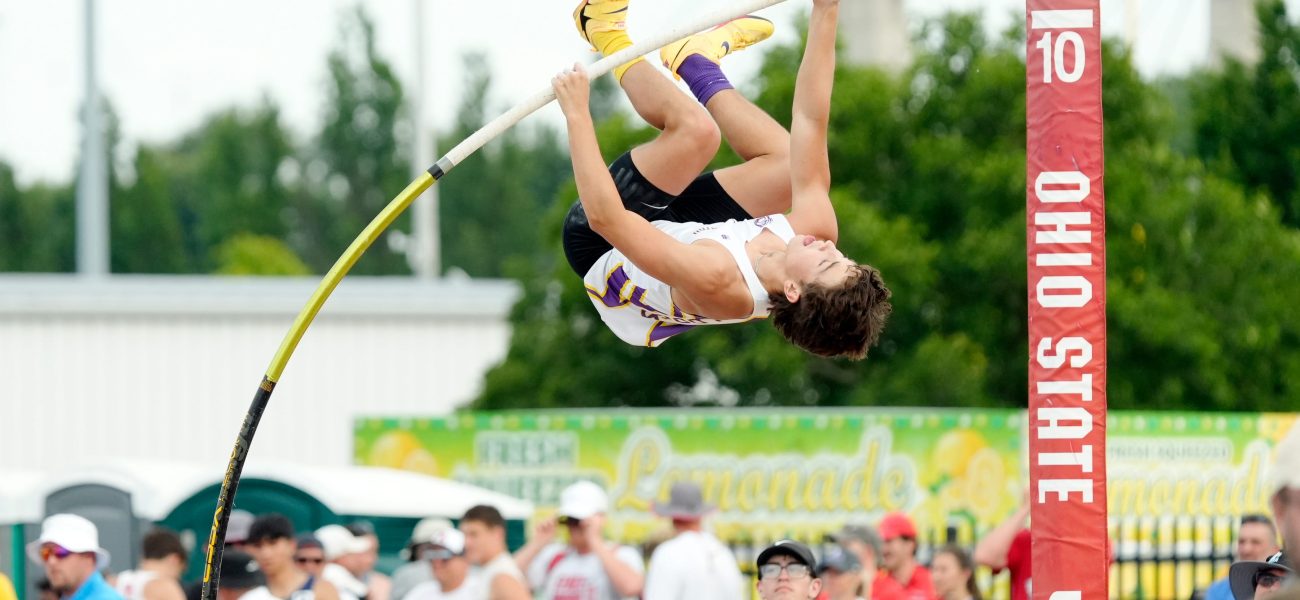
You see, not so long ago, young Knapp couldn’t even wrangle an escape from his own district track meet. Now? The junior’s hoisting the OHSAA Division III boys pole vault state champion trophy, a transformation that begs a deeper look at what it truly takes to conquer a personal Everest—or in this case, 15 feet, 10 inches of air and fiberglass. [QUOTE_PLACEHOLDER]
His journey, a compressed masterclass in focus and physical commitment, wasn’t about raw, untapped talent exploding overnight. It was grittier than that. There’s a certain humility in admitting how far you’ve come. And Knapp admitted, “This is my first time to make it to regionals or state.” He couldn’t quite believe it himself. “It’s insane.” He added that “If you would have told me last year, I wouldn’t have believed you.” This wasn’t some natural prodigy just showing up; it was a grinder, a deliberate self-sculpting act.
Last year, Knapp managed a respectable 14 feet, a personal record for a sophomore. Good, not great. But somewhere between then — and now, a different athlete materialized. He’d logged untold hours, meticulously refining his technique, his timing, and probably his psyche, under the watchful eyes of family and coaches. He also spent time honing his craft at Buckeye Pole Vaulting Academy in Sunbury, Ohio—a place where dreams are measured in fractions of an inch and fractions of a second.
This year, the story’s starkly different. He clinched the D-III district title at Hilliard Darby at 14 feet after a jump-off, then owned the Muskingum regional with a 15-foot vault. By the time he hit Ohio State’s Jesse Owens Memorial Stadium on Friday, the stakes were sky-high. He found himself locked in a high-stakes duel with Perry’s Traxton Richards, the kind of head-to-head showdown that separates the serious from the merely ambitious. It’s here, under this pressure cooker, that one truly measures an athlete’s mettle, isn’t it?
The winning vault, a commanding 15 feet, 10 inches, secured on his second attempt, proved insurmountable for Richards. Even then, he remained grounded, describing the experience as somewhat detached: “It’s kind of a blur. Getting here has been awesome.” You wouldn’t want a competitor to be any other way. Because overconfidence? That’s a trap, isn’t it?
Knapp spoke with the calculated pragmatism of a seasoned competitor. “I try not to think too highly because winds can change and there are a lot of variables in pole vaulting.” And he’s got a point. One errant gust, one slight shift, — and glory slips through your fingers. He doesn’t sugarcoat the mindset either, explaining, “I would say you never want to come in with a super winning mentality or too overconfident.” It’s a lesson in controlled ambition, a trait we often see in highly successful individuals across all competitive fields. His consistent execution was what set him apart, missing only two vaults before attempting 16-1, proving how singular focus reshapes sporting futures. He confirmed, “I come in knowing I’ve been super consistent at the heights. I knew I had what it takes to get the job done a little better than normal.” Indeed.
📄 POLICY WIRE WHITEPAPER PUBLISHED: PAKISTAN'S NATIONAL SECURITY POLICY PRIORITIES
👉 READ BY CLICKING HEREHis approach contrasts sharply with the flashy, all-or-nothing gambles often witnessed in competitive sports. It speaks to a deep understanding that raw power often bows to relentless consistency. As Knapp explained it, in earlier contests it’s “survive — and advance.” But state? “That’s where you care about the attempts.” He added: “They mean more, so being super consistent at those heights over 14-6 and 15 feet and getting that first attempt is important.” It’s not just about clearance; it’s about efficiency. That meticulousness. It’s the hallmark of a true competitor.
And it’s a testament to the systematic investment in sports academies like Buckeye. They provide specialized training that few high school programs alone can offer. It’s not just in Ohio, or America; countries like Pakistan are grappling with similar challenges in developing world-class athletes, where infrastructure and specialized coaching can be sparse. Many aspiring Pakistani athletes must seek private funding or rely on fragmented training to chase excellence, often dreaming of the consistent, structured support that an athlete like Knapp now enjoys. It’s about recognizing that sustained improvement requires sustained input—financial, technical, and psychological.
What This Means
This tale isn’t just about a kid jumping really high; it’s a policy blueprint in miniature. Knapp’s victory exemplifies how a blend of personal dedication and structured external support (like Buckeye Pole Vaulting Academy) can yield disproportionate returns. The economic implication here is clear: strategic investment in niche, high-performance training—be it in athletics, STEM, or entrepreneurial ecosystems—creates an environment ripe for talent maturation.
For burgeoning economies or regions striving to enhance their human capital, this isn’t just a sports story; it’s a playbook. It illustrates the effectiveness of focused investment over generalized programs. You’ve got to ask: where are the “Buckeye Pole Vaulting Academies” for nascent engineers or digital innovators in Islamabad or Karachi? This success isn’t about natural gifts; it’s about a calculated, deliberate pathway from potential to palpable achievement. It also mirrors broader economic narratives where small-town nine reveals larger game of talent, investment, and strategic inertia.
Political implications, perhaps less obvious, speak to resource allocation. Do we invest broadly, hoping for diffuse benefits, or do we create specialized pipelines that nurture specific talents to international standards? Knapp’s experience champions the latter. His journey suggests that when you marry an individual’s tenacious ambition with precise, high-quality, external coaching, you don’t just win state titles; you forge resilient, high-achieving individuals capable of navigating complex competitive landscapes far beyond the track and field stadium. And that’s something worth noting.