

Market’s Stubborn Logic: Why Global Energy Shrugs Off Iranian Flare-Ups
POLICY WIRE — Washington, D.C. — You’d think the prospect of renewed — or even escalated — conflict in one of the world’s most hydrocarbon-rich neighborhoods would send shivers down every...

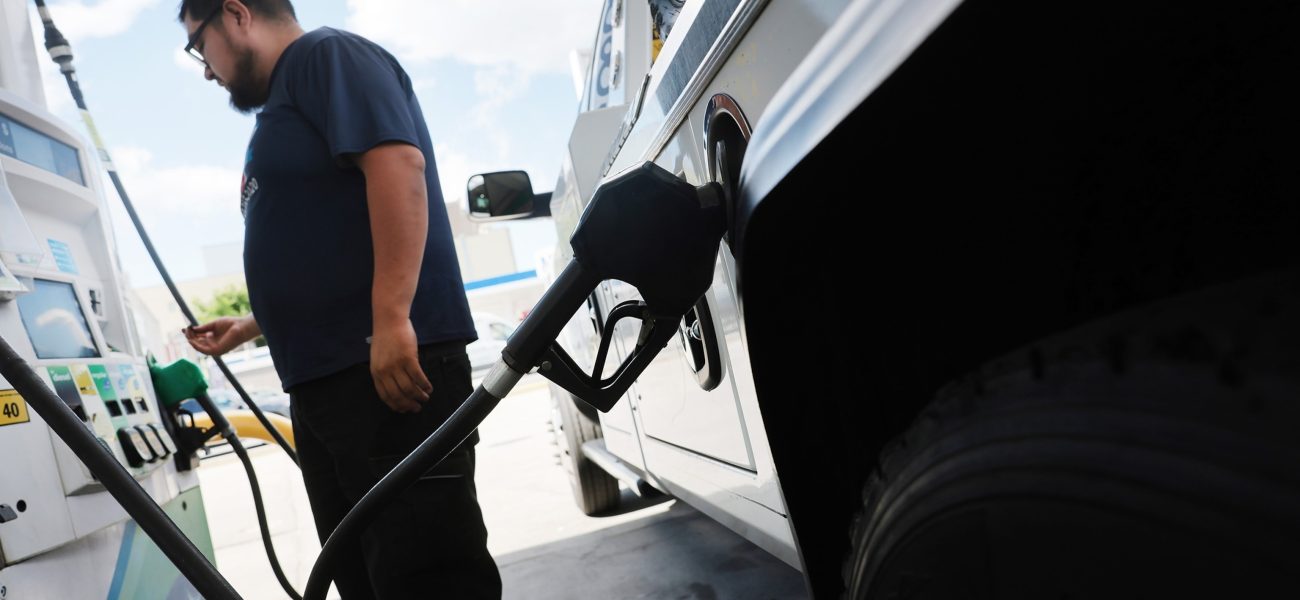
POLICY WIRE — Washington, D.C. — You’d think the prospect of renewed — or even escalated — conflict in one of the world’s most hydrocarbon-rich neighborhoods would send shivers down every trader’s spine, sparking a feverish dash for crude. Instead, a peculiar calm has settled over the global energy markets. Gas prices, quite unexpectedly, haven’t just held steady; they’ve shown a surprising reluctance to spike, even as sabers rattle louder near the Strait of Hormuz. It’s a head-scratcher for anyone schooled in classic geopolitical risk, honestly. And it certainly throws a wrench into the tidy narrative we’ve come to expect.
Because, traditionally, any sniff of trouble in the Persian Gulf is enough to send a ripple—or a tsunami—through the oil futures market. We’re talking about the world’s most critical oil chokepoint, a maritime artery through which roughly a fifth of the world’s daily oil supply moves. Yet, the usual panicked buying hasn’t materialized. Consumers, for once, aren’t getting hammered at the pump by distant political chess games. It’s almost counterintuitive. Market resilience? Perhaps a dose of skepticism toward predictable crisis cycles? Whatever it’s, something’s shifted beneath the surface, reshaping how these flashpoints register economically.
One might easily point to the broader global economic landscape. Growth forecasts aren’t exactly setting the world alight, are they? Many industrialized nations are grappling with persistent inflationary pressures, sluggish manufacturing outputs, and a consumer base that’s getting more cautious with every spending decision. That slack demand acts like a cushion, soaking up potential supply shocks before they translate into truly brutal price hikes. There’s just not the same frenetic competition for every last barrel when industries aren’t humming at full tilt. And this current lack of enthusiastic uptake in certain key markets is arguably as influential as any Mideast development.
The Saudis, for instance, aren’t exactly dialing back production, are they? Despite the nominal efforts by OPEC+ to stabilize markets through supply adjustments, actual compliance sometimes feels like it’s written in invisible ink. Russia, for its part, has kept oil flowing to alternative markets like India and China, albeit at a discount, making it tricky for the collective cartel to maintain scarcity. You’ve got all these moving parts—geopolitical posturing, fluctuating demand signals, and strategic hedging by major producers and consumers—that converge to create this rather perplexing stability. Global capital’s movements, too, play their own silent, often unseen, hand in these volatile equations.
Then there’s the long game. Energy traders—those folks with screens full of flickering numbers—they’ve seen this movie before. Years of conflict in the region, punctuated by grand pronouncements and stern warnings, have instilled a certain fatigue, a learned skepticism perhaps, toward immediate and catastrophic outcomes. There’s a prevailing sense that even serious incidents tend to be contained, or at least priced in, with surprisingly rapid speed. One expert put it bluntly: [QUOTE_PLACEHOLDER]. Meaning, unless Iranian crude is physically shut down en masse for an extended period, or the Strait of Hormuz becomes genuinely impassable, the knee-jerk reactions of yesteryear have been replaced by a more nuanced, almost jaded, assessment of risk.
📄 POLICY WIRE WHITEPAPER PUBLISHED: PAKISTAN'S NATIONAL SECURITY POLICY PRIORITIES
👉 READ BY CLICKING HEREThis evolving market behavior isn’t just some abstract economic phenomenon; it’s got real implications across the Muslim world and broader South Asia, regions heavily dependent on stable, affordable energy. Take Pakistan, for instance. A country that already struggles with energy security, chronic current account deficits, — and high inflation. Skyrocketing oil prices, ignited by Mideast instability, can and often do spell immediate economic disaster there, feeding a vicious cycle of currency depreciation and public discontent. When oil stays relatively subdued, it provides some much-needed breathing room, however fleeting, for governments wrestling with immense internal pressures. A modest global energy price of, say, roughly $80 per barrel for Brent crude in early 2024, as reported by the U.S. Energy Information Administration (EIA), represents a more manageable challenge than prices breaching the $100 mark.
What This Means
This apparent detachment of global energy markets from immediate Iranian geopolitical currents represents a profound shift. It suggests that the underlying structural factors of supply—the continued output from non-OPEC+ sources like the U.S. shale plays, for example—and demand—the softening global economy—are outweighing regional tensions. The U.S. position as a net energy exporter fundamentally alters the calculus, reducing its own domestic vulnerability to Middle East shocks while offering an alternative supply anchor for global markets. But this stability isn’t a license for complacency, particularly for countries in South Asia like Pakistan. They remain exquisitely sensitive to *any* future upward trajectory. While current restraint offers a respite, it’s a fragile one. Any true disruption—a kinetic strike that *actually* targets critical infrastructure, a sustained blockade, or a severe, unanticipated drop in global spare capacity—would quickly rewrite this current narrative of market resilience. It’s less about a new era of unshakeable calm, and more about a market that’s become extraordinarily good at distinguishing saber-rattling from actual swordplay. Or so it seems for now.
It’s almost like a slow-motion poker game, with every player bluffing a little, holding their cards tight, and no one quite willing to go all-in just yet. But remember, predictable futures are often the first to shatter when the underlying dynamics are truly tested. The subtle irony here? The very mechanisms designed to bring market stability—like OPEC+ cuts or strategic reserve releases—are sometimes overshadowed by sheer global economic inertia. And that’s something to think about.