


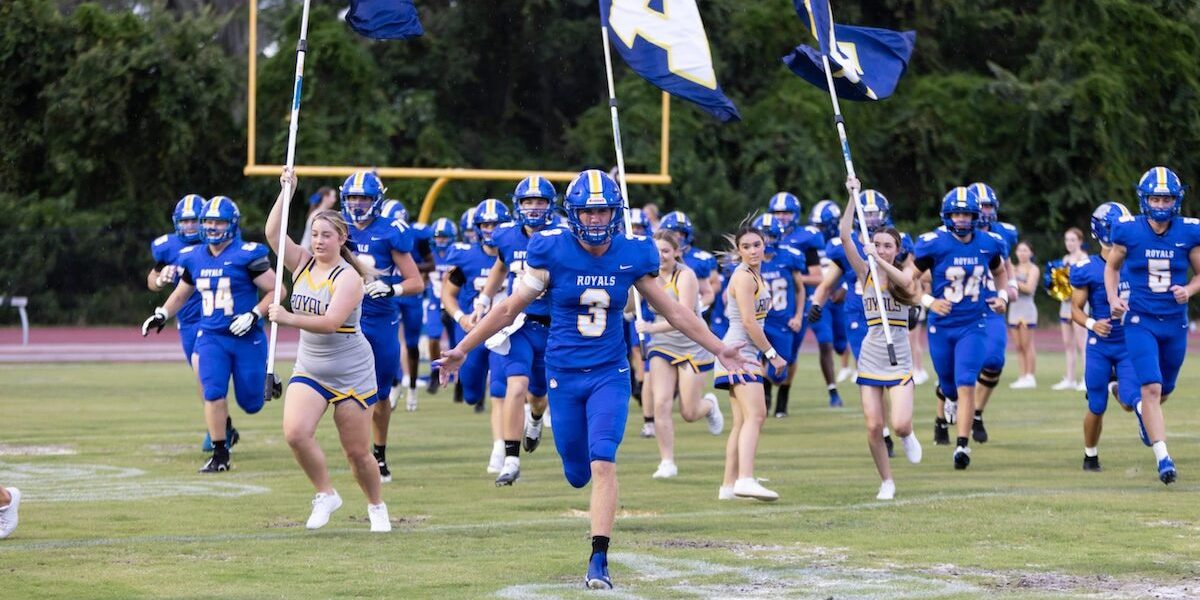
Florida’s Friday Night Fortunes: A High School Schedule Unmasks the Brutal Business of Talent Farming
POLICY WIRE — Orlando, USA — When The First Academy (Fla.) Royals dropped their 2026 football schedule this week, most folks probably just saw dates, times, and potential local rivalries. But for...

POLICY WIRE — Orlando, USA — When The First Academy (Fla.) Royals dropped their 2026 football schedule this week, most folks probably just saw dates, times, and potential local rivalries. But for those of us who track the quiet, often brutal, churn of capital — and human endeavor, it’s far more telling. This isn’t just about kids chasing a pigskin; it’s a detailed, publicly listed ledger in the vast, opaque economic machinery of American youth sports, a machine with global implications and, frankly, some pretty nasty gears.
Because, make no no mistake, these schedules aren’t just for moms — and dads planning Friday nights. They’re scouting reports for recruiters, data points for ranking services, and market signals for an industry that converts adolescent athleticism into scholarship equity, media deals, and, for a select few, multi-million-dollar professional careers. The Royals, coming off a ban—a little stain on their shiny record, don’t you think?—are diving back in with a notoriously tough slate. They’re not just playing; they’re competing in a system designed to separate the economic wheat from the chaff.
It’s a gladiatorial system, really, operating on the backs of uncompensated, underage labor. The high-profile names, like 2027 four-star offensive lineman Reed Ramsier, aren’t just promising players; they’re assets. And the academy itself, a product of this specialized talent factory model, understands this completely. Consider IMG Academy, an institution cited in the original reporting, which claims it’s ‘directly responsible for filling one-quarter of all college roster spots on an annual basis.’ Think about that for a second. One-quarter. That’s a staggering data point, sourced from their own promotional material, underscoring their role not as a school, but as a human capital farm.
And it’s a model that’s being eyed, sometimes enviously, by developing nations. Pakistan, for instance, a nation grappling with its own complex talent migration—the brain drain—often struggles to professionalize youth sports on this scale. They’ve got the raw athletic talent, plenty of it, but lack the infrastructure, the financial backing, and that cutthroat American enterprise that builds such specialized academies. Imagine what such focused, almost surgical, athletic development could do for a country seeking to establish itself on the global sports stage, not just for pride, but for potential soft power and remittances from successful athletes abroad. It’s an investment strategy that transcends mere trophies.
But the moral ambiguity of this hyper-commercialized athletic pipeline weighs heavily. Dr. Aisha Rahman, an Assistant Secretary at Pakistan’s Ministry of Sports and Youth Affairs, voiced a common concern earlier this year: “We absolutely recognize the economic power of sports. But we must foster environments that prioritize a child’s holistic development, not merely view them as economic units in a future league. That’s a delicate balance we in developing nations, with scarcer resources, must strike more carefully.”
Indeed. Here in the Sunshine State, where schools like The First Academy groom these future pros, the narrative from state officials is predictably upbeat. Florida’s Commissioner of Education, Dr. Marcus Thorne, recently quipped, “Our academies don’t just produce athletes; they build character. It’s about opportunity, pure and simple. These programs prepare young men for the rigors of college life—and beyond, wherever their talents take them.” Sure, ‘character’ and ‘rigor.’ And millions, too, I’m sure.
But how many are truly getting that shot, — and at what cost to the others, to their academic pursuits? And what kind of global messaging does it send when athletic prowess becomes such an explicit, visible economic vehicle?
📄 POLICY WIRE WHITEPAPER PUBLISHED: PAKISTAN'S NATIONAL SECURITY POLICY PRIORITIES
👉 READ BY CLICKING HEREWhat This Means
This single schedule, released without fanfare, is a microscopic look into a much larger macro-economic trend. We’re seeing the professionalization of childhood—an American export, perhaps—where specialized academies become not just schools but incubators, investment vehicles. For a state like Florida, it means sports tourism, local economic activity around events, and potentially attracting families willing to invest significant sums in their child’s athletic future. It’s a self-perpetuating system that also raises difficult questions about access, equity, — and educational priorities.
On a global scale, particularly in South Asia or the Muslim world, where youth demographics are soaring but opportunity can feel constrained, this model presents a tantalizing, if complex, alternative. It’s a template for potentially exporting human capital — and for creating new avenues of national pride and influence. Countries like Pakistan might consider such intensive academies not just for sports development but as a strategic investment in human resources, especially if conventional educational or economic pathways feel less viable. But, they’d need to navigate the ethical shoals carefully. This relentless pursuit of athletic supremacy, divorced from broader educational integration, could backfire culturally, socially, and—ultimately—financially.
it highlights how institutions in the US, whether by design or happy accident, create sophisticated pipelines for specific skills. The conversation often circles back to national economies and how they value different types of ‘talent,’ from coding to sports. Is the high-stakes world of Florida high school football just a localized version of a global talent wager, echoing a deeper societal gamble?
This isn’t about cheering for touchdowns; it’s about dissecting a formidable economic enterprise, one schedule at a time. It’s gritty, complex, and sometimes—uncomfortable.
