

Ohio’s Expanded Gridiron of Cinders: More Divisions, More Questions
POLICY WIRE — Columbus, Ohio — Forget the fanfare, the roaring crowd, and the personal bests for a moment. What really stands out about this year’s Ohio High School Athletic Association (OHSAA) track...

POLICY WIRE — Columbus, Ohio — Forget the fanfare, the roaring crowd, and the personal bests for a moment. What really stands out about this year’s Ohio High School Athletic Association (OHSAA) track and field state championship isn’t just the sheer athletic prowess on display at Jesse Owens Stadium; it’s the paperwork. The logistics. The subtle, yet significant, ripple effects of bureaucracy catching up to ambition.
They’ve busted it wide open, see? From three divisions to five. It’s an administrative decision, quietly pushed through, that now dictates an expanded, elongated affair on the track, spilling over an extra day or two. More events. More champions. And, one might ask, more headaches for everyone actually running the show. The intent, we’re told, is democratic: spread the glory around, give smaller schools a better shot. But what’s democratic in theory sometimes just feels cumbersome in practice.
The numbers themselves tell a story of escalating scale. Just take Division 3: Oakwood’s girls’ 4×800 relay team, for instance, sprinted to victory in a blistering 9:07, according to official OHSAA championship data, leaving Hathaway Brown in their wake. But imagine duplicating that entire operational spectacle across five distinct classifications. It’s not just about timing clocks — and raking sand pits. It’s a full-on logistical scramble.
But there’s no denying the individual narratives blossoming amidst the organized chaos. A student from Shaker Heights, whose family immigrated from Karachi just years ago, could be found among the sprinting hopefuls—her family watching with wide eyes, experiencing a wholly American competitive tradition. That’s a connection often lost in the headlines; it’s personal ambition meeting public opportunity. Because, in places like Ohio, high school sports can sometimes feel like the last unifying, public ritual we’ve got. For many, this isn’t just a game; it’s a chance, an escape, a tangible measure of self-worth. And that’s a big deal.
“We’re absolutely committed to growing opportunities for our young athletes,” declared Doug Ute, Executive Director of the OHSAA, when asked about the expansion, his tone a mix of defiance and practiced optimism. “This move reflects the diversity of our member schools, and it’s already generating excitement in communities that might’ve felt marginalized before.” Sounds good on paper, doesn’t it? Yet, you’ve got to wonder about the strain on smaller district budgets, scrambling for coaches, transportation, and equipment for potentially more state-level qualification contenders.
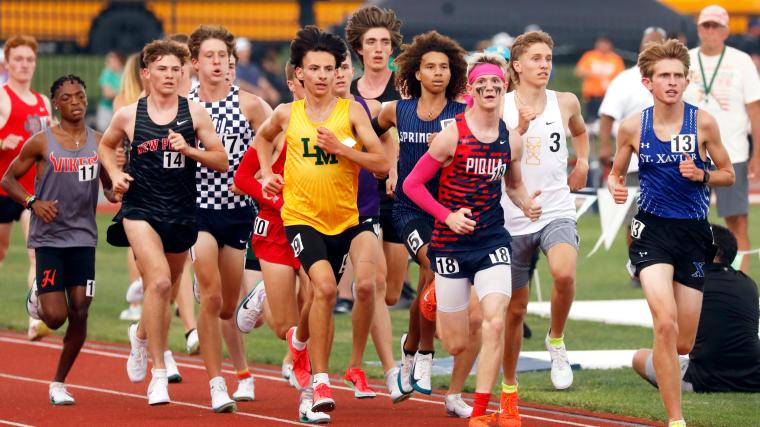
And those contenders? They’re the story. Take Gilmour Academy, which claimed the boys’ Division 4 team title, or Beachwood dominating the girls’ side. These are the perennial powerhouses, but now there’s a broader canvas for upsets. Who’d have predicted Union Local’s Connor Bendo, smashing through the Boys 3200 in 9:08, nearly a minute faster than some competitors? It’s unpredictable, a bit gritty, like the best of sports often are.
📄 POLICY WIRE WHITEPAPER PUBLISHED: PAKISTAN'S NATIONAL SECURITY POLICY PRIORITIES
👉 READ BY CLICKING HEREOne longtime high school coach, who preferred to remain anonymous lest he ‘offend the establishment’, put it more bluntly: “They want more champs. More trophies. More merch sales. And it does mean more kids getting that once-in-a-lifetime memory. But it’s a lot to manage. A lot more pressure on our volunteers — and support staff.” He didn’t sound happy, but he also didn’t sound wrong.
It’s this expansion that brings us back to the practical realities. An additional day of competition, pushing the schedule out over four days from June 4th to June 7th. That means more hotels booked in Columbus, more stadium concessions sold, and certainly more traffic snaking through the capital. It’s not a negligible impact. But are those economic boosts evenly distributed, or does the weight fall more heavily on school districts already stretched thin?
Ohio’s educational landscape is complex, boasting diverse student populations, including growing communities with ties to the Middle East and South Asia. For these students, participating and excelling in sports like track and field represents more than just a medal; it’s an active assertion of belonging and success within their new home. This broader championship framework, perhaps unintentionally, might better accommodate that emergent diversity by lowering the bar for state qualification in some categories, or simply providing more pathways to experience competitive success. It certainly adds to the buzz, creating narratives beyond the traditional gridiron or the courts – though one could argue that gridiron drama always manages to find its way to the fore anyway.
What This Means
This expansion isn’t merely an organizational tweak; it’s a quiet policy experiment in public high school athletics. Politically, it signals a deeper administrative reach into state sports, potentially setting a precedent for other states grappling with participation numbers and equitable representation. Economically, Columbus certainly benefits from an extended tourism bump, however small in the grand scheme. But for the small-town schools, for the parents — and the booster clubs, it means stretched resources. You’ve got more opportunities for kids to wear the medal, sure, but you also amplify the strain on volunteer time, equipment budgets, and school district infrastructure. This is what happens when you attempt to broaden the tent without necessarily growing the frame commensurately. It raises questions about resource allocation, long-term sustainability, and whether ‘more’ always equates to ‘better’ in youth development. And what about the coaches? Their lives, already a blend of educator — and glorified babysitter, just got that much more complicated. But still, the kids show up, don’t they? They always do. Their sheer ambition often overlooks the messy details, much like global athlete power eclipsing local concerns.