


Black Sea Heats Up: Kyiv’s Bold Naval Gambit Coincides With NATO Drone Scare
POLICY WIRE — ODESSA, UKRAINE — The usual dance of veiled accusations and diplomatic theater has gotten mighty loud, lately. You could practically hear the gears grind as Ukraine, in a stunning...

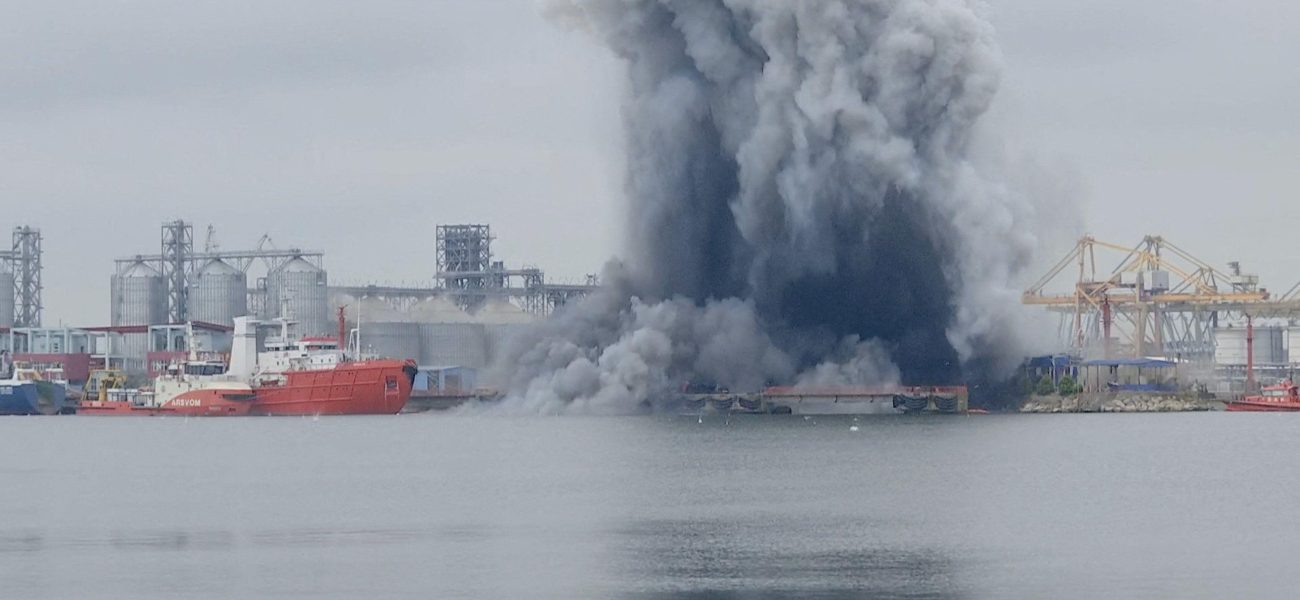
POLICY WIRE — ODESSA, UKRAINE — The usual dance of veiled accusations and diplomatic theater has gotten mighty loud, lately. You could practically hear the gears grind as Ukraine, in a stunning admission, confirmed some of its offensive drones did indeed cross into Romanian airspace—a stone’s throw, really, from actual NATO territory. That wasn’t just some oopsie, you understand. And it happened as reports surfaced of Kyiv ramping up its rather audacious strikes against cargo vessels in the Black Sea, turning what was already a dicey shipping lane into a maritime gauntlet. Meanwhile, Vladimir Putin, the man in the Kremlin, wasn’t just observing; he was prepping for a major speech, undoubtedly to cast his own narrative net over these increasingly chaotic waters.
It’s all part of a fresh chapter in this grinding conflict, where the rules seem to be less written, more scribbled on a cocktail napkin. Ukrainian forces, by all accounts, have taken a bolder posture, moving beyond land-based skirmishes to directly threaten Russia’s naval logistics and economic chokeholds. They’re hitting hard, trying to make the cost of Moscow’s Black Sea operations—its grain blockades and military transports—absolutely prohibitive. But that means collateral. It means frayed nerves in the neighborhoods, too. Just ask Bucharest, where fragments of an exploding drone landed within their borders, igniting a brief but sharp spike of panic across the NATO alliance.
Because let’s face it: one wrong turn, one misplaced explosive, — and the stakes vault higher than ever before. “We’ve got no choice but to push back—every way we can,” declared Oksana Moroz, spokesperson for Ukraine’s Ministry of Defense, her voice steady during a recent press conference. “They’ve cornered us. These strikes? They’re simply a response, a clear message that this Black Sea isn’t their personal pond.” It’s a harsh truth, delivered with unblinking resolve, that Ukraine, despite its disadvantages, intends to punch above its weight.
But the view from Moscow? Starkly different. “This recklessness, targeting civilian infrastructure under false pretenses, it’s a grave provocation,” countered Maria Zakharova, the formidable spokesperson for Russia’s Foreign Ministry, her tone dripping with disdain. “NATO’s silence speaks volumes. Such aggression won’t go unanswered; it destabilizes the entire region.” It’s the kind of strong language that precedes stronger actions, implying yet another escalation is right around the corner.
The geopolitical dominoes? They’re clattering. With Turkey—a NATO member and significant Black Sea power—treading a delicate line as both mediator and watchful neighbor, the region’s volatility has global ripples. Ankara has tried to keep the lid on, to broker peace, to ensure safe passage for commerce. But these new aggressions? They challenge those very efforts. And it’s not just ships carrying weapons. It’s also vessels attempting to move grains, a particularly sensitive matter for regions like the Muslim world and South Asia.
For example, the UN’s Black Sea Grain Initiative, before its termination by Russia, facilitated the export of a staggering 32.9 million metric tons of foodstuffs from Ukraine between August 2022 and July 2023, according to United Nations reports. Those figures illustrate the sheer volume—and global reliance—on that contested waterway. When you start messing with that, you’re talking about prices spiking, stomachs churning, and food security turning into a political weapon. For a nation like Pakistan, heavily dependent on imports and acutely sensitive to commodity price shifts, such disruptions mean real hardship on the ground—a bitter harvest indeed, if you’ll pardon the pun.
📄 POLICY WIRE WHITEPAPER PUBLISHED: PAKISTAN'S NATIONAL SECURITY POLICY PRIORITIES
👉 READ BY CLICKING HEREThese latest events have kicked off precisely when President Putin was polishing his rhetoric, likely preparing to outline Russia’s long-term strategy for Ukraine. What he says, and more importantly, what he doesn’t say, will be scrutinized by capitals from Washington to Beijing, not least because it happens against this backdrop of direct challenges to Russian maritime dominance. His narrative, whatever it may be, must now account for a conflict that refuses to stay neatly confined within Ukraine’s borders, spilling over with unwelcome — even dangerous — regularity.
And these tactical strikes? They might just be an opening act. For all its talk, Russia hasn’t been able to completely neutralize Ukraine’s capacity for unconventional warfare. It’s a game of cat — and mouse, with ships as bait and drones as unexpected hunters.
What This Means
The latest escalation—Ukraine admitting drone incursions into Romania and targeting Black Sea shipping—changes the game, big time. Economically, expect more volatility in commodity markets, especially for grain and fertilizer, because a less secure Black Sea means higher shipping insurance and fewer willing carriers. Countries already struggling with inflation, particularly in developing nations such as Sri Lanka—or the nations involved in Delhi’s mineral quest—will feel the squeeze even harder. Politically, NATO faces a stark reality: its defensive perimeter is no longer just a theoretical line on a map; it’s a very real place where debris from an active war is falling. This tests the alliance’s resolve and unity, forcing members to confront uncomfortable questions about rules of engagement and proportional responses without triggering wider conflict. Moscow, in turn, finds its economic leverage diminishing and its Black Sea fleet—a symbol of power—increasingly vulnerable. It’s a lose-lose dynamic for maritime stability, and frankly, nobody’s walking away from this one looking completely unscathed.