
World Cup 2026: Haiti’s Desperate Bid for a Miracle on Global Stage
POLICY WIRE — New York, USA — When the ball finally rolls for Group C of the 2026 World Cup, one nation’s presence won’t merely signify a sporting achievement. For Haiti, qualifying against a...

POLICY WIRE — New York, USA — When the ball finally rolls for Group C of the 2026 World Cup, one nation’s presence won’t merely signify a sporting achievement. For Haiti, qualifying against a backdrop of unyielding anarchy, it’s less about the beautiful game and more about a momentary, fleeting grasp at normalcy. Their journey — played entirely away from a homeland convulsed by armed gangs and a deepening humanitarian crisis — isn’t just an underdog story. It’s a raw, gut-punch of reality, played out on the global pitch.
It’s tough to imagine a bleaker domestic scene for any World Cup participant. The capital, Port-au-Prince, has become a hot zone, pushing an estimated 1.5 million people from their homes. Estimates from the United Nations Human Rights Office indicate that armed gang violence has displaced over 1.5 million people within the country, forcing the team to find ‘home’ nearly 500 miles away in Curaçao just to play its qualifiers. But they made it. After 52 long years, they’re here, ready to face titans like Brazil — and the formidable Moroccans, along with Scotland. It’s truly wild.
Scotland, in turn, finds itself entangled in a bittersweet reunion. They’ll face Brazil and Morocco again, harking back to 1998, though this time Haiti — not Norway, mercifully — makes for the group’s wild card. The Tartan Army’s hopes of progressing beyond the group stage hinge almost entirely on their opening clash with Haiti in Foxborough. An obvious, brutal calculation, perhaps. But that’s how these expanded tournaments work, don’t they?
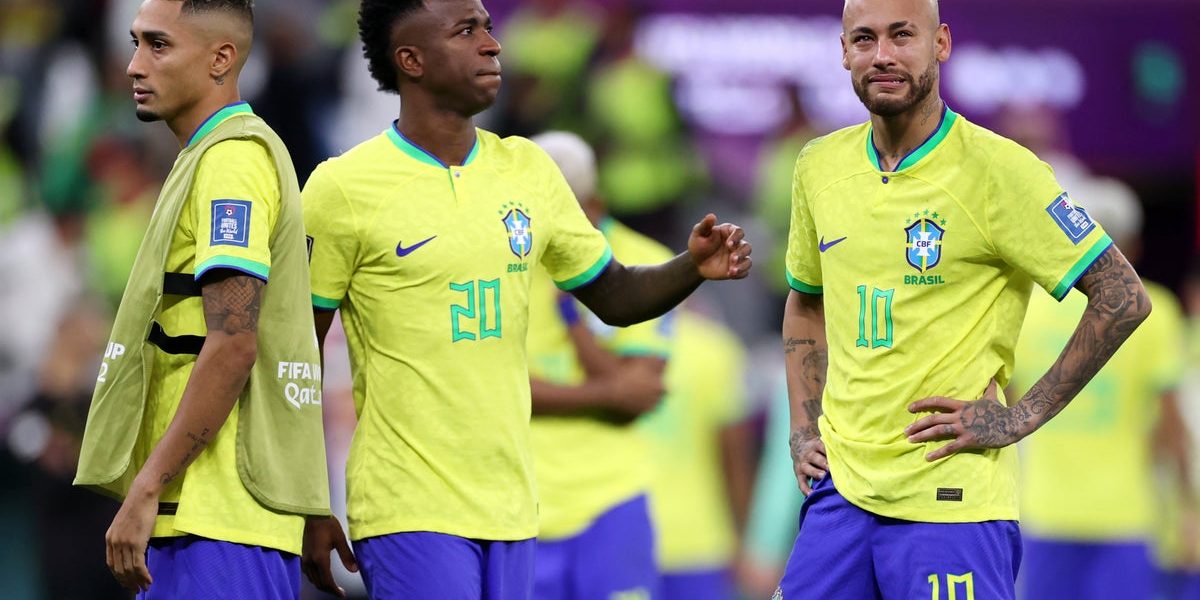
Then there’s Brazil. For them, ‘long-awaited return’ means something entirely different. They haven’t clutched the golden trophy since 2002. This barren spell — a full 24 years since their last win, tying the gap between ’70 and ’94 — feels interminable to a nation whose identity is utterly enmeshed with football supremacy. The five-time champions are, perhaps bizarrely, taking a page from the European playbook: for the first time ever, a foreign coach, the much-feted Carlo Ancelotti, is at the helm. He’s a five-time Champions League winner, sure, but coaching Brazil? It’s a whole different kettle of fish.
And he’s recalled Neymar, now 34, — and battling both form and fitness. What a surprise, eh? “The weight of history is immense here. We’ve brought Neymar back not for sentiment, but because we believe he can still provide that spark. It’s a risk, yes, but football, much like life, rarely offers guarantees without some courage,” said Carlo Ancelotti, Brazil’s pioneering foreign coach, in a statement that probably reassured no one.
Morocco, though, might offer the most intriguing narrative for the neutral — or at least, the most dramatic. Their Cinderella run to the 2022 semi-finals, the first African team to do so, has been followed by some proper drama. A few months out, coach Walid Regragui walked away after a turbulent African Cup of Nations campaign and a contentious final against Senegal. He stated he felt the team needed a “fresh face, a different energy,” which read like code for, ‘I’ve had enough of this political football.’ But they still stand as FIFA’s 8th ranked team.
📄 POLICY WIRE WHITEPAPER PUBLISHED: PAKISTAN'S NATIONAL SECURITY POLICY PRIORITIES
👉 READ BY CLICKING HERE“We acknowledge the noise. Moroccan football has seen its share of turbulence recently, but our focus remains on uniting the nation through the beautiful game, and demonstrating our strength on the global stage. We won’t shy from the spotlight,” commented Youssef El Moussaoui, spokesperson for the Moroccan Royal Football Federation, probably with a stiff upper lip. Their defensive stoicism, which spooked bigger teams in Qatar, will be key again. The Group C lineup reads: Brazil (ranked 6th), Morocco (ranked 8th), Scotland (ranked 43rd), — and Haiti (ranked 83rd). Quite the spread, isn’t it?
But Scotland? They’re not exactly bursting with confidence. Two group-stage exits in previous major tournaments. Zero wins under current coach Steve Clarke. But a 48-team World Cup changes the calculus. One victory might just be enough to squeak through. For them, that Haiti game on June 14, in the wee hours for fans back home, becomes an all-or-nothing affair. They’ll rely on veterans like Scott McTominay, now a scudetto-winning legend with Napoli (who’d have thought?), to muscle them through. Still, the squad lacks elite goal scorers — and pace out wide. They’re banking on heart, primarily. And let’s not forget their oldest player, Craig Gordon, could be the second oldest ever to play in a World Cup if he gets a run out at 43. Talk about seasoned pros!
What This Means
Beyond the goals — and glory, this Group C encapsulates several broader geopolitical narratives. Haiti’s unlikely qualification is a stark reminder of sport’s role as a potent form of national identity and, frankly, distraction in times of profound crisis. It offers a sliver of hope, however ephemeral, to a populace living under siege. From an economic standpoint, the discrepancy between the financial muscle and infrastructure of Brazil, a titan of global sport, versus Haiti’s near-total absence of domestic footballing infrastructure — its team playing all its qualifiers as ‘away’ fixtures, relying on logistical acrobatics — highlights persistent global inequalities, even in seemingly unifying domains like football.
Morocco’s story is a compelling one of soft power. Their deep run in 2022 resonated far beyond North Africa, creating immense pride across the Muslim world, from Pakistan to Indonesia. It showcased an Arab — and African nation successfully challenging the established footballing order. Any repeat performance would reinforce this narrative, projecting an image of resilience and capability onto the global stage. Conversely, Brazil’s bold gamble on Ancelotti reflects a desperate longing to reclaim their undisputed top spot, demonstrating that even football’s traditional superpowers aren’t immune to introspection and a break from convention, particularly given the colossal financial and prestige implications for a brand like Real Madrid, whose players feature heavily in both the Brazil and Moroccan squads. The tournament itself, expanded to 48 teams, ensures that commercial imperatives — larger broadcast deals, more host cities — continue to trump purely competitive considerations. That’s a cynical take, sure, but a truthful one, isn’t it?