

The Long Shot’s Allure: From Chicago’s Wind to Global Gambits, Baseball Bets Reflect Deeper Instincts
POLICY WIRE — New York, United States — It’s a game of inches, they say, but also one of unpredictable breezes and sudden, explosive force. Take June 5, 2026. While global headlines fixate on...

POLICY WIRE — New York, United States — It’s a game of inches, they say, but also one of unpredictable breezes and sudden, explosive force. Take June 5, 2026. While global headlines fixate on economic data from Beijing or geopolitical tensions simmering across the Strait of Hormuz, a more subtle, yet equally powerful, human drama quietly plays out in the digital betting markets of America’s national pastime. It’s the perennial pursuit of the long shot, the unlikely payoff that keeps punters glued to their screens, parsing granular data like medieval alchemists seeking gold. The numbers don’t lie; they just don’t tell the whole story, do they?
Because for every sophisticated algorithm sifting through exit velocity and launch angles, there’s a human yearning for that one hit, that solitary swing, to transform a modest wager into something substantial. It’s an intoxicating dance with probability, a system where even a rather ‘unimpressive’ track record can, in fact, be profitable if the bets are ‘carefully selected’. It’s enough to make a seasoned observer wonder what other societal corners might benefit from such a low success rate, high-impact approach. [QUOTE_PLACEHOLDER]
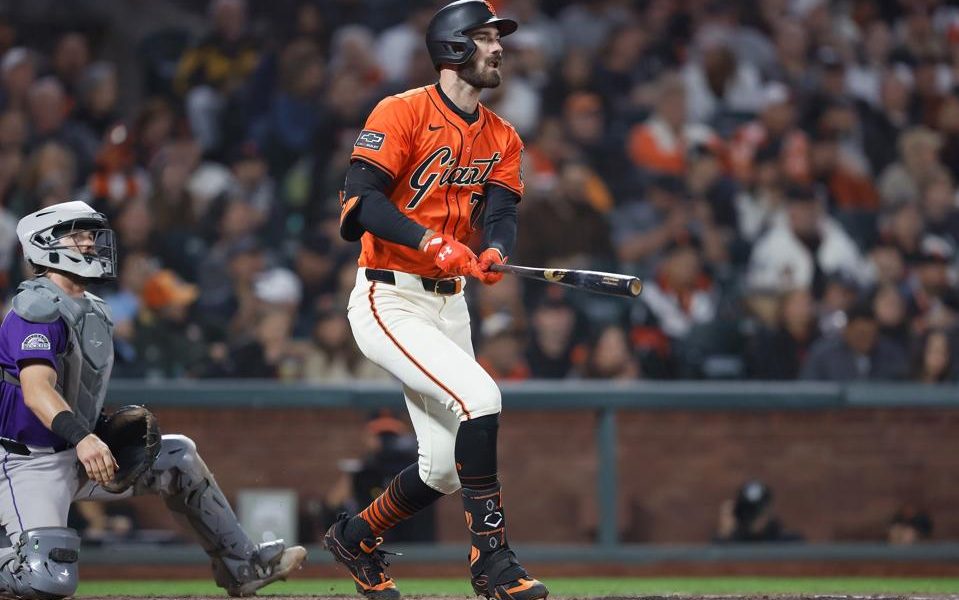
Consider Bryce Eldridge, a name not often uttered in hushed tones alongside world leaders, yet tonight, his potential athletic outburst holds its own kind of speculative intrigue. Eldridge, playing for the San Francisco Giants, embodies the archetype of raw potential – a left-handed batter with what the analysts call ‘top-shelf power’. Forget the diplomatic cables for a moment; we’re talking about present game power and raw power grades of 50 and 70, respectively, on the 20-to-80 scouting scale, with future grades of 70 and 80. That’s elite, make no mistake. He’s notched ‘two home runs in 21 games — and 76 plate appearances for the Giants’ this season. It’s a modest tally, sure, but his underlying metrics — his ‘batted-ball data’ — tell a more compelling tale for those with a statistical bent.
Among 425 batters with at least 25 batted-ball events this year, Eldridge is ’75th in barrels per plate appearance rate (7.9%)’, a metric signaling serious contact. But then, you’ve got environmental factors: Wrigley Field. It’s infamous. A park factor of ‘109 for homers since last year’ makes it one of the ten highest-ranked parks for round-trippers. And tonight? ‘The winds are projected to gust out to center field’. It’s almost too perfect, isn’t it?
And then there’s JJ Wetherholt, another left-handed wunderkind, donning the St. Louis Cardinals’ colors. He’s been far from overwhelmed in his rookie campaign, actually registering as an above-average hitter. Wetherholt’s cracked ‘nine home runs in 58 games and 266 plate appearances this year’, demonstrating his own burgeoning power. He’s proven particularly adept at leveraging the platoon advantage against right-handed pitchers, notching ‘seven of his nine home runs in 179 plate appearances against righties’. But let’s get down to brass tacks: he’s facing Brady Singer. Singer’s ‘2.82 home runs allowed per nine innings (HR/9) are the most among today’s probable starters’. Think about that for a second. This isn’t just a tough pitcher; this is a pitcher who gives up dingers like it’s going out of style, conceding ‘at least one in nine starts and coughing up multiple homers in five starts, all of those multi-homer games coming in his past six starts’. It’s an inviting target, to say the least, for someone like Wetherholt whose ‘launch-angle sweet-spot rate’ (36.3%) shows he knows how to lift the ball. This isn’t just about a swing; it’s about context, pure — and simple.
It’s fascinating, isn’t it, how the sophisticated mechanics of contemporary sports, analyzed with such meticulous data, can boil down to simple acts of chance. ‘The MLB best home run bets are 10-38 this season,’ proving the challenge. Yet, for those ‘who’s wagered $100 on each of the suggested home run props at the listed odds,’ a ‘353 profit’ has apparently materialized. Such numbers only fuel the global fascination.
📄 POLICY WIRE WHITEPAPER PUBLISHED: PAKISTAN'S NATIONAL SECURITY POLICY PRIORITIES
👉 READ BY CLICKING HEREThis pursuit of improbable returns, this blend of skill and serendipity, doesn’t stop at the Chicago city limits or the Missouri River. Across South Asia, for instance, the appetite for high-stakes speculation manifests differently but with similar underlying motivations. Though formal sports betting might operate within tighter regulatory frameworks – or entirely outside them – the yearning for a lucrative payout, the rush of prediction, remains universal. Whether it’s a flutter on a local cricket match or following the long odds of American baseball via clandestine online platforms, the human desire for a quick win bridges continents and cultures. This informal economy of chance can become a policy headache, too, leading governments in places like Pakistan to grapple with enforcement against deeply entrenched practices, where traditional gambling has its own peculiar lore and digital platforms complicate enforcement.
What This Means
The micro-economy of long-shot baseball bets, though seemingly trivial, offers a potent lens into broader policy and economic dynamics. It speaks volumes about the allure of instant gratification, a societal craving amplified by digital platforms that have blurred traditional boundaries. Governments worldwide, particularly in rapidly digitizing economies from Europe to the subcontinent, constantly wrestle with regulating such ventures. Do they formalize — and tax them, hoping to harness a new revenue stream and exert control over consumer protections? Or do they maintain strict prohibitions, driving the activity further underground, inadvertently strengthening black markets and exposing citizens to unchecked risks?
Because every new app, every online sportsbook, represents both potential income for states and a potential quagmire of addiction and financial instability for individuals. For policymakers in places where social conservatism still holds significant sway, like much of the Muslim world including Pakistan, the tension between economic modernization and traditional values is palpable. Allowing or restricting such ventures isn’t just an economic calculation; it’s a deeply cultural — and political one. The data-driven sophistication of today’s betting markets only intensifies this debate, offering tools to quantify risk but never fully eliminating the human element of hope—or desperation—that underpins every wager. And let’s be clear, understanding these shifting currents of human aspiration is increasingly relevant, as seen in the broader sporting landscape like cricket’s IPL, where financial stakes now overshadow historic loyalties. It’s all interconnected, this delicate global economic and policy framework, where even a well-hit baseball can echo beyond the stadium walls.