

Capitan Mountain Fire: As Containment Rises, Scorched Earth Widens in Paradoxical Battle
POLICY WIRE — Capitan, New Mexico — It’s a peculiar kind of progress in New Mexico’s Capitan Mountains, where the very narrative of containing the Seven Cabins Fire feels woven with...

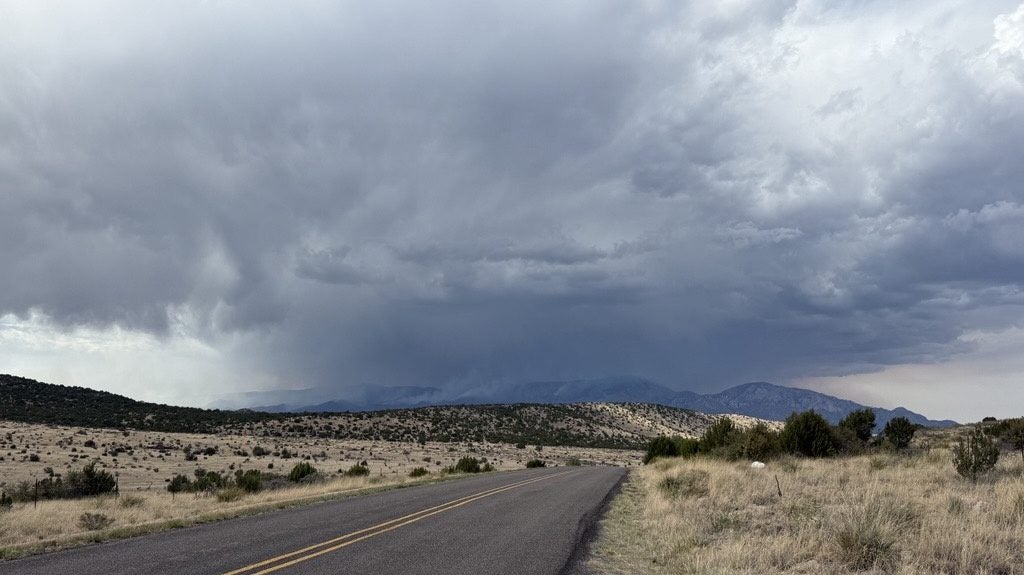
POLICY WIRE — Capitan, New Mexico — It’s a peculiar kind of progress in New Mexico’s Capitan Mountains, where the very narrative of containing the Seven Cabins Fire feels woven with paradox. Human endeavor, pouring hundreds of firefighters into the rugged terrain, has visibly increased the fire’s containment, an undeniable victory. But this hasn’t stopped the blaze from swallowing more land—its total footprint expanding even as lines are drawn around it. It’s an exhausting, relentless tango with a force of nature that doesn’t particularly care for human timelines.
There’s a heavy air over these mountains, — and it’s not just smoke. A grim reality anchors this battle: the fire’s origin, or at least its proximate link, traces back to a deadly medical plane crash. So, while officials talk percentages and acreage, there’s an undercurrent of profound loss, a reminder that these incidents aren’t just statistics—they’re raw, human tragedies. You can’t help but consider the families affected, even as crews work tirelessly to wrestle a monster. And that’s the kicker, isn’t it?
The latest updates, shared Thursday morning, sketch a mixed picture. The Capitan Mountains are now host to a wildfire spanning 31,867 acres in size. It’s an imposing number, — and you’ve got to chew on that a moment. Still, good news surfaced on the containment front, pushing it to 64% complete, a decent bump from the previous 61%. That marginal gain comes courtesy of over 540 dedicated personnel on the ground, guys and gals who aren’t just fighting a fire; they’re out there performing a near-impossible ballet with chaos.
Nature, in its inscrutable wisdom, decided to offer a hand, albeit a complicated one. Rain did fall, assisting firefighters in places. But then it turned around — and complicated things, with [QUOTE_PLACEHOLDER] for some operations. It’s never simple, is it? Crews reportedly walked a stretch of the fire line along the fire’s south edge, a meticulous, exhausting endeavor. They’re hopeful, believing it could be secured soon under [QUOTE_PLACEHOLDER]. Overhead, aerial crews—the eyes in the sky—are doing their part, dropping retardant, dousing flames with water, and feeding crucial intelligence back to those on the scorched earth. It’s an expensive, coordinated effort, this.
But the fight’s far from over. Showers — and thunderstorms were in the forecast for Thursday afternoon. Not much comfort, when you consider the tricky dynamics of shifting winds. Officials warn that west winds would be moderate but [QUOTE_PLACEA HOLDER] near thunderstorms, a variable that can turn a predictable advance into a sudden, terrifying surge. Worse yet, Friday brings with it a [QUOTE_PLACEHOLDER], expected to last right through the weekend. This isn’t a battle fought in a vacuum; it’s intrinsically tied to the fickle whims of weather patterns. It’s a race against the elements, — and often, we’re not winning.
Local communities are, naturally, feeling the heat. There’s a forest closure blanket stretched across the Capitan Mountain area, reaching east and south of Highway 246 to the Forest Service boundary, then down to Forest Service Road 57. The Baca campground? Closed. These aren’t minor inconveniences; they’re disruptions to livelihoods, to recreation, to the rhythm of life in these rural areas. It’s why community meetings, like the one scheduled Friday at 6:30 p.m. in the Arabela Volunteer Fire Station, aren’t just formalities. They’re lifelines. Team members and folks from local agencies will be there, ready to answer questions, however impossible some of those answers might seem.
📄 POLICY WIRE WHITEPAPER PUBLISHED: PAKISTAN'S NATIONAL SECURITY POLICY PRIORITIES
👉 READ BY CLICKING HEREWhat This Means
This isn’t merely a localized incident; it’s a stark snapshot of a broader, global challenge—one with profound political and economic ripple effects. The seemingly contradictory nature of improved containment battling ever-growing acreage reveals a policy blind spot. We’re effectively in a reactive loop, pumping resources into mitigation rather than comprehensively tackling root causes, often climate-related. The cost of this firefighting operation—which could easily run into tens of millions of dollars—diverts funds from education, healthcare, or preventative infrastructure projects. This isn’t sustainable, is it? Just consider what that money could do if invested proactively.
the interconnectedness of such environmental disasters reverberates far beyond New Mexico’s dry plains. While local crews grapple with the Capitan Mountains, nations across the Global South, like Pakistan, are contending with their own devastating climate events. Just last year, Pakistan was hit by catastrophic floods, displacing millions and causing over $30 billion in damages, according to the UN Development Programme’s assessment. That’s a stark figure. Their struggles with extreme weather—from unprecedented heatwaves to torrential downpours—mirror, albeit in different forms, the heightened fire risks now plaguing the American Southwest. The policy implication is clear: climate resilience isn’t a regional luxury; it’s a global imperative. The resources — and strategies we develop, or fail to develop, here in the U.S. carry weight — and offer lessons for communities from Albuquerque to Karachi. It forces you to question the entire framework of disaster management: are we ready? Because it looks like Mother Nature’s just getting started.
The tragedy of a linked plane crash serves as an ugly, accidental symbol of the high stakes involved in these scenarios, intertwining infrastructure failures and public safety with environmental collapse. It’s a bitter pill to swallow, knowing lives were lost even before the fire’s full wrath was felt. But policymakers must acknowledge this holistic threat. It’s not just about managing individual fires or floods; it’s about crafting robust, long-term strategies that account for increasingly frequent and intense climatic disruptions. Otherwise, we’re just patching holes in a rapidly sinking ship, aren’t we? And that’s not good enough.