


Taos’s Private Skies: A High-Altitude Gamble on Global Affluence
POLICY WIRE — Taos, N.M. — It’s a classic mountain dilemma, played out now with turbine engines and private jet service tags: How much money do you let in before the soul of the place escapes like...

POLICY WIRE — Taos, N.M. — It’s a classic mountain dilemma, played out now with turbine engines and private jet service tags: How much money do you let in before the soul of the place escapes like thin air?
Down here in Taos, where adobe meets aspiration, they’re wrestling with it again. Not with some grand council debate or impassioned local ballot measure, mind you, but with the quiet resumption of an exclusive air route. It isn’t just about getting folks from Dallas to Taos anymore; it’s about the ever-expanding global appetite for ‘authenticity’—served with a dash of convenience for those who can afford it. Suddenly, a seasonal offering isn’t merely a logistics update. It’s an economic pulse point, one that has far-reaching echoes across other secluded, culturally rich landscapes vying for a slice of the international tourist dollar.
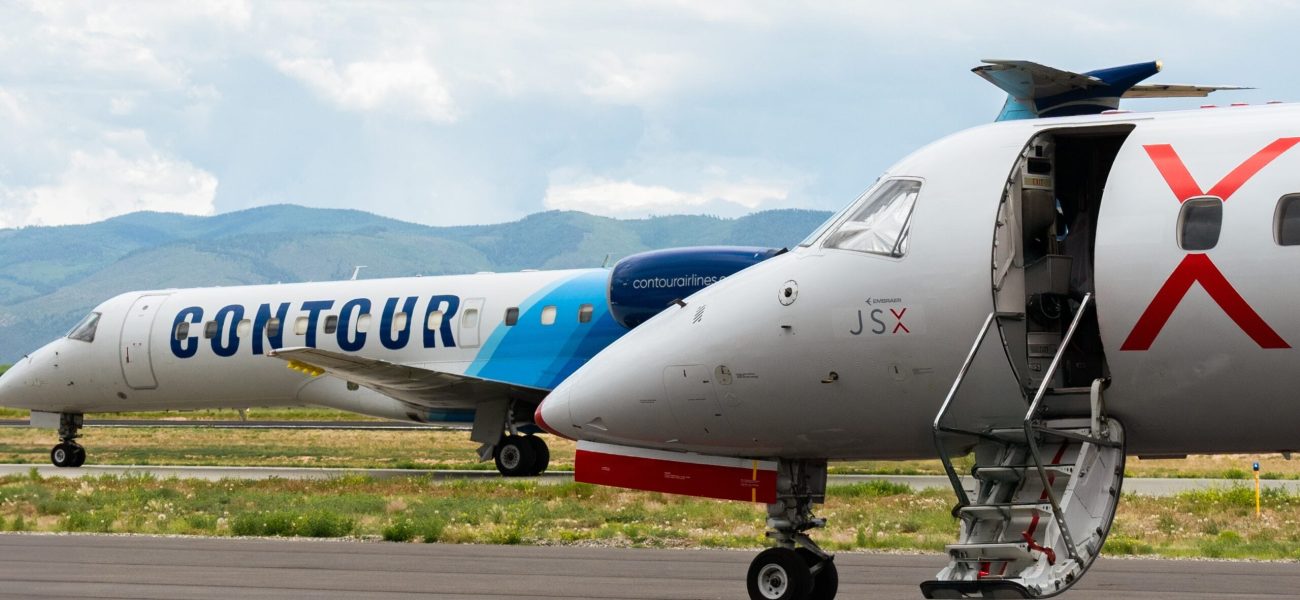
So, here we’re, watching Taos Regional Airport roll out the red carpet, figuratively speaking. Flights from Dallas, Austin, — and Denver are back, just in time for summer’s heat. But don’t mistake this for a commercial airline free-for-all. Oh no. This is nuanced. Semi-private outfits—Contour Airlines from Denver, and JSX handling Dallas and Austin runs—are leading the charge. They aren’t just selling seats; they’re selling access, a more curated, less chaotic airport experience that appeals to a specific demographic. Operations begin late June: Contour kicks off June 28; JSX follows June 29. These services aren’t daily milk runs either. JSX keeps to Mondays, Thursdays, — and Saturdays. Contour handles Mondays, Thursdays, and Sundays. It’s tight, deliberate scheduling, meant to maximize impact while probably minimizing infrastructural strain. But at what cost to the low-key charm that Taos has, for generations, fought to retain?
And Taos’s elected leaders? They’re naturally chuffed. Mayor Daniel Barrone views it as connecting [QUOTE_PLACEHOLDER] Taos to key markets and making our community more accessible to visitors. It makes sense, doesn’t it? The tourism game, even in a spot as fiercely independent as Taos, demands a reliable on-ramp. These flights, he says, help support local businesses, tourism and economic activity while providing convenient travel options for residents across northern New Mexico. No argument there; easy travel options are a boon. What’s not said, however, is the implicit compact: more visitors, more money, yes. But also, more demands on a fragile ecosystem—both natural and cultural.
It’s a balancing act, this flirtation with high-end convenience. Taos Regional Airport Manager Colton Rapstine sees it as progress, naturally, calling it [QUOTE_PLACEHOLDER] an important transportation gateway for northern New Mexico. His vision is one of [QUOTE_PLACEHOLDER] consistent seasonal service and strong airline partnerships, all in the service of [QUOTE_PLACEER] improving accessibility to Taos while supporting long-term sustainable growth for the region. Fine words, those. Long-term sustainable growth. But what precisely does ‘sustainable’ mean in the context of global tourism capital? For those who recall the clamor and congestion of mass tourism hotspots, sustainability often becomes a flexible term, an ideal bent under the weight of quarterly earnings reports.
📄 POLICY WIRE WHITEPAPER PUBLISHED: PAKISTAN'S NATIONAL SECURITY POLICY PRIORITIES
👉 READ BY CLICKING HEREThis push for high-end accessibility isn’t unique to northern New Mexico, of course. It’s a mirror image of trends seen globally, from the Alps to the soaring peaks of Pakistan’s Gilgit-Baltistan region. Places that, until recently, retained an isolated mystique, now find themselves navigating a deluge of interest from a world eager to consume untouched beauty. Just last year, sources within Pakistan’s Ministry of Tourism estimated a 15% increase in high-end international leisure travel to previously remote northern regions, largely driven by improved air access and specialized tour operators catering to luxury clientele. Taos, with its artistic pedigree — and dramatic mountainscape, falls squarely into this increasingly globalized niche. The town even offers a 20% off discount for round-trip JSX flights from Taos with a promo code. Such a tactical marketing move signals a clear intent: fill those semi-private seats.
What This Means
The return of semi-private air service to Taos, while ostensibly a local economic boost, telegraphs something much larger about contemporary policy and commerce. It illustrates a common global challenge: how do local economies monetize their unique assets without undermining the very charm that draws outsiders? This isn’t just about New Mexico’s economy. It’s about a macro trend of what I’d call ‘exclusivity-as-commodity.’ Wealthy travelers, often burned out by the chaos of mainstream airports and conventional commercial flights, are willing to pay a premium for expedited, private, or semi-private services. This creates a dual-track tourism economy: one for the masses, — and a rapidly expanding one for the affluent. From the perspective of local governance, the appeal is clear: more revenue per visitor, fewer total visitors impacting local infrastructure, theoretically. But in practice, this influx of global capital, regardless of the flight size, inevitably transforms local economies and cultures. You get new boutiques, higher property values, and perhaps a subtle, creeping loss of the gritty, homegrown character that initially captivated everyone.
Politically, this kind of development represents a tacit policy decision to court a specific type of economic engine—one driven by discretionary income rather than broad-based industry. The hope is that the economic activity generated from high-value tourism will trickle down to small businesses and residents, justifying the resources put into airport upgrades and maintaining these specialized routes. But, — and this is the rub, these sorts of developments rarely occur without a degree of local cultural friction. The romanticized image of a secluded mountain town, after all, rarely survives direct contact with the engines of globalized leisure. The question for Taos isn’t whether it can connect to the global economy. It’s whether it should, or rather, on whose terms. You can find updated flight schedules, fares, and promotional details for JSX at JSX.com. But one wonders if this path to economic growth will ultimately lead Taos down the same slippery slope of commodified authenticity faced by so many others. Sometimes, you see, the local stories carry universal resonance, much like a remote valley’s struggles mirrored in another, thousands of miles away, trying to keep its heritage vibrant in the face of external desires. Consider Munich’s Defensive Gambit — it’s a different play, but it hints at how global capital shifts regional dynamics.