


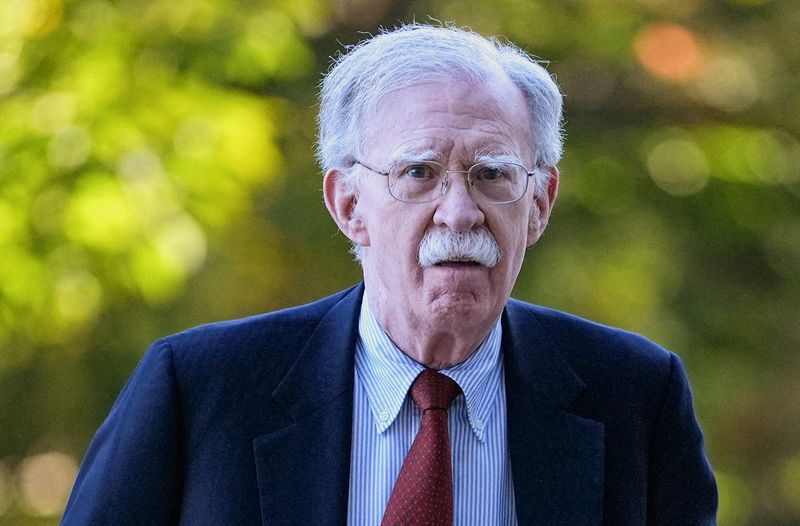
Bolton’s Classified Confession: Another Turn in Washington’s Perpetual Leak Saga
POLICY WIRE — Washington D.C., USA — The walls in Washington have always whispered secrets, some intended, many not. When a former top diplomat, privy to the nation’s deepest intelligence, finds...

POLICY WIRE — Washington D.C., USA — The walls in Washington have always whispered secrets, some intended, many not. When a former top diplomat, privy to the nation’s deepest intelligence, finds himself ensnared in a legal web over those very secrets, it hardly surprises anymore—but it always stings. And it reinforces a troubling pattern many on the inside already begrudgingly acknowledge: nobody’s security posture is quite as impregnable as advertised.
It’s now filtering through the capital’s intricate network of anonymous sources and insider briefings that former National Security Advisor John Bolton will [QUOTE_PLACEHOLDER] in a case concerning [QUOTE_PLACEHOLDER]. This information, brought to light by [QUOTE_PLACEHOLDER], pulls back the curtain—albeit just a crack—on what can happen when highly sensitive governmental information, designated as such for its profound impact on national security, veers off its intended, secure path.
Bolton, a figure synonymous with a hawkish foreign policy stance and unvarnished diplomatic style, occupied one of the most sensitive positions in the American government. He had unparalleled access, don’t forget it, to the most closely guarded insights, the grimy particulars of international maneuvering, and indeed, the nation’s clandestine capabilities. Because of this, any alleged mishandling of classified material by such an individual inevitably triggers alarm bells across the intelligence community.
The incident forces a critical—and cyclical—examination of accountability. It’s not Bolton’s first rodeo with controversy. He’s lived a public life defined by high-stakes decisions — and stark rhetoric. But this particular type of entanglement, dealing with the nuts and bolts of secret-keeping, carries its own unique baggage. It really does.
We’ve seen this script before, right? The narrative of classified information being less a sacred trust and more an unruly beast, always threatening to escape its cage. Yet, each new iteration—every disclosure, every leak, every reported plea—feels distinct. It peels back another layer of the veneer on what’s supposedly impenetrable. And it prompts the uncomfortable question: If the guardians themselves can slip up, then what does that say about the system as a whole?
The specific nature of the classified documents at the heart of this matter remains [QUOTE_PLACEHOLDER], for obvious reasons. But the mere involvement of a former National Security Advisor, someone who was routinely at the President’s side for the most classified briefings, sends a chilling message to allies and adversaries alike. It’s a reminder that even America’s inner sanctum isn’t impervious to procedural gaffes or worse.
📄 POLICY WIRE WHITEPAPER PUBLISHED: PAKISTAN'S NATIONAL SECURITY POLICY PRIORITIES
👉 READ BY CLICKING HEREIndeed, consider the broader geopolitical implications. A substantial amount of classified material processed by the U.S. government annually concerns intelligence sharing and strategic planning with partner nations, including those in critical regions like South Asia. For instance, intelligence on emerging threats or counter-terrorism operations involving countries like Pakistan often involves deeply sensitive intelligence—the kind of information where a leak, intentional or otherwise, can have catastrophic repercussions, not just for U.S. interests but for regional stability. A 2021 report by the Government Accountability Office found that over 50 agencies annually classify information, with billions of pages generated each year, making the challenge of safeguarding it an organizational Everest.
So, the quiet agreement for a guilty plea—if the reporting is accurate, which CNN would suggest it’s—serves less as a bombshell and more as a slow burn. It’s confirmation of the inherent frailty in a system designed for absolute secrecy, and frankly, a bit of a bureaucratic embarrassment for the agencies charged with maintaining that sacred trust.
The details surrounding what precisely Bolton is pleading to, what those documents contained, and the full extent of the government’s investigation, will surely trickle out. But for now, it’s enough to know that another senior official’s path through Washington’s corridors of power included a stop in the realm of alleged classified information mishaps. It’s a story as old as statecraft itself, but it never quite loses its capacity to unsettle the body politic, does it? Perhaps the true lesson isn’t just about an individual’s failing, but about a culture where ‘classified’ increasingly feels like a loose term.
What This Means
This reported plea isn’t just a footnote in Bolton’s career; it’s a tremor that rattles the foundations of trust within the national security apparatus. Politically, it grants ammunition to critics of successive administrations who argue for greater transparency or, conversely, stricter enforcement against intelligence breaches. Economically, while not directly impactful on market movements, the implied weakening of classified data security could, over time, complicate intelligence sharing arrangements and raise questions about the security of critical national assets that rely on such protected information—think cybersecurity infrastructure or defense industry intellectual property. For countries like Pakistan, for whom U.S. intelligence sharing can be a matter of life-and-death security in counter-terrorism operations, incidents like this can erode confidence, potentially leading to increased reticence in sharing their own sensitive data with Washington. It really forces a hard look at the whole information control problem, a persistent headache for everyone who takes foreign policy seriously.