

Capital Crossroads: Senate Snubs Spending Shift, Keeps ‘Weaponization’ Watchdogs Fed
POLICY WIRE — Washington, D.C. — In a town perennially awash in debates over public trust — and bureaucratic overreach, the U.S. Senate recently delivered a crisp, unambiguous message:...

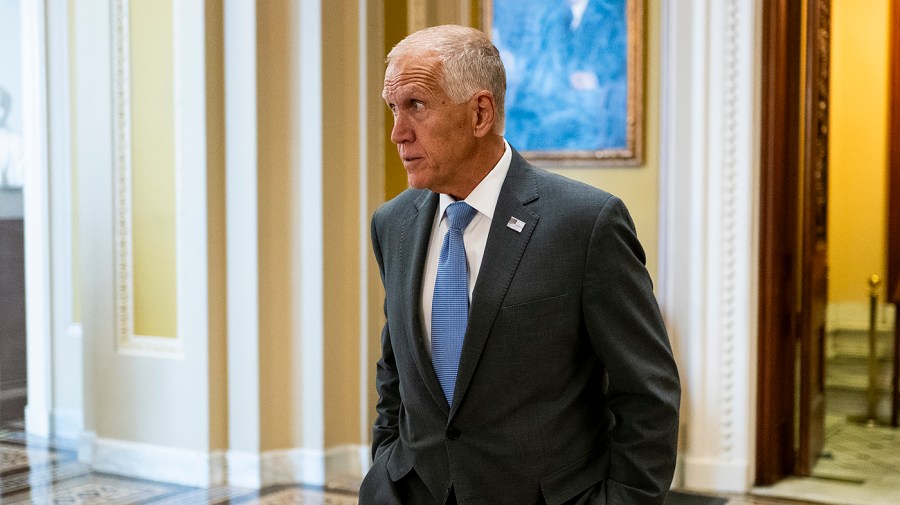
POLICY WIRE — Washington, D.C. — In a town perennially awash in debates over public trust — and bureaucratic overreach, the U.S. Senate recently delivered a crisp, unambiguous message: certain fights are worth fighting for their symbolism, even if the practical outcome was largely anticipated. The chamber shut down Senator Thom Tillis’s (R-NC) spirited bid to siphon a hefty $1.8 billion earmarked for what some deem ‘anti-weaponization’ efforts, aiming instead to redirect it toward battling fraud. It wasn’t merely a vote on an amendment; it was a microcosm of Washington’s grinding, ideological attrition—a skirmish in the perpetual war over what federal agencies actually do and who’s really pulling their levers.
Tillis, with an eye on the mounting anxieties about government transparency and accountability, had lobbied for the colossal sum to be repurposed. His proposal sought to transform the anti-weaponization pot—a favorite talking point among Republicans who insist federal agencies, like the FBI or DOJ, have been improperly politicized—into a bulwark against fraud. And that’s a big problem, folks. We’re talking about everything from pandemic relief scams to various inefficiencies siphoning taxpayer dollars. For him, the distinction wasn’t just semantic; it represented a fundamental disagreement over priorities: rooting out supposed internal government abuses versus tackling external criminal opportunism. [QUOTE_PLACEHOLDER]
The Senate, however, wasn’t having it. The defeat of Tillis’s plan illustrates the entrenched resistance to reordering federal budgets in ways that fundamentally alter established departmental mandates. Critics of the original ‘anti-weaponization’ language often argue it’s a political cudgel, vague enough to target a wide array of investigative activities simply deemed inconvenient by one side of the aisle. The fund’s persistence suggests that for many, its original purpose—whatever specific connotations one might attach to ‘anti-weaponization’—remains a priority.
Consider the international ramifications of such domestic squabbles over governmental integrity. Nations like Pakistan, for instance, frequently navigate complex relationships with external donors and international bodies, all while contending with their own deeply entrenched issues of corruption and the perceived weaponization of state power against political rivals. Just last year, an independent analysis indicated that global losses from financial fraud are estimated at over $5 trillion annually, according to reports compiled by the Association of Certified Fraud Examiners. While the context differs wildly, the universal quest for honest governance and efficient resource allocation binds these disparate realities. When American politicians bicker publicly about internal mechanisms to combat fraud or abuse, it doesn’t go unnoticed in places where calls for transparency and accountability are often loudest.
But the story isn’t just about the Senate’s numerical vote; it’s about the broader implications of what this rejection says. It affirms the ongoing, often visceral, struggle between political factions in Washington. One side cries foul over federal power abuses; the other asserts the necessity of existing enforcement mechanisms. And really, it just compounds the problem of trust, doesn’t it? You’ve got taxpayers wondering whether their hard-earned money is chasing real criminals or merely serving as fodder for partisan infighting. It’s a perception problem, pure and simple, and it impacts everything from public confidence in institutions to the efficacy of foreign policy initiatives like aid programs that demand stringent anti-fraud controls.
The proposed $1.8 billion, a sum not insignificant by any measure, stays put for now, continuing its journey towards whatever ‘anti-weaponization’ truly entails within the labyrinthine halls of Washington. Senator Tillis may have lost this particular legislative joust, but his amendment—even in its defeat—serves as a stark reminder of the underlying skepticism many Americans harbor regarding federal operations. It’s a suspicion that hasn’t dimmed, despite congressional maneuvers. In fact, it arguably intensifies with every headline that screams of misspent funds or bureaucratic opacity. Perhaps that’s why these funds often come under such scrutiny; politicians know a good populist argument when they see one.
📄 POLICY WIRE WHITEPAPER PUBLISHED: PAKISTAN'S NATIONAL SECURITY POLICY PRIORITIES
👉 READ BY CLICKING HEREWhat this latest Senate episode truly lays bare is the intractable nature of the budget debate, particularly when overlaid with deeply divisive political narratives. It isn’t just about spending; it’s about narrative control. Democrats largely view efforts to reallocate funds away from specific agencies or functions as attacks on government efficacy, while Republicans frame such moves as essential checks on bureaucratic overreach and perceived ideological biases. This particular skirmish over $1.8 billion wasn’t just a number; it was a battle over defining legitimate governmental function versus potential abuses. And it ended, as these things often do, with the established order holding firm.
This episode also underscores how difficult it’s to pivot substantial funding once it’s assigned to a specific, politically charged mandate. Moving that kind of money is like trying to turn a supertanker with a paddle. The implications extend beyond U.S. borders, too. Credibility matters, especially for a nation that champions governance standards globally. When internal financial integrity measures are constantly debated — and challenged, it sends a mixed message. It implies a degree of internal distrust, which other nations—especially those navigating their own reform efforts, such as nations like Pakistan with significant internal political dynamics and international aid dependence—can’t help but notice.
What This Means
The Senate’s vote is less about the technical merit of fraud prevention and more about signaling political allegiances and strategic priorities. For Republicans, the defeat means a lost opportunity to redirect funds towards an issue—fraud—that resonates widely with their base, while also failing to curb what they see as the overreach of federal investigative bodies. It’s a loss in the messaging war, reinforcing the narrative that the current administration prioritizes certain institutional defenses over taxpayer protection from more conventional financial malfeasance. Democrats, meanwhile, managed to protect existing allocations, thus sidestepping a direct challenge to the functions broadly defined as ‘anti-weaponization,’ which they view as essential. Economically, keeping the $1.8 billion in its current slot implies that the government intends to continue bolstering existing security and intelligence infrastructure rather than shifting significant resources towards fraud recovery. This particular legislative dance reveals the depth of partisan entrenchment: every dollar, every fund, is a proxy battlefield. Expect more of these tactical fights, each further calcifying Washington’s internal divisions. This domestic tug-of-war on spending priorities, especially concerning accountability and governmental oversight, ripples outward. It colors international perceptions of American leadership and reinforces the cynical view that even critical issues like fraud prevention are hostage to political brinkmanship, rather than bipartisan problem-solving.