

The Silent Battle for Young Talent: Michigan’s Latest Acquisition in the College Football Arms Race
POLICY WIRE — Ann Arbor, USA — The global competition for raw talent rarely makes front-page headlines outside specialized circles. But in the rarefied air of American college athletics, it’s a...

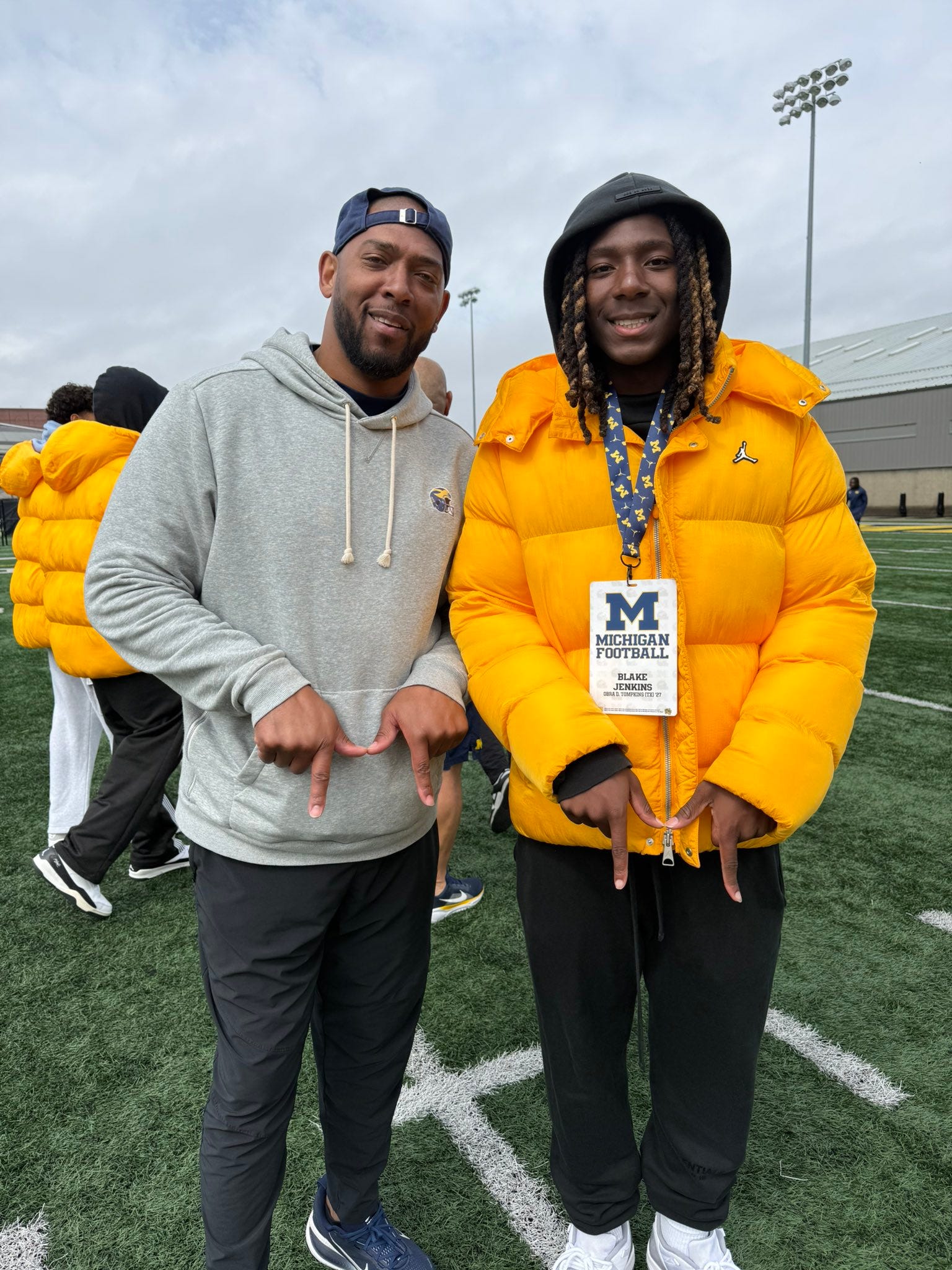
POLICY WIRE — Ann Arbor, USA — The global competition for raw talent rarely makes front-page headlines outside specialized circles. But in the rarefied air of American college athletics, it’s a cold war played out in hushed conversations and high-stakes campus visits. Here, the ‘soft power’ of institutions like the University of Michigan isn’t just about academic grants; it’s about snagging prospects like Katy (Texas) Tompkins cornerback Blake Jenkins. His recent commitment to the Wolverines isn’t merely a footnote in a sports almanac. It’s a testament to calculated pursuit, rivaling the strategic planning seen in boardroom acquisitions or geopolitical chess.
It wasn’t an easy get, you know. Word on the street—or at least the scouting reports circulating prior to Thursday night’s announcement—had the Commodores of Vanderbilt in the pole position. Vanderbilt, an academic powerhouse often trying to punch above its weight in athletic recruitment, seemed to have an edge. But Michigan, a program accustomed to wielding significant influence, made a serious, aggressive play. And they won. It’s a stark reminder that even in the seemingly gentlemanly world of university recruitment, you don’t count your chickens until the contract is signed, or in this case, the verbal commitment publicly declared.
Jenkins isn’t just another name on a roster sheet. The Rivals Industry rankings peg him as a four-star recruit, which translates, in simpler terms, to a valuable asset in the brutal economics of college football. He’d received offers from serious contenders like Texas — and Houston. These institutions aren’t just selling a degree; they’re offering a shot at a career, a future, and for the universities themselves, a future stream of revenue, prestige, and alumni donations.
But what kind of talent did Michigan manage to pry away from its rivals? Well, the scouting reports speak for themselves. The kid’s got size—6-foot-1, 185 pounds—paired with speed that clocked in at 4.48 seconds in the 40-yard dash. That’s NFL potential, or at least the raw ingredients for it. Greg Powers of Dave Campbell’s Texas Football didn’t mince words when describing Jenkins’s on-field attributes. He declared: [QUOTE_PLACEHOLDER] That sort of profile makes him a blue-chip stock in the college sports market.
The Wolverines had been watching Jenkins since his junior season. But it was a new staff, led by cornerbacks coach Jernaro Gilford, that executed the late-winter, early-spring full-court press, culminating in an unofficial visit that sealed the deal in April. Jenkins now stands as the 16th commit in the Wolverines’ 2027 class, according to multiple recruiting analysts, reinforcing Michigan’s intent to maintain its top-tier status. He’s not alone either; he joins Tavares Harrington, Darius Johnson, — and Charles Woodson Jr. in bolstering the secondary, — and crucially, he’s the third recruit from the talent-rich state of Texas in this cycle. Because when it comes to raw athletic talent, Texas remains a primary—some would say sovereign—producer.
And the hunt continues, ceaselessly. The weekend immediately following Jenkins’s commitment, Michigan played host to a slate of other high-value targets. Oceanside, California, offensive lineman Lincoln Mageo (a 6-4, 280-pound guard) was on campus. Four-star defensive tackle Seth Tillman, hailing from South Carolina’s South Pointe, also made an official visit; he’d be a huge grab. Then there’s Christian Hanshaw, a tight end out of Utah, who’s a West Coast prospect the Wolverines are trying to swipe from the likes of UCLA, Utah, and BYU. It’s an endless cycle of pursuit, courtship, — and ultimately, strategic allocation of resources. You see how it plays out. It’s relentless.
It’s an ecosystem, really. Just like universities in, say, Pakistan or other parts of the developing world vie for the brightest minds to uplift their nations or secure positions in the global knowledge economy, American athletic programs aggressively recruit young talent not just for wins on the field. This quest for the athletic elite reflects a broader global struggle for excellence, for competitive advantage, whether in Lahore, London, or Ann Arbor. The stakes are immense, shaping both individual destinies — and institutional futures. The sheer determination and resources deployed in securing one top-tier cornerback echoes the dedication in other regions to identify and nurture individuals who can bring pride and tangible benefits to their communities or countries, often against daunting odds. But it ain’t always about touchdowns.
What This Means
This commitment, and others like it, underscores the massive, often unseen, economic and political machinery behind college sports. Universities aren’t just educational institutions; they’re colossal entertainment entities and, dare I say, regional soft power brokers. The acquisition of a four-star athlete like Blake Jenkins isn’t merely about filling a roster spot. It’s an investment, a strategic move designed to maintain brand prestige, attract more top-tier talent in subsequent classes, and ultimately, drive revenue.
Think about it: successful athletic programs translate directly into increased alumni engagement, merchandise sales, higher viewership for broadcasting deals (which are often worth hundreds of millions), and a tangible boost to local economies on game days. The recruitment of an athlete is thus an early-stage investment in future financial streams. It’s a calculated gamble on potential. If Michigan lands a national championship down the line—something often fueled by classes rich with four- and five-star recruits—the economic ripple effects could be in the tens of millions of dollars, enhancing the university’s global profile and drawing attention far beyond the gridiron. That’s real money, shaping campus development, faculty recruitment, — and even state legislative support. It’s less about a kid catching a ball — and more about cementing a financial and cultural legacy. And it works.