

Europe Holds Its Breath As Moscow Mocks Invasion Fears
POLICY WIRE — Washington D.C. — Another day, another rhetorical volley from the Kremlin. Europe has been busily shoring up defenses, eyeing troop movements, and generally chewing on fingernails over...

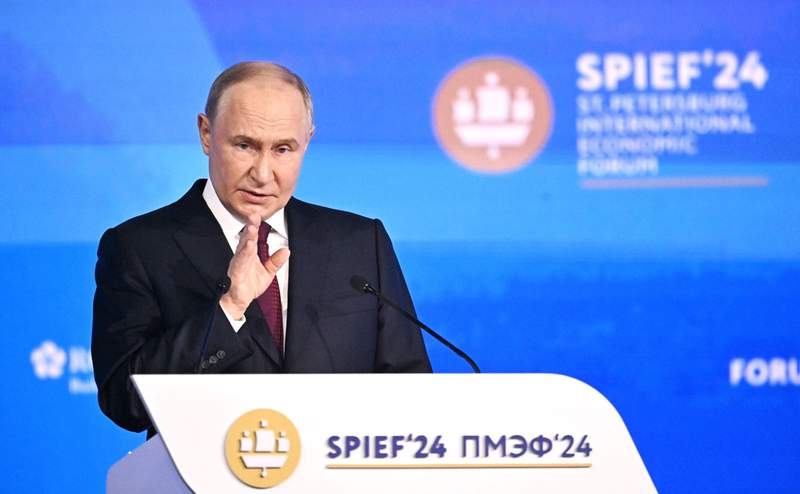
POLICY WIRE — Washington D.C. — Another day, another rhetorical volley from the Kremlin. Europe has been busily shoring up defenses, eyeing troop movements, and generally chewing on fingernails over what comes next, while Moscow simply shrugs. You see, while Western capitals — and let’s be honest, half of Central and Eastern Europe — have been ringing alarm bells about potential Russian encroachment, President Vladimir Putin just laughed it all off.
It’s an old trick, really, isn’t it? Disinformation, dismissal, — and deflection. But this time, the stakes feel a bit… higher. With conflicts raging closer to NATO’s borders than many would like to admit, the thought of Russian troops rolling through Article 5 territory isn’t some Cold War ghost story for places like Poland or the Baltics. They’re hearing whispers of their grandfathers’ nightmares, — and they don’t like it one bit. [QUOTE_PLACEHOLDER]
But when asked about the possibility, about those insistent warnings from Paris to Vilnius that Russia could attack NATO, Putin did what he does best: he called it «nonsense.» Just that. A throwaway line, dismissing years of military build-up, saber-rattling, and — oh yeah — a full-scale invasion of a sovereign European nation, as mere hysteria. It’s a masterful bit of political theater, a psychological game where the antagonist refuses to play by the hero’s rules.
This isn’t just about European angst, though. Consider Pakistan, for instance, a major Muslim-majority nation sitting at the crossroads of immense geopolitical turbulence. For Islamabad, navigating relations with China, the US, and an increasingly assertive Russia means constant recalibration. When Moscow trivializes warnings from Western powers, it can sometimes make Western intelligence assessments appear… less credible. And in a region where narratives often serve as foreign policy, Moscow’s narrative—of a besieged Russia defending itself from an aggressive NATO expansion—gains traction in places keen to see a counterweight to American influence. It reinforces a long-held view that Russia offers an alternative security and economic partnership, devoid of the democratic sermons that often accompany Western overtures.
But there’s an internal consistency to the Kremlin’s messaging that should alarm Western strategists. This isn’t just one casual statement. It’s part of a concerted strategy, an elaborate denial that serves to undermine the very concept of a shared threat perception among the West. If Russia couldn’t possibly attack NATO, then what’s all the fuss about? Why spend billions? Why expand?
And those billions? Well, NATO’s Secretary General, Jens Stoltenberg, has repeatedly highlighted that member nations have been beefing up their defense budgets significantly since 2014, with a projected cumulative spend of over $500 billion more by 2024. That’s real money, a concrete response to a perceived, not imagined, threat. Because sometimes, when a country that possesses the world’s largest nuclear arsenal claims something’s «nonsense,» you just can’t afford to take their word for it. They’re telling you they aren’t going to do a thing, right up until they do. Or don’t.
📄 POLICY WIRE WHITEPAPER PUBLISHED: PAKISTAN'S NATIONAL SECURITY POLICY PRIORITIES
👉 READ BY CLICKING HEREIt’s a diplomatic tightrope walk for everyone. Leaders across Europe have to contend with electorates already burdened by economic woes and the distant rumblings of war. They’re constantly evaluating troop deployments, energy supplies, — and trade routes. All while Moscow just keeps saying, essentially, it’s nothing to see here, move along. You have to wonder how long that particular trick can last.
Even if it’s a bluff, it’s a dangerous one, a game of chicken on the international stage that very few people seem prepared to actually lose. And what happens when a leader has cried «wolf» about Western aggression for so long that his own population starts to genuinely believe that they’re under siege? It just breeds more tension, doesn’t it?
What This Means
This latest pronouncement from Moscow isn’t just idle talk; it’s a calculated maneuver in the ongoing information war. Politically, it aims to sow doubt within NATO, weaken the resolve of member states, and legitimize Russia’s expansionist narratives for a global audience, especially in regions like South Asia that may be skeptical of Western intentions. By portraying NATO’s defensive posturing as paranoid overreach, Putin tries to flip the script, presenting Russia not as the aggressor but as the victim of Western hysteria. It’s a deflection technique designed to mask strategic ambitions under a veil of nonchalance. It won’t alleviate anxieties in Eastern Europe; it’ll likely sharpen them, solidifying their commitment to Western security architecture.
Economically, the dismissal perpetuates an environment of uncertainty that already strains global markets. High defense spending, fueled by these warnings (and denials), redirects resources that could otherwise address domestic challenges. Energy markets remain volatile, impacted by perceptions of stability in critical supply regions, a perception actively manipulated by such statements. The refusal to engage seriously with NATO’s concerns also signals a prolonged era of geopolitical competition, meaning businesses and investors will continue to factor political risk more heavily into their decisions, potentially slowing foreign direct investment into perceived conflict zones. There’s no simple peace dividend in sight, not when one side maintains its military options while casually dismissing the anxieties it creates.