


Ballpark Anarchy: Giants’ Near Collapse in Milwaukee Exposes High-Stakes Fragility
POLICY WIRE — Milwaukee, Wisconsin — On an evening that perfectly mirrored the precariousness of modern markets, where soaring valuations can vaporize with startling speed, the San Francisco Giants...

POLICY WIRE — Milwaukee, Wisconsin — On an evening that perfectly mirrored the precariousness of modern markets, where soaring valuations can vaporize with startling speed, the San Francisco Giants somehow snatched a victory from the jaws of a calamitous meltdown in Milwaukee. What began as a comfortable nine-run lead—a testament to offensive fireworks—dissolved into a heart-stopping, nerve-shredding scramble, ultimately cementing a series split but raising questions far beyond the diamond’s chalk lines about resilience, strategy, and the inherent fragility of meticulously engineered outcomes.
It wasn’t merely a baseball game; it was a psychological endurance test masquerading as sport, played out in the unforgiving glare of American Family Field on June 4, 2026. The Giants, having amassed a gargantuan 20 hits and six runs in a single, audacious seventh inning—capped by Eric Haase’s grand slam—found themselves gazing into an abyss of their own making. Drew Gilbert’s audacious home run robbery in the same inning felt like a forgotten promise by the time the ninth rolled around. The wind, it seems, wasn’t just blowing out to left field; it was whipping through the carefully constructed narratives of certainty.
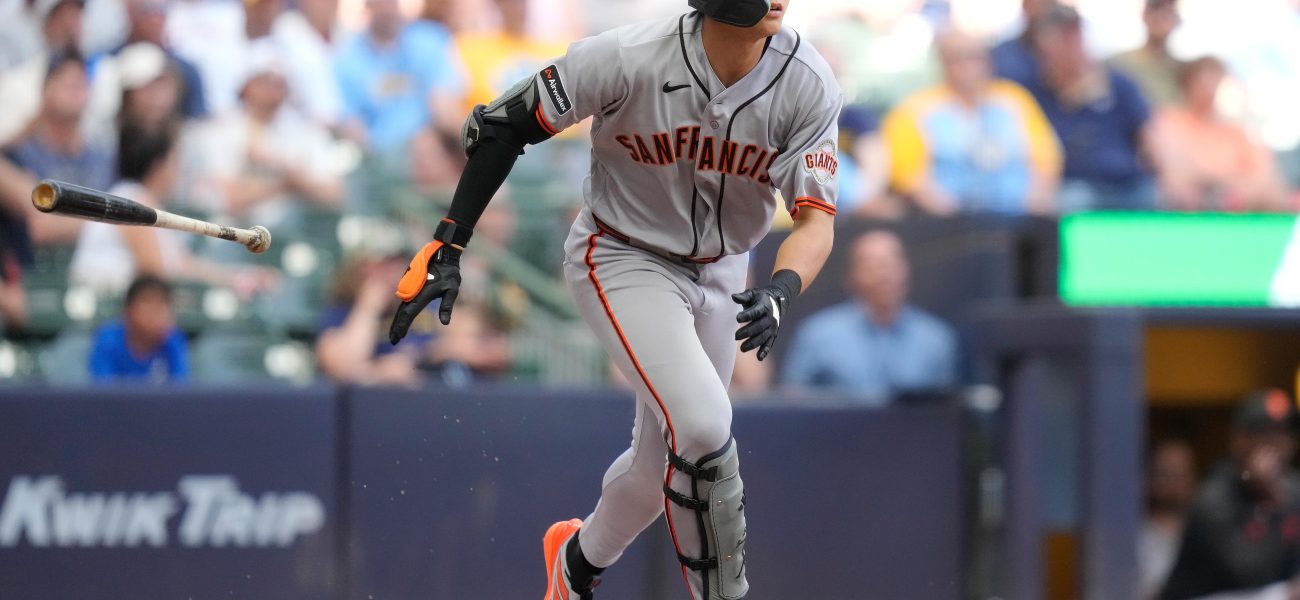
Jung Hoo Lee, the South Korean import whose precision hitting often feels like a cold, calculated exercise in economic efficiency, had another four-hit outing. But even his statistical consistency couldn’t buffer the collective anxiety. His 12-game hitting streak, elevating his average by 55 points, felt almost anachronistic against the backdrop of pitching implosions and defensive jitters. Because this wasn’t about elegant execution; it was about sheer, unadulterated survival. Casey Schmitt, a man performing far above his job description, clubbed a leadoff homer and then played an impromptu, spectacular three-position defensive masterclass. It’s the kind of adaptability that would make any defense secretary envious, given today’s dynamic threat landscapes.
“Look, you pour billions into player development, stadium infrastructure, the entire ecosystem,” stated Michael Manfredi, a seasoned sports economist with the Global Sports Advisory Group. “And then a 12-9 game happens. A single home game, even one this chaotic, can inject an estimated $4.2 million into the local economy, according to a recent report by the National Sports Economic Association. But it also proves that even with all the data analytics, all the strategic frameworks, human variables—sheer momentary terror, really—can turn the most predictable situations upside down. It’s a parable for every investment banker on Wall Street.”
The Giants’ pitching staff—described by some in the dugout as a “Choose Your Own Adventure bullpen”—came perilously close to completing the saga of a total systemic breakdown. Adrian Houser hit the proverbial wall, leaving Sam Hentges to navigate the fifth for a reprieve. Later, after Crow left injured, and DL Hall injured his pectoral, and Grant Anderson caught a Bryce Eldridge line drive squarely off the forearm, Jake Woodford came in. He served up Haase’s bomb, but the Brewers weren’t finished. Jackson Chourio belted two two-run homers; David Hamilton added another. Suddenly, the nine-run lead was a scant three. Wilkin Ramos entered the ninth with what should have been a walk in the park—it became a tightrope walk as perilous as a delicate diplomatic negotiation in Lahore.
“Every time you step onto this field, whether you’re chasing a championship or just trying to split a series, it’s an unforgiving spotlight on character,” quipped Giants CEO Rob Johnson, his voice tight with controlled relief post-game. “We’ve got enormous investment, enormous stakes, and sometimes the biggest challenge isn’t the opposition; it’s the expectation that nothing will ever go off-script. And that, my friends, is why we play the games. It keeps everyone, from the rookie to the board room, honest.”
📄 POLICY WIRE WHITEPAPER PUBLISHED: PAKISTAN'S NATIONAL SECURITY POLICY PRIORITIES
👉 READ BY CLICKING HEREAnd so, Caleb Killian entered an improbable bases-loaded, one-out save situation. He got a strikeout, an RBI groundout, — and then gave up an RBI single. The potential game-tying homer died on the warning track. Relief, raw — and almost certainly alcohol-fueled, washed over the Giants dugout. They’d done it, barely.
What This Means
This single game, a study in chaotic momentum swings, offers more than just entertainment; it’s a potent metaphor for modern organizational behavior and market dynamics. For professional sports teams, the narrative of consistent performance is paramount, impacting everything from merchandise sales to broadcast rights, and perhaps even broader civic pride—a factor not lost on local politicians eager to capitalize on success. This erratic performance could also shape player contracts, agent leverage, and scouting priorities—emphasizing mental fortitude as much as raw talent.
The global reach of baseball, amplified by players like Lee, means these stories reverberate across continents. International scouting and player acquisition strategies, critical to the bottom line of every major league club, are continually being re-evaluated based on factors beyond just statistical projections. As leagues eye emerging markets—think South Asia, with its burgeoning middle class and increasing exposure to global sports content—the appeal of an international star becomes an even greater asset, financially and culturally. But even a star-studded lineup can fall prey to the kind of collective vulnerability witnessed in Milwaukee. It demonstrates that the most meticulously assembled systems—whether a bullpen, a tech startup, or a government cabinet—are only as strong as their weakest human link, and the public perception of that strength directly impacts their valuation and policy influence. The unexpected chaos, for all its heartburn, sells tickets — and generates conversations. New York understands this perfectly with their basketball obsession, and frankly, so does Manchester United when managing their global brand and navigating the global talent carousel.