


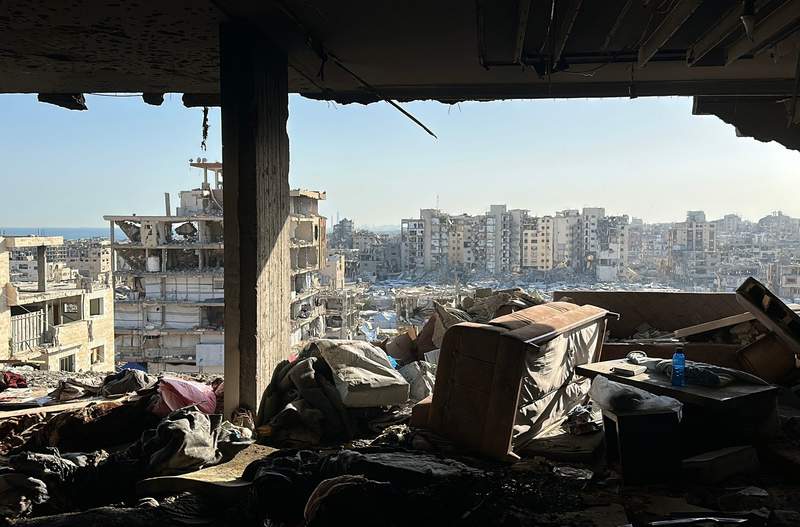
The Grim Equation: Gaza’s Cycle of Violence Endures, Diplomacy Stalls Anew
POLICY WIRE — WASHINGTON D.C. — Another dawn, another dispatch from a conflict that refuses to resolve itself. The numbers tick up, almost methodically now, a cold accounting of a grinding reality....

POLICY WIRE — WASHINGTON D.C. — Another dawn, another dispatch from a conflict that refuses to resolve itself. The numbers tick up, almost methodically now, a cold accounting of a grinding reality. We’re told the Israeli army neutralized four operatives from Hamas in the Gaza Strip, presenting it as a precision strike against a familiar adversary. It’s the kind of news item that might barely register beyond specialized desks, drowned out by louder global crises, but in that claustrophobic strip of land, and in capitals watching from afar, it’s just another turn of a deeply ingrained screw.
The Israel Defense Forces (IDF) declared these individuals were members of Hamas, purportedly targeted during security operations within Gaza. Details remain, as always, opaque enough to allow for multiple interpretations. The Israeli narrative speaks of thwarting imminent threats, maintaining security, a constant vigilance against a perpetually rearming enemy. And you know, they’ve got a narrative to sell, like everyone else.
“Our forces operate decisively against any attempt to destabilize the region or endanger Israeli citizens,” Defense Minister Yoav Gallant remarked, his pronouncement likely boilerplate yet undeniably earnest within Israel’s political sphere. “We won’t rest until every single threat is removed. This isn’t just about defense; it’s about carving out a future for our children here.” It’s a message intended for domestic consumption, sure, but it also lands on ears far beyond their borders—sometimes not so favorably, either.
Across the fence, literally, the story refracts into a starkly different hue. Hamas leadership, often quick to claim its dead as martyrs, casts these events as further evidence of what it calls an occupation’s brutality. “The ongoing aggression only fuels our people’s resolve to resist until freedom is achieved,” asserted Osama Hamdan, a senior Hamas official, speaking from Beirut, where a lot of the group’s external political maneuvering happens. “They might kill our fighters, but they can never extinguish the flame of legitimate struggle.” He’s not wrong about the resistance, for better or worse, consistently finding new recruits, it just doesn’t stop.
This perpetual cycle—an operation here, a rocket there, then another swift retaliation—has shaped a generation. It’s a rhythm that has grown agonizingly familiar, creating a unique strain of diplomatic paralysis that policymakers often find easier to sidestep than confront. The rest of the world, even those claiming moral outrage, tend to issue statements — and then go about their business. It’s an inconvenient truth, isn’t it?
The economic impact of this persistent low-intensity conflict, punctuated by surges of full-blown warfare, is catastrophic for Gaza. For instance, according to the UN’s Office for the Coordination of Humanitarian Affairs (OCHA), a staggering 80% of Gaza’s population relied on humanitarian aid even before the latest major escalation began in late 2023. That’s a staggering dependency, a testament to years of blockade — and conflict-induced stagnation. Think about it: four out of every five people, unable to sustain themselves. It just doesn’t compute with any normal definition of societal well-being.
📄 POLICY WIRE WHITEPAPER PUBLISHED: PAKISTAN'S NATIONAL SECURITY POLICY PRIORITIES
👉 READ BY CLICKING HEREBut the reverberations aren’t confined to the immediate vicinity. Because this particular wound in the Middle East has long bled into the broader Muslim world, coloring narratives and igniting passions from North Africa to Southeast Asia. In Pakistan, for example, the conflict often acts as a potent rallying cry for various political and religious factions. Images from Gaza regularly dominate news cycles and social media feeds, stoking anti-Western sentiment and placing immense pressure on Islamabad to adopt a more confrontational stance against Israel.
It’s an emotional pressure point that transcends geographical boundaries. Political leaders in Muslim-majority nations frequently walk a tightrope, balancing internal public anger with external diplomatic necessities. And that, frankly, shapes their foreign policy in ways Washington, D.C., often doesn’t quite grasp, or perhaps chooses to ignore.
What This Means
This latest flash of violence, small though it may appear on the global stage, actually speaks volumes. Politically, it confirms a deeply entrenched status quo where neither side possesses the political will or perceived leverage to fundamentally alter the conflict’s trajectory. For Israel, these operations are presented as existential necessities, bolstering domestic security narratives but doing little to foster long-term peace or reconciliation. On the Palestinian side, the ‘resistance’ remains fractured, yet potent enough to provoke Israeli responses, creating a grim calculus of suffering and defiance. Economically, Gaza remains an open wound, its populace reliant on external lifelines, unable to build a sustainable future under siege conditions. And its global impact? Well, that’s just more kindling on the fire of regional instability, consistently undermining diplomatic efforts toward broader Middle East normalization, an outcome some Israeli leaders have vigorously pursued. The pattern holds; expect little shift in this bleak panorama anytime soon. The show, tragically, goes on.