


Albuquerque’s Ghost Blocks: A Tale of Two Free Hours in the Urban Wilderness
POLICY WIRE — ALBUQUERQUE, N.M. — The scent of dust and memory still clings to the 500 block of Central Avenue Northwest. It’s a particularly tenacious aroma in the wake of the Bliss...

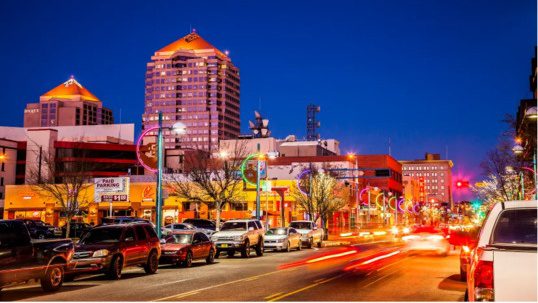
POLICY WIRE — ALBUQUERQUE, N.M. — The scent of dust and memory still clings to the 500 block of Central Avenue Northwest. It’s a particularly tenacious aroma in the wake of the Bliss Building’s unceremonious descent into rubble—a gaping absence where Lindy’s Diner once stood, a diner that for generations served up comfort food alongside its own brand of dusty nostalgia. You see the signs, don’t you? The hastily erected barriers, the quiet whispers among the remaining shopkeepers. And against this tableau of urban blight, a peculiar remedy has emerged: two hours of free parking.
It sounds almost absurd, a bureaucratic balm for a civic wound that runs deep. This isn’t merely about inconvenience; it’s about the very lifeblood of a city’s core. The city isn’t rebuilding a block; it’s patching a systemic rupture. Because in downtown Albuquerque, much like beleaguered urban centers from Dhaka to Detroit, small enterprises fight a grinding battle against apathy, infrastructure woes, and the relentless march of time. That battle, for now, includes snagging a free spot in the Copper Garage if you’re doing business in the immediate, beleaguered vicinity. QR codes, mind you, are your golden ticket. High-tech solutions for deeply analog problems.
“We’re not just clearing debris; we’re sowing the seeds for resurgence,” stated Councilwoman Elena Montoya, her voice unwavering amidst the persistent hum of distant construction. “This limited free parking, while seemingly small, represents our commitment to our local entrepreneurs. It’s an immediate, tangible help for folks navigating what’s undeniably a rough patch.” But one can’t help but notice the emphasis on ‘limited’ and ‘immediate,’ as if the long-term prognosis remains conveniently off the agenda. Free parking. It’s almost quaint.
And what exactly does ‘sowing seeds’ entail in this concrete jungle? Is two hours enough to reverse the years of disinvestment? Or to lure back shoppers accustomed to sprawling suburban ease? the temporary closure of Central — and 5th hasn’t helped foot traffic; it’s funneled it away. One wonders, doesn’t one, if the city’s approach feels less like proactive planning and more like a reflexive gasp, a reaction to a visible symptom rather than the underlying disease.
Mohammad Al-Hassan, President of the Downtown Business Collective, speaks with the weary candor of a man who’s seen too many ‘initiatives’ come and go. “We appreciate any lifeline, don’t misunderstand,” he conceded, his brow furrowed, “but a couple of hours in a specific garage? It’s a nice thought, a brief respite from the meter-maid’s gaze, but it’s a Band-Aid when our main street needs a major transfusion. We’re still facing infrastructure challenges that run deeper than a collapsed facade.” He added, dryly, “It’s reminiscent of trying to fix a leaky dam with a thimble in certain marketplaces I’ve seen back in Karachi – well-intentioned, but ultimately symbolic without sustained policy muscle.” He knows it; we know it. Symbols are cheap. Solutions are pricey.
📄 POLICY WIRE WHITEPAPER PUBLISHED: PAKISTAN'S NATIONAL SECURITY POLICY PRIORITIES
👉 READ BY CLICKING HEREThe situation isn’t unique to the high desert. From the crowded bazaars of Lahore grappling with aging water lines and inconsistent power, to the decaying urban cores of former industrial giants across the U.S., the pattern holds: infrastructure neglect precipitates economic fragility. A report from the National Federation of Independent Business (NFIB) indicated that over 40% of small businesses nationwide never fully recover after significant disruptions, like a building collapse or prolonged road closures, a stark reality often brushed aside by temporary fixes.
What This Means
The free parking isn’t merely a courtesy; it’s a tacit acknowledgement of a deeper malaise that afflicts downtowns everywhere. Politically, it allows city officials to appear proactive, responsive to crisis. Economically, however, it skirts the real, complex issues of urban revitalization: the skyrocketing costs of maintenance, the allure of peripheral developments, and the seismic shift in how people consume goods and services. A strategy centered on a short-term parking incentive, however well-meaning, signals a short-term vision. It doesn’t address the competitive disadvantage faced by a historic main street trying to lure customers away from suburban malls or the ease of online shopping. The irony, of course, is that a district requiring such desperate measures might suggest that its value proposition, even when free, isn’t strong enough on its own. For the local businesses – the 505 Food Hall, Man’s Hat Shop, R & D Smoke Shop, Sushi Hana – this isn’t just about customers finding a spot; it’s about staying afloat, period. It’s a microcosm of the global struggle for local commerce, from Islamabad’s saddar markets struggling against online retailers, to mom-and-pop shops in the heartland wrestling with mega-chains. Short-term sweeteners rarely heal long-term systemic neglect.