
The Ghost in the Clean Air Machine: Wildfires Erase Decades of Smog Progress
POLICY WIRE — Washington, D.C. — For years, the story was one of triumph. Regulatory muscle had pushed back the dirty pall of urban smog, making the air — perceptibly, statistically — cleaner....

POLICY WIRE — Washington, D.C. — For years, the story was one of triumph. Regulatory muscle had pushed back the dirty pall of urban smog, making the air — perceptibly, statistically — cleaner. Americans breathed a little easier. Now? That chapter seems like an almost forgotten myth, an artifact of a bygone era when political will sometimes aligned with scientific consensus. Because wildfire smoke, an insidious and increasingly relentless adversary, is systematically unwinding nearly two decades of hard-fought atmospheric improvements.
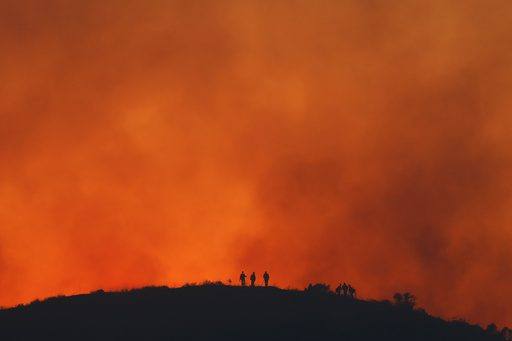
It’s not just an inconvenience. It’s deadly. And it highlights a peculiar, almost tragic irony: while industries adapted, while vehicle emissions plummeted under stringent rules, a far older, more elemental force—amplified by human-caused climate change—has taken center stage, making a mockery of our policy victories. We thought we had a handle on pollution. We were wrong. This isn’t about factories spewing crud anymore; it’s about forests burning down, day after relentless day, mile after suffocating mile.
New findings, published in the journal Science, paint a stark picture. From 2003 to 2015, the nation saw its smog levels drop by a significant 11 percent. Those federal regulations? They worked. But since 2015, as mega-fires became the horrifying new normal, the nation’s average ground-level ozone—that’s smog, for the uninitiated—has ticked up by 4 percent. Consider that for a second. More than a decade of effort, slowly erased by an invisible enemy carried on the wind. The study’s lead author, Weizhi Deng, an atmospheric scientist at the University of Iowa, projects a grim trajectory: if these smoky trends continue, the country will be back to 2003 smog levels in roughly two decades. A full circle, but one nobody asked for.
And the human toll? It’s not abstract. Researchers calculated an additional 318 American deaths per year attributable to ozone pollution since 2013 alone, a figure derived from established epidemiology studies. These aren’t just statistics; these are people. Futures gone. Families grieving. Because air they breathe is suddenly weaponized. That’s a stark contrast to places like Lahore or Karachi in Pakistan, where pollution is an old, chronic foe. There, a thick, persistent smog, often a brew of industrial emissions, vehicle exhaust, and agricultural burning, is a normalized part of life—or, rather, a normalized contributor to reduced life expectancy. They grapple with the everyday reality of air that literally shortens lives, much as this new, wildfire-driven smog is doing here.
The monitoring apparatus didn’t even see it coming, not fully. The U.S. Environmental Protection Agency’s traditional monitors, scattered mostly in urban centers, capture a mere 2 percent of the nation. It took scientists leveraging satellite data, weather models, and, yes, a hefty dose of artificial intelligence, to stitch together a nationwide picture. The mosaic they created shows an undeniable, pervasive increase. “All those kinds of effort were wiped out,” observed Meng Zhou, a University of Iowa wildfire researcher and co-author, referring to the initial gains.
“It’s a disheartening reality,” Dr. Lynn Goldman, former dean of the George Washington University School of Public Health and an ex-EPA assistant administrator, observed grimly. “We’ve fought these battles for decades, pushing for science-based protections. To see that progress so casually eroded—because certain voices deem it inconvenient for industry—well, it speaks volumes about where our true priorities lie.” Her frustration is palpable, and for good reason.
📄 POLICY WIRE WHITEPAPER PUBLISHED: PAKISTAN'S NATIONAL SECURITY POLICY PRIORITIES
👉 READ BY CLICKING HEREThe policy landscape hasn’t exactly helped, either. The Biden administration, at one point, tapped the brakes on tightening ozone standards. The previous administration? They tweaked regulations, effectively downgrading the consideration of death — and health impacts in smog and soot rules. A truly breathtaking dereliction of duty, some would say, in the face of mounting evidence. What could possibly explain this backpedaling? It makes you wonder if anyone in power truly breathes the same air we do.
What This Means
This isn’t merely an environmental footnote; it’s a profound, systemic unraveling with deep political and economic implications. For one, it screams about the limitations of siloed policy. You can regulate smokestacks all you want, but if you don’t address the macro drivers of planetary heating, other, more chaotic forces will inevitably surge forth and erase your painstaking progress. Politically, it signals a growing chasm: between scientific urgency — and political expediency. Administrations, irrespective of party, seem to be caught in a bureaucratic limbo, either delaying necessary action or actively dismantling safeguards. And because climate change disproportionately affects vulnerable communities—think marginalized groups near industrial zones or in regions prone to wildfires—this deteriorating air quality isn’t just an economic drag; it’s an intensifying health equity crisis. This is a battle for our lungs, sure. But it’s also a battle for the legitimacy of governance itself, to prove that leadership can respond effectively to something as elemental and foundational as the air we breathe. There are costs to every policy, but the human cost of this one might prove irreparable. The trajectory for public health is undeniably bleak. You’d think the policymakers could smell the smoke—literally and figuratively.
Gina McCarthy, former EPA Administrator during the Obama years, minced no words when reflecting on the reversal. “It’s beyond discouraging to watch all that hard work go up in smoke, literally,” she stated. She understands the nuance: wildfires themselves bring death — and destruction. But the insidious threat of increased ozone levels—driven by smoke and heat—that harms people’s lungs and hearts? That’s the creeping terror. “So the big question is,” she challenged, her voice laden with frustration, “when are we going to stop the nonsense from this administration to burn more and more ‘beautiful’ fossil fuels?” It’s a question for all of us, not just Washington. Because, whether we want to admit it or not, the air doesn’t distinguish between our politics, our paychecks, or our zip codes. We’re all in this hazy mess together. And that’s a suffocating truth.