

Albuquerque’s Perpetual Grind: I-25 Shifts Highlight Nation’s Infrastructure Tensions
POLICY WIRE — ALBUQUERQUE, N.M. — Another stretch of I-25 in Albuquerque is about to get a fresh coat of pavement—and a fresh dose of motorist aggravation, wouldn’t you know. It’s a scene...

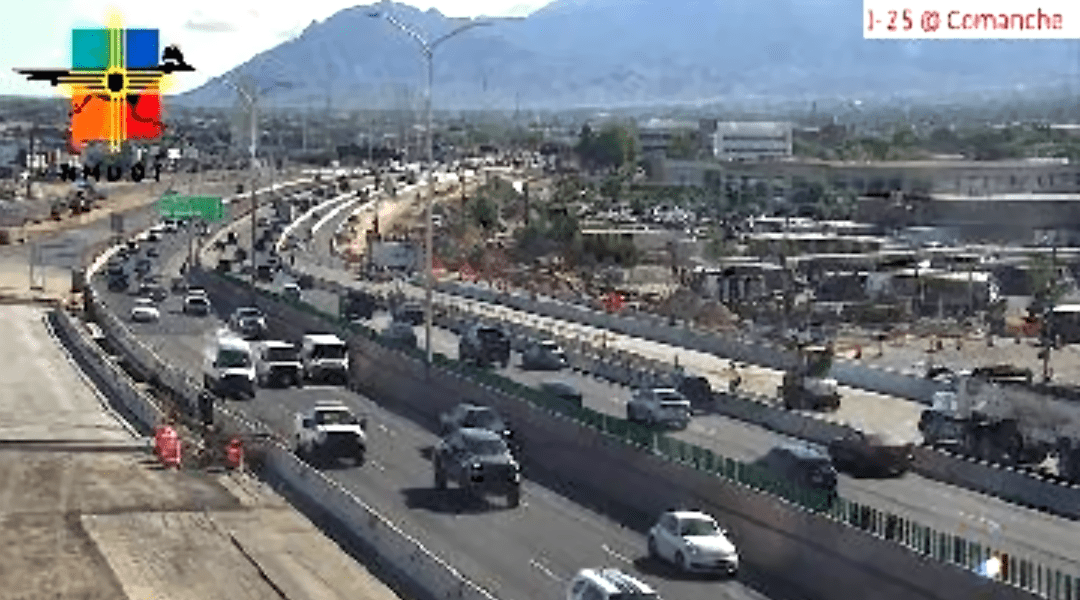
POLICY WIRE — ALBUQUERQUE, N.M. — Another stretch of I-25 in Albuquerque is about to get a fresh coat of pavement—and a fresh dose of motorist aggravation, wouldn’t you know. It’s a scene playing out across America, really, this endless dance between urban expansion and the grinding machinery of its own upkeep. What’s presented as mere logistics — shifting northbound traffic to new lanes between Candelaria Road and Montgomery Boulevard on June 4-5, followed by the southbound migration on June 12 — tells a much broader story. It’s a quiet testament to the complexities of moving people and commerce, a story written in cones, re-routes, and frayed nerves.
It’s not just about getting to work anymore, is it? These traffic shifts, while ostensibly about fixing roads, morph into mini-economic crises for local businesses, a test of patience for every commuter, and a constant, low-level hum of policy debate about who pays, who profits, and whether it’s all even worth it. You’ve got to wonder if our public officials secretly enjoy watching us navigate their intricate orange labyrinths. Maybe they see it as character building. (They don’t, probably.)
The state’s infrastructure chief, NMDOT Secretary Sandra Jenkins, put on her most earnest face when discussing the project. “Look, no one’s celebrating the delays,” she recently quipped during a teleconference, a hint of practiced weariness in her voice. “We absolutely get the frustration. But this isn’t about just putting a band-aid on a crack. We’re literally rebuilding core sections of a major artery that hadn’t seen proper investment in decades. It’s tough medicine, but it’s for a healthier patient long-term.” Her office pegs the I-25 Modernization Project’s current budget at north of $150 million—a figure that has itself crept upwards over time, much like the rush hour commute on a bad day.
But the ‘long-term vision’ often clashes with the day-to-day grind for those on the ground. For businesses like those flanking Montgomery Boulevard, where an on-ramp remains closed indefinitely while an off-ramp reconstruction kicks off around June 17, the economic reverberations are immediate and very real. Albuquerque City Councilor Robert Peña doesn’t mince words. “We hear from small businesses daily,” Peña observed during a ward meeting just last week. “Customers are bypassing them, delivery schedules are a mess. We’ve seen places on the edge close their doors because this ‘necessary evil’ pushes them right over. The cost isn’t just in concrete, it’s in lost livelihoods.” It’s a recurring theme in modern American cities, isn’t it, this balancing act? A tough, economic calculus, not entirely unlike the considerations explored when organizations battle for talent in a cutthroat marketplace, mirroring themes seen in Policy Wire’s recent piece on the futures market of young American talent.
Nighttime lane and ramp closures, 8 p.m. to 6 a.m., become standard operating procedure. It’s a trade-off, shifting the bottleneck to the overnight hours, aiming to minimize peak-time impact. But even that’s relative; for gig-economy drivers, night shift workers, and those simply needing to traverse the city for family emergencies or late-night supplies, the detours and uncertainty persist. They don’t simply vanish into the desert night.
📄 POLICY WIRE WHITEPAPER PUBLISHED: PAKISTAN'S NATIONAL SECURITY POLICY PRIORITIES
👉 READ BY CLICKING HEREAnd let’s be frank, this isn’t solely an American phenomenon. Think about the sprawling metropolises of South Asia—Karachi, Lahore, Delhi—where urban planning constantly grapples with exponential population growth, outdated infrastructure, and the daily nightmare of vehicular gridlock. Their challenges are magnified, of course, their budgets often more strained, but the fundamental struggle against decay and congestion is universal. The continuous construction of infrastructure, whether it’s a six-lane highway in New Mexico or a new elevated corridor in Lahore, speaks to the unceasing human demand for mobility and connection—a demand that often outstrips the capacity of planners and purse-strings to meet it gracefully. According to a 2023 report from the Texas A&M Transportation Institute, average annual delay per urban commuter in the U.S. climbed to 54 hours, costing the nation over $188 billion in lost productivity — and wasted fuel.
What This Means
These temporary traffic shifts on I-25 aren’t just inconvenient, they’re microcosms of a broader struggle in American policy and economics. They point to a nation wrestling with the ghost of deferred maintenance—the price we pay for years of underinvestment in our foundational public works. The billions budgeted for these projects across the country aren’t just for concrete; they represent a contentious battle over public funds, where every dollar spent on a freeway is a dollar not spent on schools, healthcare, or green initiatives. And it isn’t always clear how those investments actually play out, as Policy Wire has discussed in articles about cities confronting the cold economic logic of difficult decisions.
Politically, the handling of these large-scale infrastructure projects becomes a talking point—for incumbent politicians touting ‘progress,’ and for challengers pointing fingers at inefficiencies or cost overruns. Economically, while they create jobs in the construction sector, they also impose ‘soft costs’ on local economies, impacting small businesses, lowering employee productivity due to extended commutes, and, quite frankly, chipping away at citizen morale. This isn’t just about smooth asphalt; it’s about the very fabric of urban life, the viability of local commerce, and the psychological burden of perpetually navigating a city under construction. It implies a social contract where citizens endure present discomfort for future gain—a contract that often feels skewed for those caught in the endless loop of road work. For every gleaming new lane, there’s an unspoken toll extracted.