

America’s Energy Anachronism: Trump’s Bet on Black Gold Echoes in a Warming World
WASHINGTON D.C. — It’s a legislative relic from a bygone age, forged in the chilling grip of superpower rivalry. Yet, this week, President Trump didn’t dust off the National Security Act...

WASHINGTON D.C. — It’s a legislative relic from a bygone age, forged in the chilling grip of superpower rivalry. Yet, this week, President Trump didn’t dust off the National Security Act for some geopolitical showdown; instead, he invoked its solemn authority to channel nearly $700 million into a fading energy source: coal. Not exactly the ‘Mutually Assured Destruction’ scenario Cold War strategists envisioned for this specific clause, is it? One might almost chuckle, if the stakes weren’t so high.
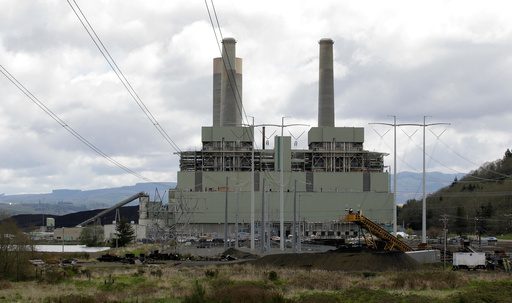
The White House, predictably, frames this massive infusion of taxpayer cash as an act of patriotic defiance, a tangible investment in American jobs and energy independence. The package is earmarked to shore up 13 struggling coal-fired power plants across the country, kick-start new facilities in places like Alaska and West Virginia—the first of their kind since 2013, a statistic that speaks volumes about the industry’s trajectory—and even to breathe life back into a mothballed Maryland plant and a long-stalled coal export terminal out in Oakland, California. The administration calculates this audacious intervention will create or support some 14,000 jobs, encompassing everything from mining to maritime logistics.
And yes, this isn’t just a one-off. It’s a recurring theme, almost a personal crusade for the President. Last fall saw 13 million acres of federal land thrown open to new coal mining permits and another $625 million funneled into retrofitting or recommissioning older power stations. They’ve even been forcing operational extensions for fossil-fueled plants in Michigan, Indiana, and Colorado, past what might otherwise have been their peaceful, pollution-free retirements. It’s a strategy that, according to Energy Secretary Chris Wright, is rooted in necessity, not sentimentality. “This isn’t about nostalgia; it’s about grid stability,” Wright asserted during an informal chat with Policy Wire, his gaze unwavering. “We’re talking about powering homes, factories, — and America’s future when the wind stops blowing. Some call it an anachronism. I call it responsible governance.”
But responsibility, like beauty, is in the eye of the beholder. Environmental watchdogs, naturally, aren’t buying it. Not one bit. They see this not as governance, but as governmental gymnastics to placate an industry that, by almost every economic metric, has been on life support for years. It’s a curious priority when juxtaposed against the administration’s decidedly frosty posture towards renewables—freezing offshore wind permits, hacking away at clean energy tax credits, even blocking solar projects on federal lands. Kit Kennedy, managing director for power at the Natural Resources Defense Council, didn’t mince words. “Propping up coal billionaires with taxpayer money is one more way for this administration to put polluters first and put the rest of us at risk,” she fired, adding with a heavy dose of sarcasm, “What’s next, a taxpayer bailout to build new phone booths?”
The numbers don’t paint a rosy picture for King Coal, either. Not domestically. Its share of U.S. electricity production, which once powered more than half the nation, has plummeted to roughly 15% today, a stark drop from about 45% as recently as 2010. Natural gas, cheaper and somewhat cleaner (depending on who you ask), now claims about 43% of the grid, with renewables and nuclear making up the remainder. U.S. coal exports themselves dropped significantly during the first year of Trump’s second term, largely due to Chinese reciprocal tariffs, as documented by the U.S. Energy Information Administration.
📄 POLICY WIRE WHITEPAPER PUBLISHED: PAKISTAN'S NATIONAL SECURITY POLICY PRIORITIES
👉 READ BY CLICKING HEREWhat This Means
This latest gambit is a clear, unfiltered declaration from the Trump administration: fossil fuels aren’t just here to stay; they’re to be aggressively nurtured, even resurrected, with considerable public expense. Politically, it’s a direct appeal to blue-collar voters in traditional coal states, a constituency the President prizes dearly. But it’s an increasingly expensive, potentially quixotic battle against market forces and, let’s be honest, scientific consensus. And it’s not just about domestic policy. The ripple effects echo far beyond America’s borders.
Consider the energy landscape in the developing world, particularly in South Asia. Nations like Pakistan, wrestling with their own formidable energy security challenges and climate vulnerabilities, watch these maneuvers keenly. When a major developed economy openly channels hundreds of millions into propping up its coal sector—invoking ‘national security’ in the process—it offers an interesting blueprint, or perhaps a perverse justification, for others to pursue similar fossil fuel-intensive paths, despite their climate commitments. It’s a challenging signal to parse when, on one hand, wealthier nations often exhort others to transition to green energy, and on the other, they’re pumping millions into what the rest of the world increasingly sees as an energy dead-end. The global conversation around climate change becomes instantly more complicated, more hypocritical even. Pakistan, for instance, faces pressure to decarbonize while simultaneously trying to electrify millions of homes and power rapid industrial growth. America’s re-embrace of coal doesn’t make that tightrope walk any easier.
Economically, it’s a huge bet, diverting resources that could arguably be used to transition workers in these struggling regions to sustainable industries—an investment that could future-proof economies rather than tethering them to the past. But then, as any veteran of Washington knows, sometimes policy isn’t about the future. It’s about the next election. This particular energy play—a multi-million dollar echo of the Cold War—seems firmly planted in that very familiar soil, climate consequences be damned.