


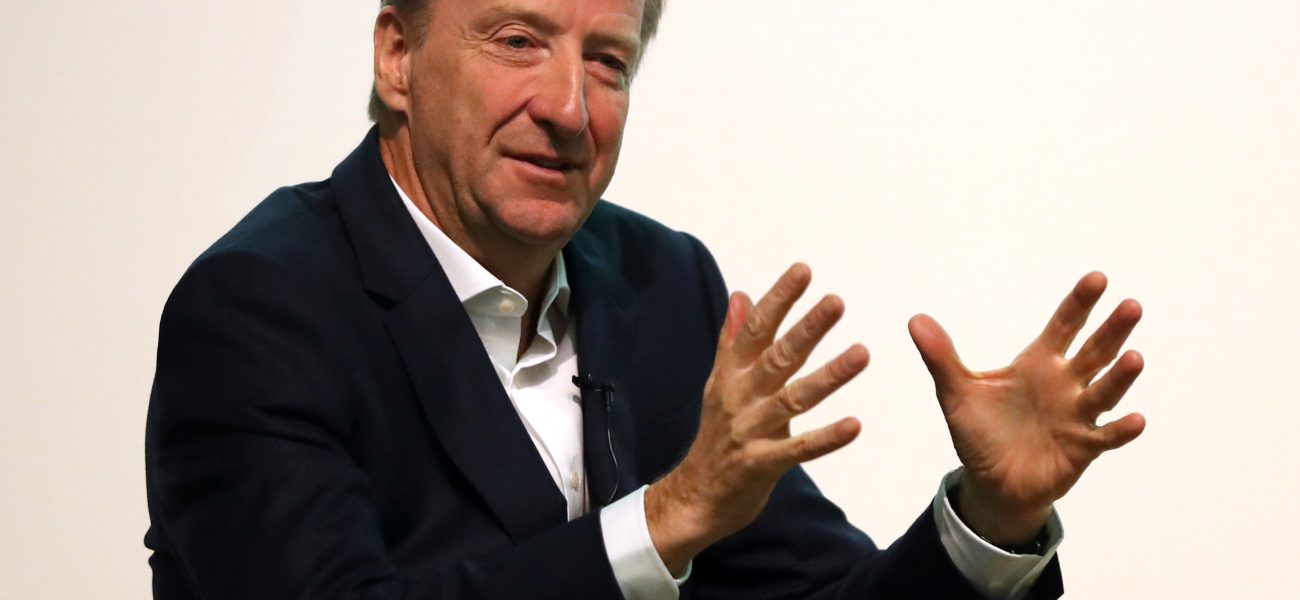
Silent Architect of Shadows: MI6’s Alex Younger Leaves Behind a Restructured Invisible War
POLICY WIRE — London, UK — The true measure of an intelligence chief, one might argue, isn’t found in accolades or public fanfare. It’s in the absence of catastrophe, the quietly averted...

POLICY WIRE — London, UK — The true measure of an intelligence chief, one might argue, isn’t found in accolades or public fanfare. It’s in the absence of catastrophe, the quietly averted threat, the unseen hand steadying the ship amidst global storms. Alex Younger, who headed Britain’s Secret Intelligence Service (MI6) from 2014 to 2020, operated entirely within this opaque, demanding calculus. His recent passing at the age of 62—a remarkably brief coda to a life spent in the shadows—casts a rare flicker of light on the world he so painstakingly navigated.
It isn’t every day you hear a spy chief speak. That’s kinda the point, isn’t it? But Younger, in his rare public appearances, didn’t talk of daring escapes or gadgets. He spoke, rather dispassionately, of data, of the internet as a battleground, of nations jockeying for unseen advantage. But then again, the headlines that blared ‘MI6 Chief Dies’ barely scratch the surface of a career defined by intense, often solitary, strategizing against adversaries both kinetic and digital.
During his six-year tenure, one of the longest in modern MI6 history, Younger wrestled with a world that seemed to pivot wildly. He inherited an organization deeply embedded in the fight against jihadi terrorism but quickly found himself having to re-pivot towards a resurgent Russia and the burgeoning, often amorphous, threat of cyber warfare. He repeatedly warned of hostile state actors — Russia foremost among them — using “hybrid warfare” tactics to undermine Western democracies, often deploying disinformation campaigns and cyberattacks with clinical precision. It wasn’t the kind of stuff they wrote thrillers about, but it was, for better or worse, the new espionage.
“Alex possessed an unparalleled understanding of the global landscape, particularly the shadowy battlefields of intelligence and counter-intelligence,” remarked Former National Security Adviser Sir Stephen Lovegrove. “He reshaped MI6 into a lean, digitally astute fighting force, ready for the challenges of the 21st century. We owe him a considerable debt for that.” It’s true; he oversaw significant structural changes, emphasizing technology and forging closer ties with international partners. He had to.
And those international partners extended well beyond the traditional ‘Five Eyes’ alliance. Younger’s MI6 quietly maintained significant links throughout the Muslim world, from clandestine operations in parts of the Middle East to critical intelligence sharing relationships in South Asia. Pakistan, for instance, a nation often grappling with internal extremist elements and a complex geopolitical position, was frequently a nexus for intelligence efforts during his watch. British operatives often worked in tandem with regional agencies, sharing threat assessments and counter-terrorism strategies against groups that spanned borders — a complex dance requiring immense diplomatic skill alongside operational expertise. They couldn’t afford to get it wrong.
His era also coincided with a notable shift in recruitment. For years, MI6, like many intelligence agencies, relied on a specific ‘type.’ Younger actively championed diversification, recognizing that diverse perspectives were essential to understanding a diverse world. It wasn’t just about ethics; it was about sheer effectiveness. This cultural pivot within the traditionally buttoned-up Service was itself a significant undertaking. In 2019, for example, the UK intelligence agencies jointly committed to increasing the proportion of their staff from minority ethnic backgrounds to 12% by 2020, according to public reports from the Intelligence and Security Committee of Parliament. A seemingly small number, but for an organization so steeped in tradition, it marked a substantial internal revolution.
📄 POLICY WIRE WHITEPAPER PUBLISHED: PAKISTAN'S NATIONAL SECURITY POLICY PRIORITIES
👉 READ BY CLICKING HERE“He knew intelligence work wasn’t just about gadgets anymore, or even exclusively about human sources; it’s about connecting the dots, predicting geopolitical shifts,” explains Dr. Zara Hussain, a security analyst specializing in South Asian affairs. “The shift he implemented wasn’t merely cosmetic; it was about ensuring Britain’s spies could understand everything from Karachi’s street politics to Beijing’s cyber warfare plans.”
What This Means
Younger’s departure from MI6 in 2020 — and now his passing closes a definite chapter in British intelligence history. He operated in a grey zone—between the old school, human-led espionage and the new era of sophisticated cyber operations. His legacy will be defined not just by the threats he helped mitigate—the attempted assassinations, the foreign meddling—but by the transformation of a venerable, often analog institution into a formidable digital force. Britain’s economic health, arguably, hinges on its ability to safeguard intellectual property and critical infrastructure from state-sponsored cyber theft, a domain Younger pushed MI6 deeper into. This strategic foresight undoubtedly impacts Britain’s ability to maintain its competitive edge in a hyper-connected, and often cutthroat, global economy. We’re seeing now how the long-game played in Tehran with nuclear capabilities, for instance, requires precisely this kind of adaptable intelligence posture. His initiatives in human-machine collaboration are certainly shaping how MI6 now approaches issues of global stability and threat forecasting. That’s a good bet.
Because the threats aren’t going anywhere. But intelligence budgets are always a moving target, subject to political whims — and shifting priorities. And finding the balance between clandestine operations abroad and providing actionable intelligence for domestic policy decisions will remain a constant challenge. There’s an art to keeping secrets in an age where everything feels transparent, and Younger was, arguably, one of its last great maestros. And yet, even he knew, you couldn’t be purely secretive; you had to adapt. And adapting often means rethinking who you are, what you look like, and even who you recruit, something he wasn’t afraid to do.