

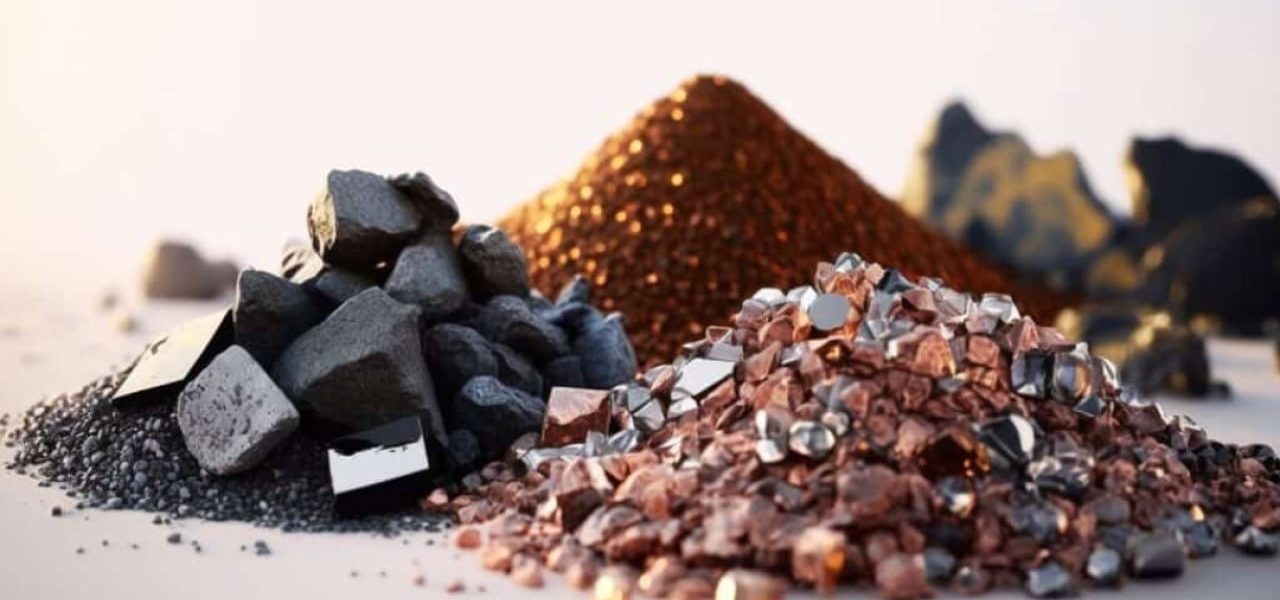
Delhi Dreams Big: Can India Really Chip Away at Beijing’s Mineral Monopoly?
POLICY WIRE — New Delhi, India — In the grand geopolitical poker game, where stakes involve the raw ingredients for everything from your smartphone to fighter jets, India just tossed in its chips....

POLICY WIRE — New Delhi, India — In the grand geopolitical poker game, where stakes involve the raw ingredients for everything from your smartphone to fighter jets, India just tossed in its chips. It’s not a full-blown revolution—not yet, anyway—but Delhi’s recent dalliance with Washington on critical minerals certainly has Beijing paying attention. Everyone knows China’s had a near-stranglehold on the processing of these metallic wonders. Now, India’s betting it can muscle into that club, a formidable task indeed.
Forget the official statements — and the diplomatic pleasantries for a moment. This whole endeavor is less about friendly cooperation — and more about a desperate scramble. Nations worldwide are waking up to the rather inconvenient truth: China doesn’t just mine a lot of these materials; it also processes something like 90% of the world’s rare earths, according to data from the U.S. Geological Survey. And that gives them leverage—serious leverage—in global supply chains. Nobody wants to be held hostage, particularly when the future hinges on who controls the elements fueling the green transition and advanced tech.
But can India actually do it? That’s the billion-dollar question, or perhaps the trillion-dollar one. The newly inked framework agreement on May 26th between the U.S. and India, penned during U.S. Secretary of State Marco Rubio’s visit, is essentially a pledge to collaborate on mining — and processing. It’s an implicit nod from Washington that it sees India as a viable alternative—a necessary bulwark, frankly—against an overly concentrated market. But India isn’t starting from scratch, it’s true; geological surveys suggest substantial reserves exist, though tapping them is a whole different beast.
“Look, we’re not just talking minerals; we’re talking strategic security,” Secretary Rubio reportedly quipped to aides following the signing. “Beijing’s had a monopoly, and frankly, that’s not good for anyone’s future—ours, India’s, or the global economy’s.” And he isn’t wrong. The West has been burned by supply chain fragility often enough in recent years to understand the danger of relying on a single, often adversarial, source.
India’s own motivations are multi-faceted. Economic prosperity, for one. And then there’s the concept of ‘Atmanirbhar Bharat’—self-reliant India—a nationalist mantra often invoked by Prime Minister Narendra Modi. Building a robust domestic industry for critical minerals plays directly into that narrative. “Our aim isn’t just to extract; it’s to refine, to innovate, to build a resilient, truly ‘Made in India’ supply chain,” stated India’s Minister of Mines, Pralhad Joshi, detailing the nation’s ambitious push during a recent industry summit. He seemed to relish the challenge. Because, let’s be honest, geopolitical bragging rights are a tasty bonus.
There are some rather large hurdles. India’s environmental regulations, while improving, can be labyrinthine. Its infrastructure, though growing, often lags behind the needs of such intensive industries. And local communities often have valid concerns about the ecological impact of large-scale mining. Just try convincing villagers their ancestral lands must be dug up for electric car batteries in California or jet engines in Toulouse.
📄 POLICY WIRE WHITEPAPER PUBLISHED: PAKISTAN'S NATIONAL SECURITY POLICY PRIORITIES
👉 READ BY CLICKING HEREThis whole mineral chase isn’t just an internal Indian affair, you know. It has implications for its immediate neighborhood — and the wider Muslim world. Pakistan, India’s perennially fraught neighbor, sits on significant mineral deposits too—some say unexplored or poorly managed. Any major move by India to ramp up its mineral extraction and processing capabilities will inevitably be watched with keen interest, and perhaps a touch of envy, by Islamabad. And further afield, the Gulf nations, seeking to diversify their economies beyond hydrocarbons, could become crucial partners—or competitors—in the downstream processing segments, leveraging their abundant energy for smelting and refining. Imagine a Riyadh-Delhi mineral processing nexus. It’s not totally out of the realm of possibility. But such partnerships aren’t forged overnight.
Because ultimately, Beijing isn’t just going to roll over. They’ve built this colossal industry over decades, perfecting their refining techniques — and consolidating control. China holds the intellectual property — and the manufacturing scale. So, India and its Western partners face a Goliath, a very entrenched, very efficient Goliath.
What This Means
The India-U.S. pact on critical minerals is less about immediate displacement and more about strategic signaling and long-term ambition. Economically, India’s successful entry into this space could unlock significant domestic wealth, creating jobs and fostering an industrial ecosystem far beyond mining itself. It would provide crucial input for its rapidly expanding electronics, defense, — and green energy sectors. Politically, it grants India greater leverage in the global supply chain discussions, positioning it as a reliable, democratic counterweight to China. It’s a vote of confidence, if you will, in India’s industrial maturity. Regional ripple effects include increased competition for resources—particularly in Afghanistan’s untapped mineral wealth, which always seems to lurk in the background—and potential shifts in foreign investment patterns across South Asia. The initial investment might seem steep, and the path arduous, but the potential geopolitical payoff, the lessening of dependence on a single actor, well, that’s priceless for Washington. And for India? It’s a chance to truly become a great power, one shovelful at a time.