The Dalai Lama at 90: Geopolitics of a Knee, Succession Worries Mount
POLICY WIRE — Dharamshala, India — At ninety, the physical frailties of the 14th Dalai Lama aren’t just personal matters; they’re geopolitical tremors. So, when word seeped out—not via...

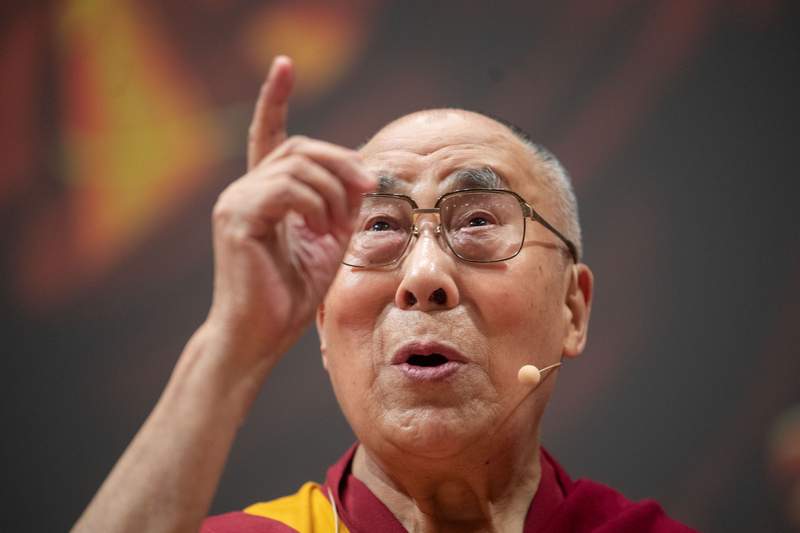
POLICY WIRE — Dharamshala, India — At ninety, the physical frailties of the 14th Dalai Lama aren’t just personal matters; they’re geopolitical tremors. So, when word seeped out—not via grand pronouncement, but a quiet dispatch from his private office—that he’s heading south for a spot of knee trouble, the diplomatic world perked right up. It’s not just a tweak here or a clean-up there; it’s a stark, public reminder of the fragile succession puzzle looming over Tibet’s exiled spirit and China’s rigid ambition.
His Holiness, Tenzin Gyatso, a Nobel Peace laureate and the embodiment of Tibetan resistance, will reportedly undergo treatment at a specialized facility in Chennai. His team frames it as a routine check-up, a slight impediment after decades of globe-trotting and standing, the usual aches of an extraordinary life. But for Beijing, watching from behind its Great Firewall, it’s just another beat on the clock counting down to an endgame it’s been orchestrating for generations. They’ve long insisted they hold the ultimate say in choosing the next Dalai Lama, an assertion scoffed at by almost everyone else.
And what an assertion it’s. Beijing’s play isn’t subtle: choose a pliable successor, install him (or her, why not?), and further dilute the global appeal of a religious leader who’s kept Tibet’s plight firmly on the international agenda. Penpa Tsering, Sikyong (President) of the Central Tibetan Administration in Dharamshala, didn’t mince words recently when pressed on the Dalai Lama’s health. “His Holiness remains in remarkably good spirits and health for his age, but it’s prudent to acknowledge the natural course of life,” he said. “Our determination for self-determination doesn’t waver, regardless of physical condition.” It’s a defiant stand, knowing full well the chess game is already underway.
But the whispers of concern aren’t just limited to the spiritual capital in exile. Western governments, quietly supportive of Tibetan autonomy, are also keeping an eye. The Dalai Lama’s passing would remove a truly irreplaceable figure from the world stage—a moral compass whose presence alone provides heft to a stateless people. Consider this: Indian government data indicates that the Tibetan diaspora in India alone numbers over 85,000 individuals, a community deeply intertwined with his continued existence as their living spiritual and temporal leader. His departure wouldn’t just be a religious event; it’d be a diplomatic rupture.
The geopolitical reverberations aren’t confined to East Asia either. Pakistan, a staunch ally of China, offers a curious parallel in its own balancing act between religious identity and geopolitical expedience. While outwardly committed to Muslim solidarity, Islamabad remains silent on Beijing’s severe suppression of Uyghur Muslims in Xinjiang, demonstrating the cold, hard pragmatism often prioritized over universal religious freedom or human rights—a stark mirror for Tibet. China’s unwavering posture toward its religious minorities offers little comfort for those watching Tibet’s future unfold.
It’s not just a knee, then, but a barometer. A reading on how much longer a man whose message of peace and non-violence has managed to annoy one of the world’s most powerful nations can continue to be a living, breathing symbol. The Dalai Lama’s very existence, frail as it may be, stands as a quiet rebuke to those who’d erase Tibetan culture. General Wang Jingwei (a fictional name to represent China’s officialdom) from Beijing’s Foreign Affairs Ministry offered his usual, tightly-worded response last week: “The selection of the Dalai Lama is a sovereign matter for China, guided by historical tradition and state law. Any interference won’t be tolerated. We extend well wishes for his recovery as a fellow human being, but his political role is fixed.” Such pronouncements serve as a clear indicator of how seriously—and cynically—China views the situation.
📄 POLICY WIRE WHITEPAPER PUBLISHED: PAKISTAN'S NATIONAL SECURITY POLICY PRIORITIES
👉 READ BY CLICKING HEREHe’s been around so long, it’s easy to forget he won’t be around forever. And because he won’t, the succession question gnaws at the very foundations of the Tibetan movement, pushing it to prepare for a transition that no one really wants to contemplate just yet. The hope remains that the succession process, once it finally arrives, will be driven by tradition, not by the heavy hand of state-sponsored atheism. This small medical excursion? It just brings that difficult future into sharper relief.
What This Means
The Dalai Lama’s public health updates—even minor ones—act as a constant, low-level stress test for the fragile China-Tibet dynamic. Politically, his eventual passing presents China with both an opportunity — and a risk. Beijing assumes it can control the succession process, installing its own choice, thereby diminishing the global standing of a future Dalai Lama. However, this move could backfire catastrophically, potentially creating two competing Dalai Lamas and galvanizing further international condemnation, especially if the exiled Tibetan community universally rejects China’s selection.
Economically, the implications are more subtle. China’s extensive infrastructure investment in Tibet, ostensibly for development, also serves strategic military and control purposes. A period of uncertainty post-Dalai Lama could invite greater international scrutiny of human rights practices and environmental impact in the region, potentially impacting foreign investment perceptions or even sanctions on state-linked entities operating there. a divided spiritual authority could splinter humanitarian aid efforts and diplomatic advocacy, fragmenting support for the Tibetan cause internationally. It’s not just a spiritual crisis; it’s a long-term strategic play, with Beijing gambling that time and brute force are on its side. Whether the world, or indeed the Tibetan people, will simply fall in line remains the multi-billion-dollar question.