


Germany’s Building Blocks Crumbled: A Slowdown Echoes Beyond Europe’s Core
POLICY WIRE — Berlin, Germany — You can almost hear the quiet, can’t you? It’s the sound of fewer jackhammers shattering the morning calm, of cranes sitting idle against a steel-grey...

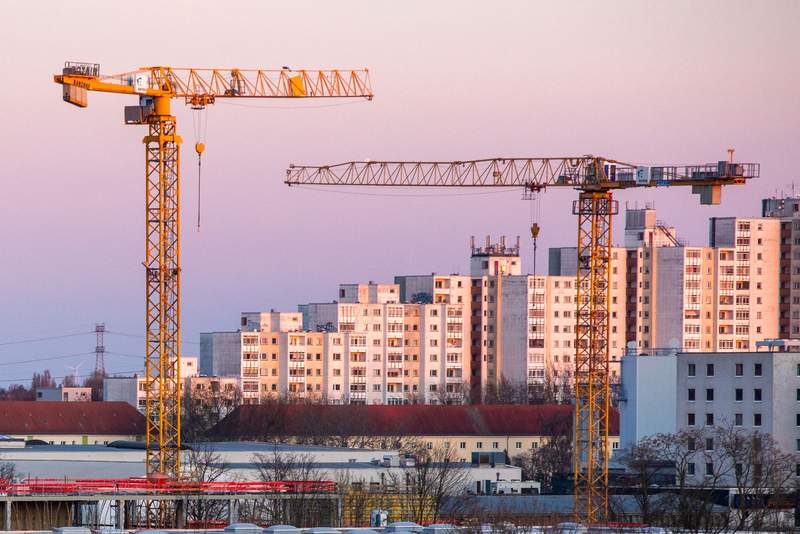
POLICY WIRE — Berlin, Germany — You can almost hear the quiet, can’t you? It’s the sound of fewer jackhammers shattering the morning calm, of cranes sitting idle against a steel-grey German sky. Forget the immediate numbers for a moment—they’re bleak, sure—but consider the broader vibe. Because what we’re witnessing isn’t just a dip in construction; it’s a tremor running through the very foundations of Europe’s largest economy, shaking investor confidence and casting long shadows that reach far beyond the Autobahn.
It’s an unsettling paradox. Just a few short years ago, Germany was the rock of stability, its industry chugging along, its engineers lauded globally. But the once-thriving construction sector—a bellwether, many would argue—has seemingly misplaced its blueprint. May saw activity stutter, building permits dwindle, and a palpable sense of unease settle over what was once a booming industry. Homeowners waiting for their dream house, businesses needing expansion, infrastructure upgrades — many plans are on hold. And nobody’s quite sure when, or if, the ground will firm up again.
“We’ve weathered storms before, and we’ll weather this one,” insisted German Finance Minister Christian Lindner in a recent address, his voice laced with the characteristic pragmatism expected from the FDP. “But make no mistake, fiscal prudence isn’t a choice, it’s a necessity when inflation gnaws at budgets and global competition intensifies. We can’t just spend our way out of every difficulty.” His message, a familiar refrain of caution, didn’t exactly set fire to optimism.
But those on the front lines see a grimmer picture. “Prudence is fine, but paralysis isn’t,” shot back Felix Kramer, head of a major German builders’ association, during a testy radio interview. “Our members are laying off skilled workers. They’re delaying projects that communities desperately need. We’re losing our best people because government signals are mixed, and interest rates—they’re a brick wall for developers. We don’t just need confidence; we need actionable policy that brings shovels back to dirt.” His frustration was palpable, echoing sentiments across the Mittelstand—the small and medium-sized enterprises that are the backbone of Germany’s economy.
The numbers don’t lie, not that anyone expects them to. The ifo Institute’s Business Climate Index for construction, for instance, showed a sharp decline, with expectations falling to their lowest levels since 2008 in some segments, as reported by outlets tracking economic indicators earlier this year. This isn’t just abstract economics; it’s lost jobs, delayed infrastructure, — and diminished growth prospects.
This slowdown, naturally, isn’t happening in a vacuum. It’s a confluence of factors: persistently high inflation driving up material costs, surging energy prices, the European Central Bank’s aggressive rate hikes aimed at cooling the broader economy (even if they inadvertently ice construction), and a distinct lack of affordable housing driving social pressure. But also, a lingering hangover from supply chain disruptions — and an acute shortage of skilled labour. Many of Germany’s construction sites traditionally relied on workers from Eastern Europe; with shifting demographics and economic incentives, those pipelines aren’t flowing like they once did. And that’s a problem when you need hands on deck.
📄 POLICY WIRE WHITEPAPER PUBLISHED: PAKISTAN'S NATIONAL SECURITY POLICY PRIORITIES
👉 READ BY CLICKING HEREAnd consider the reverberations reaching further afield. Germany’s industrial strength often meant robust foreign direct investment and significant demand for goods manufactured globally. A spluttering German economy sends cautious signals to burgeoning markets elsewhere. For instance, countries in South Asia—like Pakistan—have been keen to attract German investment in manufacturing and infrastructure, leveraging their own vast workforces and developing industrial bases. A less confident Germany, bogged down by domestic woes, isn’t going to be sprinting into new overseas ventures. Their purchasing power dips, their appetite for foreign goods potentially wanes. It’s a chain reaction, subtle but impactful.
Because ultimately, Germany’s health is intrinsically linked to European stability and, by extension, to global economic sentiment. When its construction cranes fall silent, it suggests a broader hesitation to invest, to grow, and to plan for tomorrow. And for those seeking long-term partnerships or economic uplift from Europe’s traditional powerhouse, that’s cause for serious introspection. This isn’t merely about Germany not building enough houses; it’s about a hesitancy that echoes far beyond its borders, influencing everything from global supply chains to geopolitical economic alignment.
What This Means
The construction sector’s malaise isn’t merely an inconvenient blip; it’s a symptom of deeper structural challenges in Germany and, by extension, the Eurozone. Politically, Chancellor Olaf Scholz’s coalition faces increased pressure to reconcile conflicting priorities: the Greens’ environmental mandates often complicate development, the FDP demands fiscal discipline, and the SPD struggles to balance social welfare with economic reality. This internal tug-of-war paralyses meaningful action, contributing to investor hesitancy.
Economically, the impact cascades. Reduced building activity means fewer jobs, a direct hit to household incomes, and a decline in demand for associated industries—steel, cement, plumbing. It exacerbates the already acute housing crisis, particularly in urban centres, which can fuel social discontent. The ECB, trapped between fighting inflation and avoiding recession, finds its job harder when major economies like Germany start to falter. The global implication is clear: a less robust German economy means reduced purchasing power and investment capacity, directly affecting its trading partners and nations looking for capital injection or stable export markets. This could slow down infrastructure development in regions dependent on German technical expertise or funding, including parts of the Muslim world that see Germany as a crucial partner in modernization projects or green energy transitions.