


Beyond the Ball: Global Friendlies as the Quiet Chessboard of Geopolitics
POLICY WIRE — London, UK — No medals on the line. No glory etched into history books. For most, Thursday’s sprawling roster of international football ‘friendlies’ reads like little more...

POLICY WIRE — London, UK — No medals on the line. No glory etched into history books. For most, Thursday’s sprawling roster of international football ‘friendlies’ reads like little more than background noise — a sporting palate cleanser between the real competitions. Yet, for the discerning eye—the policy wonk, the trade attaché, the student of subtle statecraft—these inconsequential kickabouts on distant pitches offer a different kind of scoreboard. They’re less about goals, more about global maneuvering, often serving as quiet arenas where nations perform an intricate dance of soft power, economic outreach, and geopolitical messaging.
Take Spain versus Iraq, scheduled for a seemingly unremarkable afternoon clash. On the surface, it’s a standard fixture for the reigning European titans, a chance to fine-tune their formation. But step back, — and the choice of opponent gains heft. Iraq, a nation perpetually navigating a labyrinth of internal reconstruction and external influence, isn’t just sending a football team to face a European giant; it’s projecting an image. It’s signalling a return to some semblance of normalcy, a willingness to engage with the broader international community, even if that engagement comes via a pitch in some sun-baked stadium. And Madrid, for its part, extends a cultural hand, perhaps eyeing future economic inroads or solidifying existing ties in a resource-rich region. Football, it turns out, often paves the way for much larger discussions.
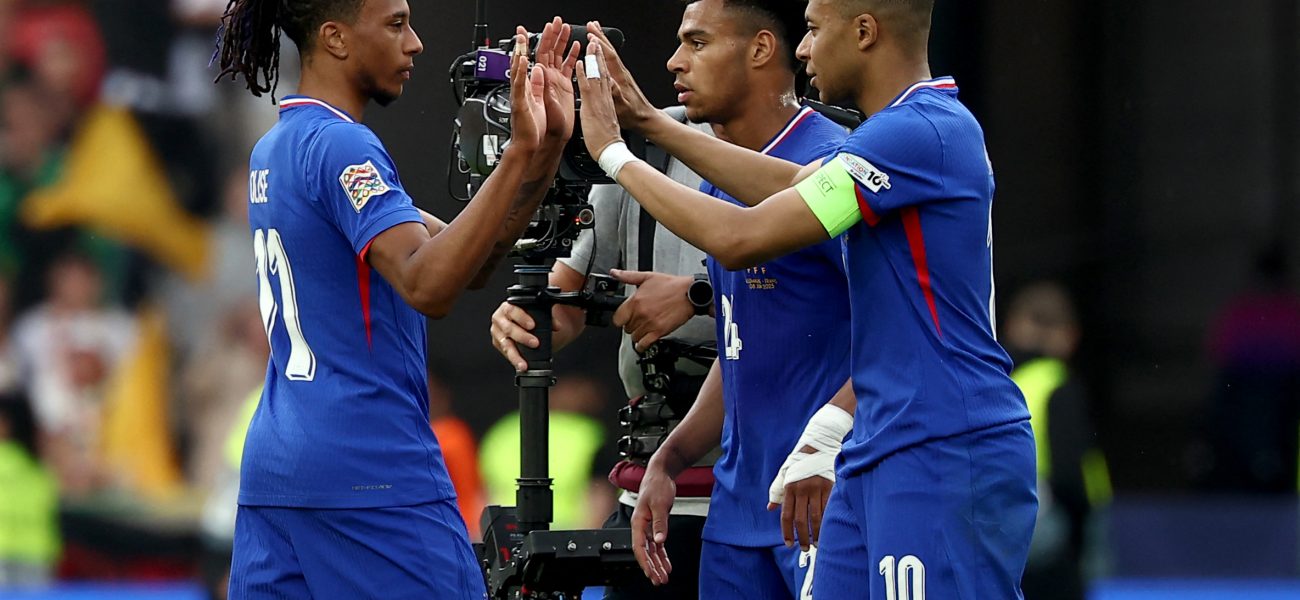
It’s an age-old strategy, updated for the modern era. We see it repeatedly. Consider France, playing Ivory Coast. There’s the undeniable echo of historical ties, certainly. But it’s also Paris reaffirming cultural links and commercial relationships with a significant West African economic player, showcasing a connection that goes deeper than tariffs or treaties. Northern Ireland locking horns with Guinea? Not exactly a headline grabber, yet even these less glamorous matchups perform a function—perhaps exploring new markets, or quite simply, ensuring visibility on a global stage where national brands compete for eyeballs and influence.
“These matches are far more than just exercises in athletic prowess; they’re carefully curated theatrical performances on the global stage,” observes Dr. Anya Sharma, a political economist specializing in sports diplomacy, whose recent study, ‘Pitch and Power: The Global Economics of Sporting Outreach’, reveals that over 60% of international friendly matches between high-income and developing nations involve some form of antecedent bilateral trade discussion. “Every jersey worn, every handshake exchanged, every televised moment—it all feeds into a larger narrative of who a nation is, or at least, who it wishes to be perceived as.”
But it’s not all calculated geopolitical grandstanding. Sometimes, it’s about shoring up domestic support. In nations where political trust runs thin—and frankly, where doesn’t it?—a competitive national team, even one playing friendlies, can serve as a potent unifier. Look to Czechia versus Guatemala. It’s a curiosity for many, but for the fanbases in Prague and Guatemala City, it’s a moment of collective national identity. Because, whether we admit it or not, these fleeting contests are often a proxy for national pride.
📄 POLICY WIRE WHITEPAPER PUBLISHED: PAKISTAN'S NATIONAL SECURITY POLICY PRIORITIES
👉 READ BY CLICKING HERE“When our national team steps onto that field, they don’t just represent themselves, they carry the aspirations of an entire nation,” a senior diplomat from Iraq’s Ministry of Foreign Affairs, who wished to remain anonymous due to the ‘sensitivity of combining sports and statecraft,’ remarked to Policy Wire. “These games, even if they lack formal stakes, are invaluable opportunities to present a different image of our country to the world—one of resilience, talent, and engagement. It’s a powerful tool, perhaps more powerful than any speech.” He’s not wrong. It’s a sentiment keenly understood by governments across the spectrum, from established European powers to nations eager to assert their place in a rapidly shifting global order.
For nations like Pakistan, though not on Thursday’s docket, or other countries across the broader South Asian and Muslim world, the broadcast of such international fixtures carries immense weight. These matches aren’t just entertainment; they’re often windows into other cultures, other economic realities. And they’re certainly viewed differently. The spectacle of European football, with its vast financial muscle and global celebrity, can be both aspirational and a subtle form of cultural penetration. What message is implicitly sent when a high-profile European club—or national team—engages with an outfit from, say, Baghdad or Casablanca? It’s usually interpreted as a gesture of respect, a recognition of shared humanity. Or sometimes, if one’s being cynical (and we’re, aren’t we?), it’s just about extending the global market reach.
What This Means
These so-called friendlies, often relegated to the back pages, are anything but politically inert. They represent a low-cost, high-visibility opportunity for nations to project specific narratives without the gravitas—or the cost—of high-level diplomatic visits or trade missions. Economically, these events stimulate local economies through tourism and media rights, though the bulk of the financial benefit often flows to the host nation or the dominant sporting bodies. Politically, they act as an informal diplomatic track, fostering people-to-people connections and subtly advancing national interests. But for countries like Iraq, it’s also a delicate balance—how much soft power can one truly exert through sport when internal instabilities remain potent? The global sporting calendar, particularly these ‘filler’ dates, is increasingly understood not as an afterthought, but as another theatre in the ceaseless competition for influence, reputation, and perhaps, a slightly better deal down the line. It’s the silent hum beneath the roar of the crowd, the policy unfolding with each pass, with every contested ball.