


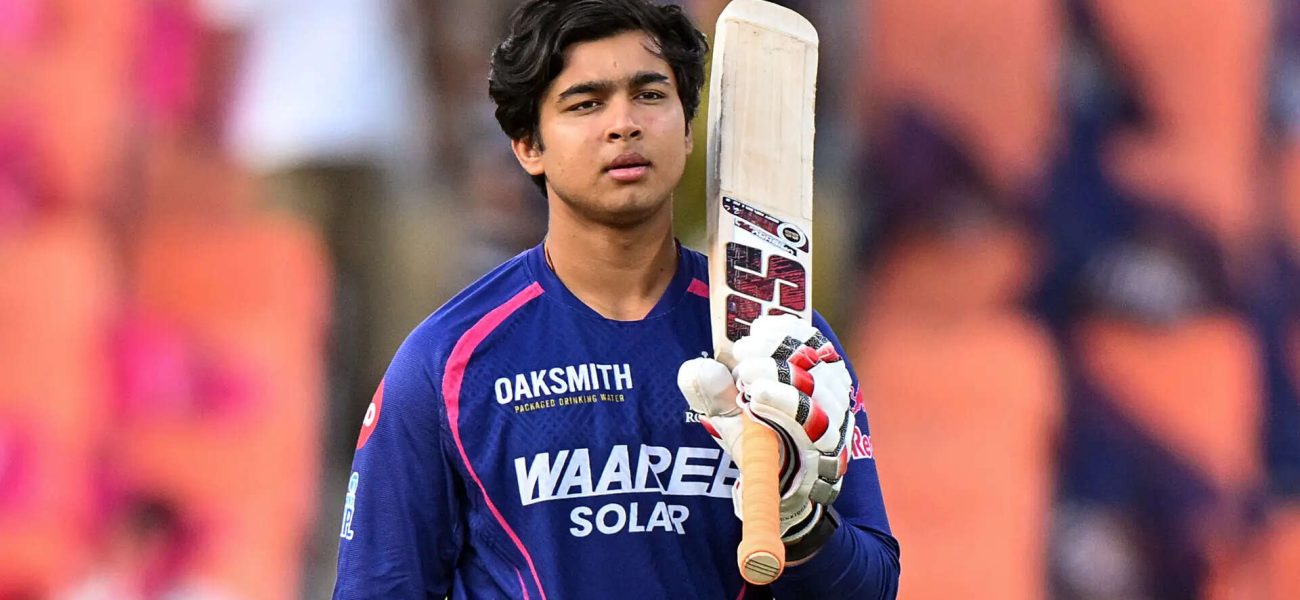
School’s Out: Pat Cummins Wishes Teen Batting Sensation Was Still in Class
POLICY WIRE — Melbourne, Australia — It wasn’t a nuanced strategy or an opponent’s tactical masterstroke that drew a dry, almost rueful admission from one of cricket’s premier fast bowlers. Instead,...

POLICY WIRE — Melbourne, Australia — It wasn’t a nuanced strategy or an opponent’s tactical masterstroke that drew a dry, almost rueful admission from one of cricket’s premier fast bowlers. Instead, it was a 15-year-old kid, wielding a bat, who managed to make Pat Cummins—yes, that Pat Cummins—publicly pine for an alternate reality where his nemesis was grappling with trigonometry instead of T20 bowling attacks. This isn’t the typical post-match analysis; it’s a window into the sport’s evolving landscape, one where raw, unvarnished talent routinely upends established hierarchies.
Cummins, the stoic Australian captain, the man who’s stared down the fiercest batting lineups, found himself genuinely outmaneuvered by Vaibhav Sooryavanshi. The teenager’s name, once a whisper, is now an echo across the cricketing world after an IPL 2026 season that, frankly, bordered on the absurd. He didn’t just play; he annihilated. And Cummins, in a moment of disarming candor on Fox Cricket, didn’t shy away from admitting it. The skipper, facing a direct question about the peculiarity of bowling to someone who, by age, belongs in a school uniform, cracked wise.
[QUOTE_PLACEHOLDER] Cummins quipped, a response heavy with both humor and the unspoken acknowledgment of genuine difficulty. He went on to praise the kid’s undeniable, almost scary ability. Because really, how else do you explain a fledgling talent, barely old enough to vote, reducing world-class professionals to mere spectators? It’s unnerving, this sort of dominance from someone so young, it really is. And for those of us who’ve watched this game for decades, it’s also pretty thrilling.
Sooryavanshi wasn’t just another flashy youngster. He finished the season with an almost unbelievable 776 runs, according to official IPL records, backed by a strike rate north of 230. That’s not careful accumulation; it’s an unapologetic assault on the record books. Think about it: a 15-year-old, ripping apart seasoned bowlers like Jasprit Bumrah, Josh Hazlewood, Bhuvneshwar Kumar—and yeah, Cummins himself. The margins for error? They were minute, almost nonexistent. “He’s a talent. He hits the ball a long way, he hits very hard. Margins for error are very small. He’s a real talent, pretty tough to bowl to,” Cummins confirmed. It wasn’t just the volume of runs, either, it was the audacity.
His defining moment? Look no further than the Eliminator match against Sunrisers Hyderabad. The Royals were chasing a berth in Qualifier 2, high stakes. Sooryavanshi walked in — and proceeded to dispatch the SRH attack with a blistering 97 off just 29 deliveries. During that particular blitzkrieg, Cummins experienced the kid’s destructive power firsthand, having three successive sixes launched back over his head. Three. In a row. That’s gotta sting a bit, no matter how many World Cups you’ve won. It speaks to a certain fearlessness you just can’t coach. And it changed the whole dynamic of the match.
📄 POLICY WIRE WHITEPAPER PUBLISHED: PAKISTAN'S NATIONAL SECURITY POLICY PRIORITIES
👉 READ BY CLICKING HERE“It’s just incredible. Like, I don’t think I’ve seen batting like that, let alone from a 15-year-old kid. Whether he’s 30 or 15, he’s just a very good hitter of the ball,” Cummins reflected, acknowledging the almost generational talent he was up against. This isn’t a one-off performance; it’s a systemic outcome of cricket’s evolving ecosystem, particularly in South Asia. The talent pipeline, honed in dusty academies and relentless local competitions across India, Pakistan, Bangladesh, and Sri Lanka, is just churning out these phenoms. You see it every year in tournaments like the IPL, young players from humble backgrounds becoming millionaires overnight, redefining what’s possible on the pitch. The intensity, the sheer volume of players, means talent will always find a way to surface. It’s what drives the economic engine of modern cricket.
What This Means
The rise of a talent like Vaibhav Sooryavanshi isn’t just a feel-good sports story; it’s a telling indicator of significant shifts in the global sports economy and cultural soft power. Economically, young phenoms like him command massive endorsement deals and drive immense viewership figures, particularly across the massive South Asian market and the broader Muslim world, where cricket borders on a religious observance. He becomes a brand, an aspirational figure. His presence alone elevates the IPL’s already considerable financial might, attracting new investment and broadcasting revenue, further solidifying India’s financial dominance in global cricket. This, in turn, influences the development strategies of other cricketing nations, forcing them to rethink their own youth systems and domestic leagues if they want to compete for market share, both on and off the field. Because money talks, right?
From a geopolitical standpoint, the IPL, while ostensibly a commercial league, acts as an aggregator of global cricketing talent, concentrating influence and opportunity in one region. Young Pakistani cricketers, despite not officially participating due to political tensions, often share similar pathways and face comparable socio-economic dynamics. The success of players like Sooryavanshi — emerging from intensely competitive, highly populous regions — underlines how deeply embedded the sport is, providing avenues for upward mobility that can translate into significant social influence. Such narratives don’t just sell tickets; they reinforce national pride and regional soft power, making the game far more than just a contest of bat and ball. You might say it helps rewrite the underdog script, not just in sports but in broader perceptions of a nation’s capabilities. And it means traditional cricketing powers, accustomed to dominating, now face challengers from all corners—and all ages—with startling consistency. This kid? He’s only just started, hasn’t he?