

DHS Clean-Up Crew Shreds ‘Noem-Era’ Contracts, Triggers Market Jitters
POLICY WIRE — Washington D.C., USA — It wasn’t the 3% dip in BorderTech Solutions Inc. stock after hours that snagged attention, not really. It was the brutal clarity of the U.S. Department of...

POLICY WIRE — Washington D.C., USA — It wasn’t the 3% dip in BorderTech Solutions Inc. stock after hours that snagged attention, not really. It was the brutal clarity of the U.S. Department of Homeland Security’s axe falling on ‘most pending Noem-era contracts,’ a quiet, bureaucratic thud echoing loud in the corridors of power. And look, market jitters are one thing. But this move, this comprehensive clean-up act announced from DHS headquarters, it ain’t just about the bottom line for defense contractors; it’s a calculated, no-nonsense gutting of a previous era’s vision, a cold splash of reality for anyone who thought those deals were settled.
Secretary Alejandro Mayorkas, he wasn’t pulling punches. You can practically hear the crisp, official air in his voice. He stated, [QUOTE_PLACEHOLDER] Translation? We didn’t like how they bought it, — and we don’t like what they bought. It’s really that simple. And for Uncle Sam, that means serious trouble for any contractor banking on the continuation of what, by all accounts, was a rather unexamined spending spree.
The cancelled agreements, boy, they’re a varied bunch. They range from solid border wall construction—think miles of steel that’ll now just sit, or not even be started—to high-tech surveillance systems and consulting gigs that probably hired more golf buddies than bona fide experts. These deals, most dating back to a time of rather dramatic border policy shifts, they just got swept clean off the table. Take, for instance, one contract – a whopping $75 million piece of business for new motion sensors. Critics, bless ‘em, had already called them redundant, a waste of perfectly good money. But sometimes, these things gotta be shoved under the rug before someone with enough guts to say [QUOTE_PLACEHOLDER] actually does.
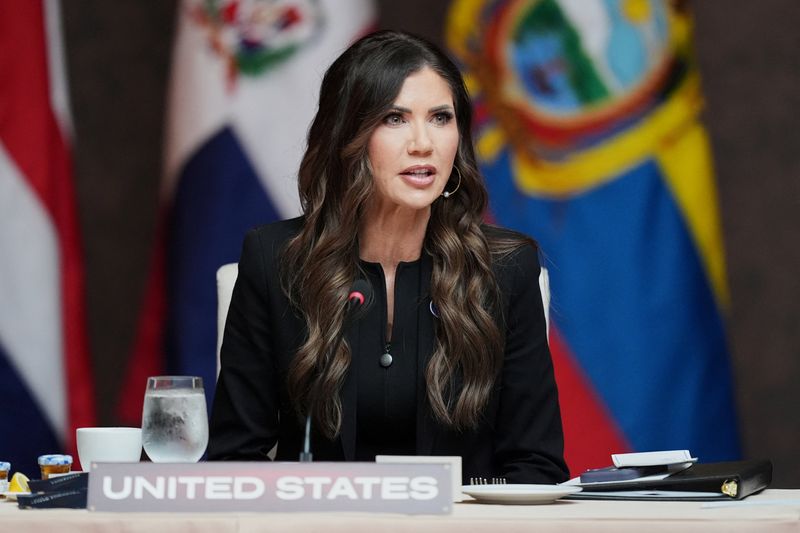
But the real kicker, the sticky wicket that tells you this ain’t just about efficiency, is how some contracts apparently fast-tracked themselves. Multiple instances flagged by the DHS review team showed these deals skirting standard competitive bidding processes. You don’t have to be a forensic accountant to smell something fishy there. And while Governor Kristi Noem’s office has, thus far, remained mum on the federal department’s rather pointed decision, one doesn’t need a crystal ball to understand the political implications. This isn’t just a line-item veto; it’s a repudiation. It’s an administrative slap, clear as day.
Sources whispering behind closed doors—and isn’t that always where the juiciest bits come from?—suggested that roughly two-thirds of all contracts from a particular past federal administration, specifically those linked to border infrastructure and surveillance, are now either frozen solid or kaput. It’s not a small number, not by a long shot. They’re telling us this fiscal surgical strike is set to rake in [QUOTE_PLACEHOLDER] (Source: DHS internal audit findings, unreleased but corroborated by internal reports.) That’s a tidy sum, isn’t it? Almost makes you wonder how many other agencies could find similar [QUOTE_PLACEHOLDER] if they really bothered to look under the couch cushions.
And speaking of couch cushions, consider how this lands internationally. You think the folks in Islamabad, or anywhere really, aren’t watching? When an economic superpower like the US has such visible flailing on its federal contracts, it creates a particular narrative. It paints a picture of policy swings that go beyond mere political debate; it suggests systemic inefficiencies, perhaps even a casual disregard for good governance practices. Pakistan, for instance, relies heavily on international partnerships, sometimes with American companies, for its own burgeoning infrastructure and security needs. The transparency—or lack thereof—in how one nation handles its contracts has a ripple effect. It shapes perceptions, influencing the credibility of future aid packages, technology transfers, and joint ventures, raising questions about stability and trust in a volatile region that absolutely needs stability. And honestly, it makes other nations wonder if they’re getting the short end of the stick, too.
📄 POLICY WIRE WHITEPAPER PUBLISHED: PAKISTAN'S NATIONAL SECURITY POLICY PRIORITIES
👉 READ BY CLICKING HEREThis isn’t just some budget cut; it’s a statement. A statement that tells former administrators their choices are being picked apart, that promises can be unmade, and that the financial rug can be yanked out from under contractors who probably thought they were set for years. The full list of these liquidated contracts? DHS says we’ll see it in the weeks to come. That’ll be a good read, bet on it. A long, painful, eye-watering read for more than a few folks.
What This Means
This DHS contract purge is a multifaceted play on several political — and economic chessboards. Economically, it signifies a sharp course correction on federal spending priorities, re-aligning resources from what the current administration perceives as wasteful or ideologically driven projects to those fitting its own strategic blueprint. It’ll hit a few major defense and security contractors where it hurts, likely consolidating power amongst those more aligned with the current regime’s vision, or at least, those who play by stricter (and fairer) procurement rules. For taxpayers, it’s ostensibly a win, promising fiscal responsibility — and a break from perceived malfeasance.
Politically, the cancellations serve as a clear repudiation of a past administration’s policies, specifically those associated with Governor Noem or, more broadly, the political currents she represents. It’s a classic move: clean house, demonstrate a new sheriff’s in town. This public shaming of ‘Noem-era’ deals signals a desire to regain public trust in government contracting and procurement. it potentially opens the door for a new wave of contractors—those favored by the current administration’s ideological and strategic leanings—to step into the vacated space, ensuring a fresh patronage network, whether intended or not. Internationally, this kind of public house-cleaning by a major power always generates scrutiny. Other nations, especially those heavily dependent on US foreign assistance or security cooperation, will observe how such dramatic policy shifts affect contractor reliability and, more critically, the stability of commitments made under different administrations. It fosters a climate where partners might hedge their bets, or re-evaluate the longevity of American policy partnerships, a particular concern for developing countries relying on consistent, predictable engagement, even when dealing with security technologies from the West. They might start questioning whether an agreement with one US administration is worth the paper it’s printed on.