

Hoosier Huddle: A Homegrown Coach’s Risky Bet on Loyalty and Local Lore
POLICY WIRE — Bloomington, Indiana — Forget the carefully constructed narratives of corporate ascent; sometimes, opportunity knocks late, loud, and unexpectedly—or, in the case of Connor Basye,...

POLICY WIRE — Bloomington, Indiana — Forget the carefully constructed narratives of corporate ascent; sometimes, opportunity knocks late, loud, and unexpectedly—or, in the case of Connor Basye, through an 11:30 p.m. phone call, asking him to fill a roster spot for an all-star game back in 2015. It was, by all accounts, a chaotic invitation to high-level basketball. It felt right then, and it felt right again recently when Edgewood athletic director Jerry Bland extended an equally abrupt, if more consequential, offer: the head coaching position for the Mustangs boys basketball.
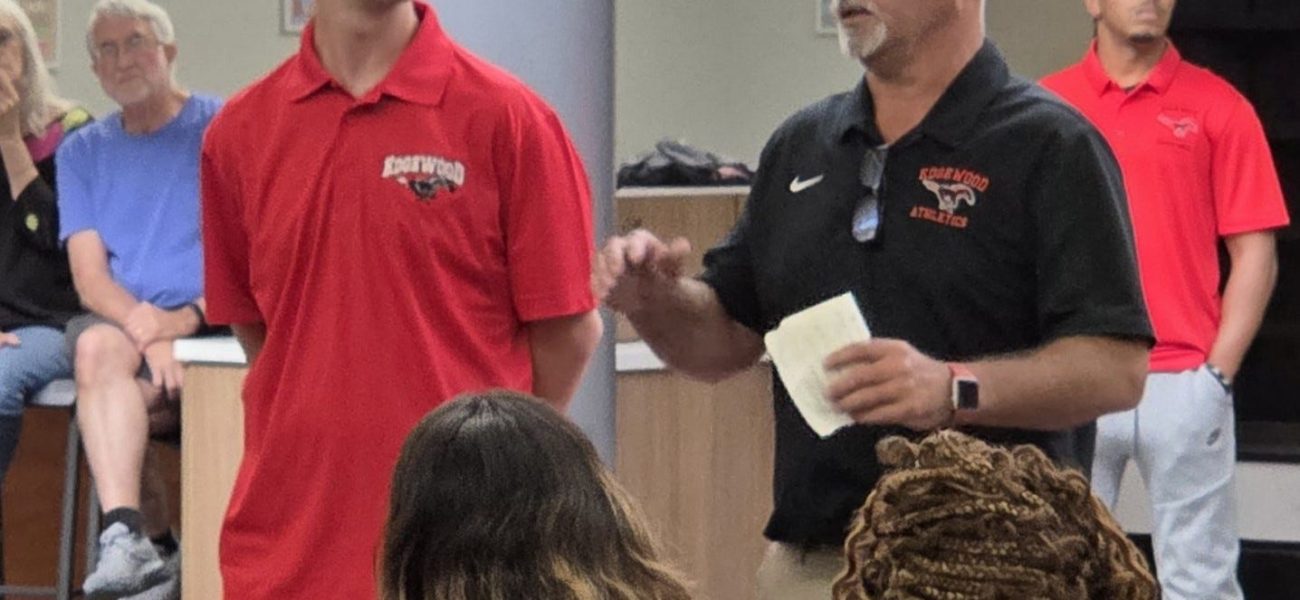
His answer was, predictably, affirmative. And yes, he expects to win this time as well. It’s less a presumption and more a deeply ingrained conviction, rooted in a life saturated by the Hoosier State’s singular basketball obsession. Basye, 29, assumes his first varsity head coaching gig — at a 3A school, no less — having cultivated a staff that’s practically a local sports reunion. They were introduced Wednesday, the new blood alongside one lone holdover, marking what many see as a calculated gamble on hometown pedigree.
The job interview, we’re told, was rather splendid. [QUOTE_PLACEHOLDER] The seven people in that room, I think we just clicked. We connected. I was honest about how I am, how I do things. We were all on the same page. He reportedly told Bland’s committee precisely what they wanted to hear—or, perhaps, simply the truth. Either way, they bought it. [QUOTE_PLACEHOLDER] I couldn’t be more excited. I’ve always wanted to coach — and to get your first job at 29 years old at the 3A school where I’m from, it’s special. Indeed. Such local loyalty isn’t always easy to come by in a landscape often valuing external ‘expertise’ over deeply personal roots.
The gravitational pull of the game for Basye wasn’t a casual discovery; it’s practically genetic. [QUOTE_PLACEHOLDER] It starts with my dad, Basye stated, sketching out a childhood spent on countless gym benches, witnessing every dribble and desperate timeout call. [QUOTE_PLACEER] Growing up, he always coached us. My brother was five years older, so I grew up sitting on his bench in every gym you can imagine in the country. This isn’t just about X’s and O’s; it’s about inheritance, the kind of communal knowledge transfer that underpins generations of community engagement. You know, like how across South Asia, particularly in nations like Pakistan, families invest generations into fields—whether it’s medicine, military service, or a particular craft—creating dynastic expertise, or at least a deep-seated vocational identity, not dissimilar to what we’re observing with the Basye family’s long shadow over Indiana basketball. It’s a shared belief that excellence isn’t just achieved; it’s grown.
Basye credits a veritable legion of mentors, a parade of names from his past that sounds more like a hall of fame roll call than a mere acknowledgment. Coach Hodson, Coach Carmichael, Coach Hudson, Coach Leonard, Derrick Cross, his brother, Coach Cloyd—[QUOTE_PLACEHOLDER] I’m probably forgetting people. All those people who were there when I played. They just made you love the game. That’s an awful lot of hands on the clay, molding a future leader, proving that, at least in some communities, the concept of a shared investment in youth still exists. And because of this collective experience, when he landed assisting at Indianapolis Crispus Attucks, climbing the ranks to offensive coordinator, it was merely the logical next step. Six years there saw him guide his team to the Class 3A title game in 2025—a notable achievement by any metric, and one demonstrating a tactical acumen alongside the relational ones.
The philosophical backbone of his coaching approach marries pragmatism with a touch of nostalgia. [QUOTE_PLACEHOLDER] I believe in having a new-school approach to old-school values, he proclaimed, describing a balance of tough love and genuine connection. [QUOTE_PLACEHOLDER] I believe you can pull kids aside and talk to them, but I also think you still can be honest with them, stern with them. I’m hard-nosed. I’m about playing with energy, playing with toughness. And then, there’s the clincher: [QUOTE_PLACEHOLDER] Also, you’ve got to be able to relate with the kids. It always comes down to relationships. If you can build those relationships, it enables you to coach them harder. It’s an almost Confucian belief in character building as the foundation for collective success, which feels, frankly, rather un-modern in an era obsessed with analytics and instant gratification. But it’s his North Star.
📄 POLICY WIRE WHITEPAPER PUBLISHED: PAKISTAN'S NATIONAL SECURITY POLICY PRIORITIES
👉 READ BY CLICKING HEREBut the homecoming was always inevitable. He’d seen the job posted — and reached out. The familiarity with the facilities—Edgewood boasts the best in Monroe County, he thinks—and knowing many of the current players from their travel circuit days sealed the deal. He sees a genuine opportunity to not just coach, but [QUOTE_PLACEHOLDER] really grow the youth basketball community up. Studies have shown that consistent participation in high school athletics correlates with a 15% higher graduation rate and better civic engagement outcomes, according to the National Federation of State High School Associations, meaning these community-level investments in sports can yield significant dividends well beyond the scoreboard.
The decision to hire Basye wasn’t without choices. Bland noted a field of some 20 candidates, several with previous head coaching experience, but Basye simply [QUOTE_PLACEHOLDER] checked all the boxes. One reference even observed, [QUOTE_PLACEHOLDER] Yeah, he’s been coaching before he even came into high school. They didn’t hesitate with the first-timer. But you don’t take risks like this just for the feels. They’re betting on energy and established relationships with the kids—something critical for both on-court performance and off-court engagement in youth development. For more on the complex interplay of youth athletics and broader societal impacts, one might consider how global sports economies—often detached from these local realities—influence aspiration; see this analysis on The Transfer Portal’s Costly Calculation: Loyalty’s Retreat from College Station. Basye understands the intense competition necessary to reach state-level success in Indiana’s 3A landscape, a challenge his own mentors—and perhaps even those distant Pakistani sports fathers—would understand.
The staff he assembled reads like a who’s-who of local talent, including Connor Hickman, fresh off his college playing days, who initially demurred but ultimately committed, swayed by the Basye family’s unblemished reputation for doing things the [QUOTE_PLACEHOLDER] right way. It’s about developing kids, not just chasing wins—or money. And for young athletes eyeing college opportunities, Bland affirms, the Basye brothers intrinsically understand the path forward. [QUOTE_PLACEHOLDER] The basketball knowledge was very evident, Bland observed. [QUOTE_PLACEHOLDER] The energy, too. I think there’s a big buzz right now with our kids.
What This Means
Basye’s hire at Edgewood is less a routine coaching announcement and more a subtle policy statement on local development. It’s a bet on continuity and deep community investment over external ‘fixes’—a rejection of the itinerant professional for a figure deeply rooted in the area’s social fabric. This approach implies a belief that true community resilience in extracurriculars stems from internal relationships, familial legacies, and a long-term commitment to nurturing talent from within. In an era where global sports have become a vast, depersonalized industry, emphasizing transaction over tradition (see the discussion on Foul Play or Fan Fever? The Digital Disruption of Spectator Sports), Edgewood’s move subtly champions a more ‘protectionist’ policy—investing in local human capital, even if it’s raw, youthful, and unproven at the very top. The implied economic benefit isnases tangible as any new factory: it fosters loyalty, retains local talent, and builds communal pride that can translate into stronger local bonds, essential for any thriving polity. This model suggests that robust local institutions, even something as seemingly minor as a high school basketball program, contribute significantly to broader civic health, generating a social capital often undervalued in economic forecasts.