


Super League Showdown: Congress Wades Into College Sports Turf War as Powerhouse Conferences Clash
POLICY WIRE — WASHINGTON, D.C. — Imagine former Pakistani cricket captain Imran Khan—a global sporting figure turned politician—walking onto the floor of parliament not to discuss national budget...

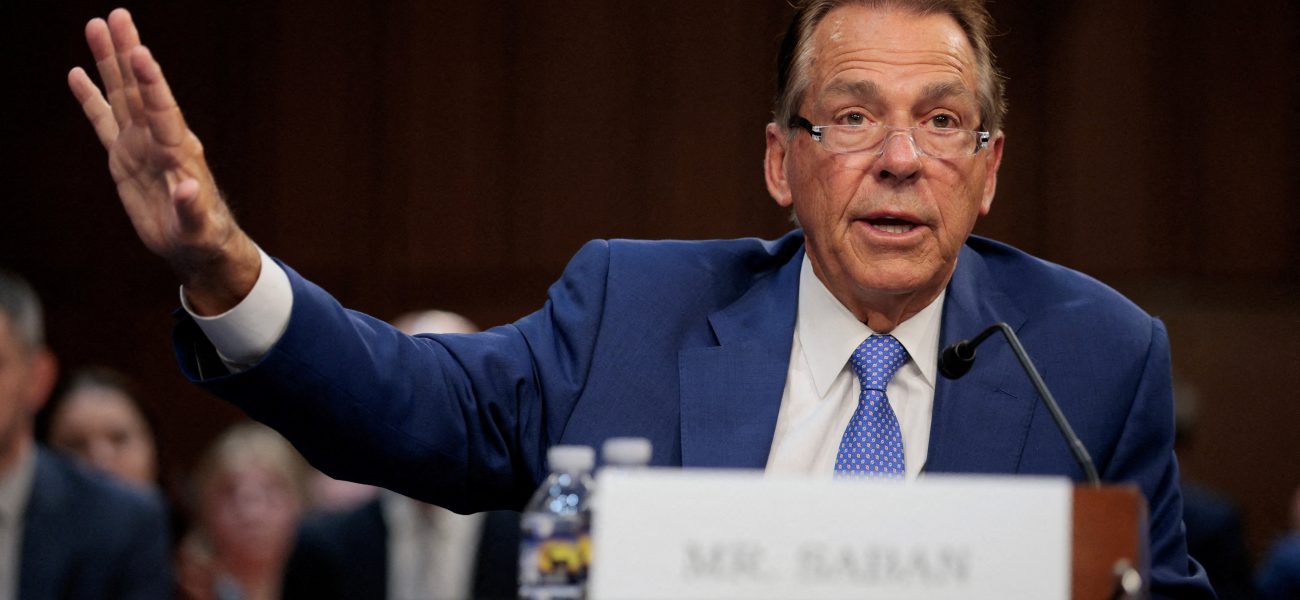
POLICY WIRE — WASHINGTON, D.C. — Imagine former Pakistani cricket captain Imran Khan—a global sporting figure turned politician—walking onto the floor of parliament not to discuss national budget allocation or defense, but the increasingly lopsided financial disparities between cricket federations within the nation. That’s not far off from the scene unfolding on Capitol Hill. Instead of Islamabad, it was Washington, and the superstar at the podium wasn’t a world leader, but Nick Saban, a revered American football coach—there to warn lawmakers about a system he once dominated, a system now racing towards economic stratification. It’s a bizarre confluence of sport and policy, one that illustrates just how intertwined—and problematic—money has made the amateur game.
For weeks now, the nation’s political landscape has watched an unexpected showdown brew. Senator Ted Cruz, a Texas Republican, and Senator Maria Cantwell, a Washington Democrat—not exactly ideological twins, mind you—have joined forces against an unlikely adversary: the Big Ten and SEC athletic conferences. These two behemoths of college sport, after all, aren’t just dominating the field. They’re absolutely steamrolling the competition, fiscally speaking. [QUOTE_PLACEHOLDER]
Last year, for instance, these two conferences pulled in 82 percent of all five-star football recruits, cementing their on-field advantage. That’s a pretty stark number, straight from industry reports, showcasing an undeniable gravitational pull toward their programs. This isn’t just about trophies. These leagues will soon dole out up to $40 million more to their member institutions than any other conference. They’re compensating their athletes at least five times more in above-the-cap NIL dollars too, a reality that makes smaller programs wonder if they can even compete for talent anymore.
Lawmakers here are not just concerned; they’re trying to brake what many see as an inevitable collision course. Cantwell, for her part, has articulated fears of these conferences devouring the smaller leagues. She told reporters that the ACC — and Big 12 are saying, and this is a literal quote, I don’t want to be the Pac-12. Don’t come and eat my best parts and leave me for scraps.
— a grim prognosis that saw her own state’s team, Washington State, discarded when the Pac-12 imploded. Cruz didn’t pull any punches either, asserting before his Senate Commerce Committee that a failure to pass congressional legislation would kill off everyone but the SEC and Big Ten.
The core of the problem? Allegations, dismissed by the conferences as fabrications, that these two leagues are attempting to create a super league
— an NFL-esque entity that would consolidate their 34 (or more) schools, maximizing media rights and viewership. Big Ten Commissioner Tony Petitti came out swinging, telling media he was setting the record straight.
He insists Any statement that suggests the Big Ten is pursuing or wants a super league is a fabrication.
And he added, At no point in time have we discussed such a concept with the SEC or anyone else. Any suggestion otherwise comes from people outside our respective conferences.
SEC commissioner Greg Sankey mirrored this sentiment, declaring his own league already a super league
to preempt any notions of a merger. Yet, the word super league
itself echoed through Wednesday’s hearing over a dozen times, underscoring its conceptual gravity.
Even so, the drama isn’t confined to Capitol Hill speeches. The Big Ten and SEC made a rare, joint statement before the hearing, opposing the Protect College Sports Act as written. This sparked a terse response from Cruz, mentioning a Power 2 consolidation
that stands to further destabilize college sports.
Lines, you might say, are drawn. Saban, for all his championship pedigree, warned Congress that if things continued unchecked, college athletics would be left with 30-50 teams in a mini NFL.
The Ferrari of college sports, he argued, was headed toward a canyon. I think that’s what we all need to do here,
he mused, referring to tapping the brakes.
📄 POLICY WIRE WHITEPAPER PUBLISHED: PAKISTAN'S NATIONAL SECURITY POLICY PRIORITIES
👉 READ BY CLICKING HEREThe legislation aims to empower other conferences, notably by letting them pool media rights—a move Cantwell claims could bring in an additional $4-8 billion.
This would bolster struggling Olympic and women’s sports. The catch? The Big Ten and SEC aren’t on board, and they possess the voting power to thwart it, as the bill requires 75% of FBS schools to agree to trigger the antitrust protections.
What This Means
This isn’t just a squabble over football; it’s a bellwether for American institutional competition. When two dominant players consolidate power—whether it’s in media, tech, or college athletics—the free market’s supposed fairness often goes out the window. Economically, this legislation, if passed in its current form, could re-distribute billions, acting as a soft antitrust measure designed to prop up smaller enterprises. It also represents a rare, bipartisan recognition that unchecked growth and wealth concentration, even in sports, eventually becomes a public policy issue. If Washington steps in, it fundamentally shifts the balance from private enterprise (the conferences) to governmental oversight. And that’s a precedent, a kind of brutal theater in itself, for industries beyond the gridiron.
For nations like Pakistan, where national pride often merges with athletic prowess—think their fiercely competitive cricket or squash leagues—the issue of equitable funding and competition is perpetually contentious. Similar financial pressures, albeit within different regulatory frameworks, impact grassroots sports there. It’s a global dynamic: who controls the money, who controls the talent, and what happens when that balance tips too far?
The bizarre bedfellows of this congressional initiative are perhaps the most telling aspect. Democrats, often concerned with athlete rights and fair compensation, are allied with Republicans like Cruz, who traditionally champion free market principles, but see the consolidation as a market failure impacting smaller, often state, universities. Meanwhile, many Democrats (like Chris Murphy and Cory Booker) are actually against this bill, believing congressional action isn’t the way to address athlete issues; they’d prefer employment status or collective bargaining for players. It’s messy, unconventional. And it demonstrates the extent to which economic forces, not just ideological purity, shape legislative action. As one longtime political powerbroker remarked, this public fight, pitting a leading member of Congress against two prominent stakeholders who resist legislative limits on their decisions, is a first in modern political history.
And it isn’t going away, not with billions of dollars and the cultural heart of Saturday afternoons at stake.