


Memory’s Maze: India’s Unseen Road Toll Claims Student’s Identity
POLICY WIRE — New Delhi, India — The simple act of identifying oneself—a name, a history, a family—is something most folks take for granted. It’s not just a collection of sounds; it’s the bedrock of...

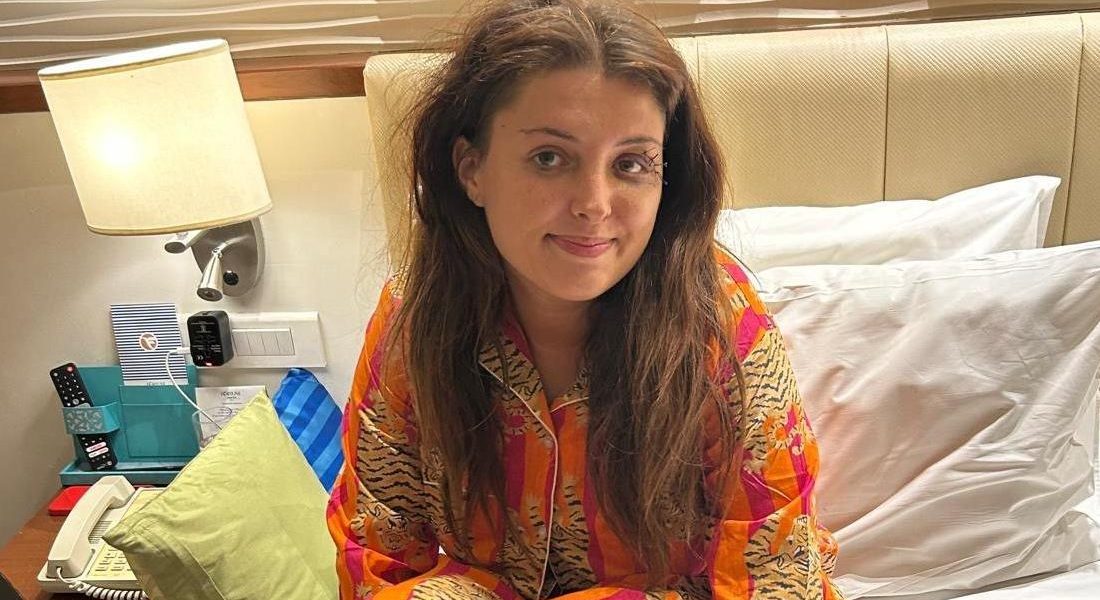
POLICY WIRE — New Delhi, India — The simple act of identifying oneself—a name, a history, a family—is something most folks take for granted. It’s not just a collection of sounds; it’s the bedrock of existence, an anchoring truth. But for one young student in India, that fundamental fact evaporated in the brutal calculus of a scooter crash, leaving her adrift in a landscape she no longer recognizes. Her memory’s gone, snatched away, she’s unable to remember her own name.
It wasn’t a headline-grabbing political scandal or an economic policy shift. Just a harsh collision, another blip in the ceaseless, chaotic hum of an Indian metropolis. This particular incident, tragic in its specificity, carves a sharper, more visceral insight into the burgeoning perils of rapid, unplanned urbanization and the human cost it extracts across South Asia. A coma, severe brain trauma, and now this profound amnesia, aren’t merely medical conditions; they’re echoes of a larger, systemic malaise, a silent crisis unfolding on roads choked with ambition and inadequate infrastructure.
Doctors, bless their hearts, say [QUOTE_PLACEHOLDER], which really doesn’t paint the full picture. The medical details, of course, are sobering: a brain injury so severe it stripped away not just recollections of the accident but the very essence of self. Imagine that. You wake up, — and everything’s a blank slate, like some cruel digital reset button got pushed on your entire life. This isn’t just about a broken body; it’s about a shattered identity, a family left piecing together a person who doesn’t even know their name anymore.
And let’s be frank, this isn’t an isolated incident. India’s roads are notoriously unforgiving. The numbers speak for themselves, cold — and clinical. According to data released by the Ministry of Road Transport and Highways, India recorded over 412,000 road accidents in 2021, leading to more than 153,000 fatalities. Those aren’t just statistics; they’re someone’s daughter, son, father, or, in this case, someone who lost themselves without even losing their life. That particular stat, 153,000 fatalities, doesn’t even begin to cover the countless serious injuries, the lifelong disabilities, or the memory wipeouts like the one we’re seeing here. It’s an epidemic of trauma, hiding in plain sight amidst the daily grind.
Many commuters, especially younger students like her, rely heavily on two-wheelers. They’re quick, they’re agile, they’re economical—and often, they’re incredibly dangerous, particularly on congested urban streets where traffic rules seem more like polite suggestions than binding mandates. Helmets? Sometimes. Driving skill? Variable. But a lapse in judgment—or the reckless maneuver of another driver—can, and does, lead to devastating outcomes. The vulnerability of motorcyclists, it’s just stunning, isn’t it?
But the story doesn’t end with a hospital bed. Because this young woman’s ordeal isn’t just a personal tragedy; it’s a harsh reminder of broader issues that extend across the subcontinent. From Karachi to Colombo, Lagos to Lahore, countries experiencing rapid development often struggle to keep pace with the ancillary costs of their economic aspirations. Infrastructure planning, traffic enforcement, and public health responses often lag years—decades, sometimes—behind the sheer surge in vehicles on their roads. It’s a race no one’s really winning.
This individual plight also quietly illuminates the often-invisible burdens shouldered by families in such circumstances. In many South Asian — and Muslim-majority countries, extended family networks form a crucial safety net. But supporting someone with a long-term neurological injury, especially one that wipes out their personal history, requires an emotional and financial toll that even the strongest family unit can barely withstand. [QUOTE_PLACEHOLDER], they say, referring to the difficulty in finding proper rehabilitation or psychological support. It’s not just physical recovery; it’s rediscovering a lost self, — and that’s a whole different ballgame.
📄 POLICY WIRE WHITEPAPER PUBLISHED: PAKISTAN'S NATIONAL SECURITY POLICY PRIORITIES
👉 READ BY CLICKING HEREWe’re talking about a nation that wants to be a global superpower, and yet, it grapples daily with conditions that would be unacceptable in much of the developed world. This collision of ambition and reality? It’s potent. The incident raises some sharp, pointed questions about safety standards, urban design, and perhaps most tellingly, about how we quantify suffering when it doesn’t manifest as a body count but as an erasure of identity. You see the headlines for fatalities, sure. But who remembers the names forgotten?
What This Means
This solitary, agonizing case of memory loss due to a scooter accident isn’t merely unfortunate; it serves as a stark metaphor for the unacknowledged costs of rapid urbanization in nations like India and across South Asia. Economically, these accidents drain national health systems already straining under the weight of widespread illness. Productivity takes a hit, too, as a young, potentially contributing member of the workforce is sidelined, perhaps permanently. Families bear immense, unreimbursed burdens, perpetuating cycles of economic vulnerability.
Politically, such incidents rarely stir widespread public outrage beyond the immediate community. Why? Because the individual tragedies are so common they become normalized, background noise in the urban symphony. This normalization breeds political apathy towards fundamental reforms in road safety, traffic enforcement, and robust rehabilitation services. Politicians, busy chasing larger infrastructural projects, often overlook the [QUOTE_PLACEHOLDER] human impact—until, perhaps, a campaign season provides a fleeting opportunity for lip service. For the ordinary citizen, the state’s implicit failure to ensure basic road safety erodes trust, reinforcing the perception that individual survival is largely a matter of luck, not policy. But there’s gotta be a breaking point, right? Sooner or later, someone’s going to connect the dots between that everyday commute and the deeper failure of governance to protect its people, especially its youth—its future, plain and simple.
And culturally, such debilitating injuries can profoundly alter community dynamics. In societies where memory and oral history hold significant sway, the literal loss of a personal history is devastating, not just for the individual but for their ancestral lineage. It highlights the tenuousness of personal narrative in a context where collective memory is often more robust. These kinds of stories, where identity is brutally stolen, they linger. They change how people view safety, agency, and just how much control they truly have over their lives in bustling, precarious cities.